Skip to content




Layered Necklaces Q&A: Fit, Length, Style
I start with two or three necklaces, about 2 inches apart, and give one pendant or chain room to stand out. If a pendant overlaps another layer, I try a 3- to 4-inch gap instead. Comfort matters more than the number on the tag.
Here’s my checklist:
- Fit: Check where each necklace falls on your body, not just its labeled length.
- Style: Let one metal lead, and keep pendants clear of neckline edges.
- Materials: Check product details and stamps; metal color alone doesn’t tell you what a piece contains.
- Tangles: Vary chain lengths and textures, and try an extender or layering clasp if needed.
- Daily wear: Move around for 30–60 seconds to check the fit, then store each necklace separately after wear.
My rule: <u>leave each layer room to show</u>. If the stack pulls, catches, or keeps crossing, adjust a length or remove a piece.
Choosing Necklace Counts and Lengths
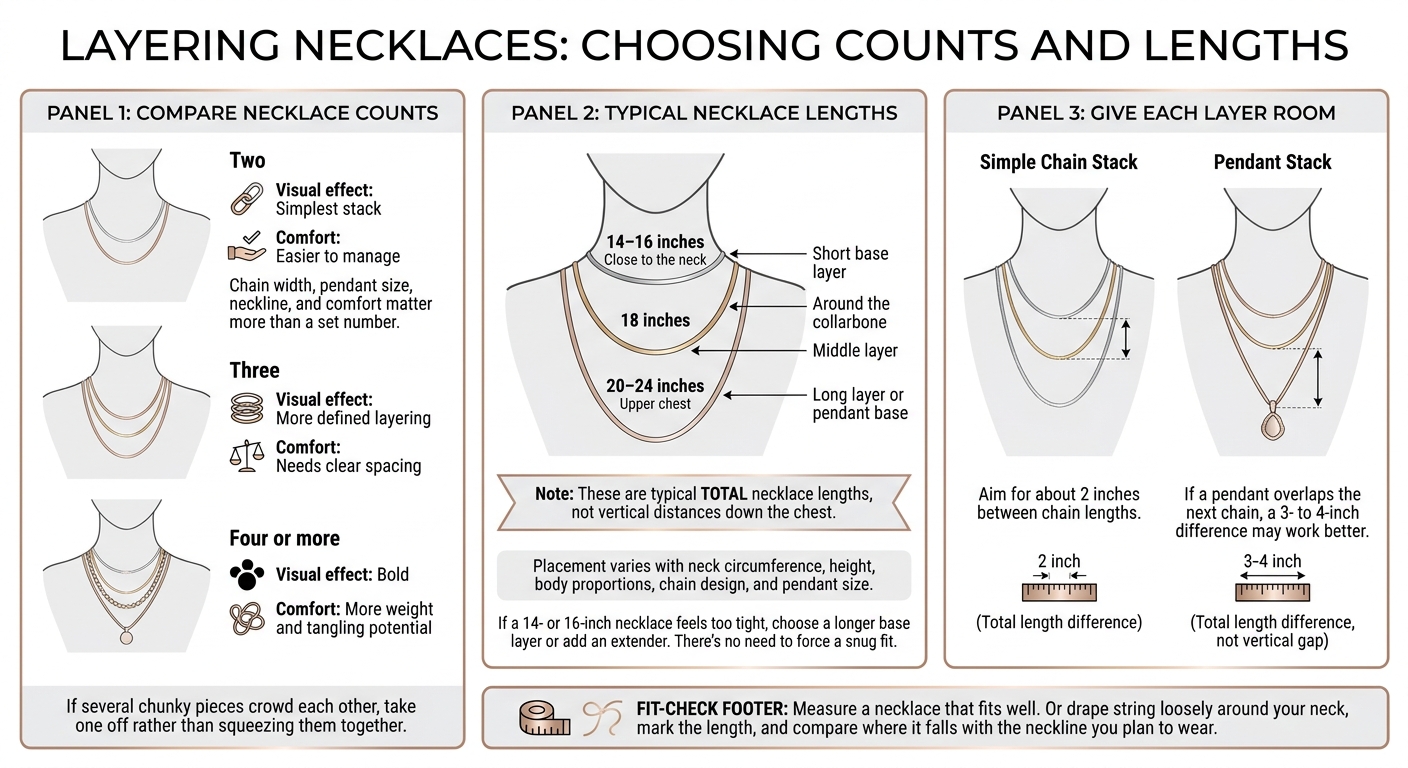
Necklace Layering Guide: Counts, Lengths, and Spacing
Choosing 2, 3, or More Necklaces
Chain width, pendant size, neckline, and comfort matter more than a set number. For three or more necklaces, keep most chains delicate and use one heavier chain or pendant as the focal point. If several chunky pieces crowd each other, take one off rather than squeezing them together.
| Necklace count | Visual effect | Comfort considerations |
|---|---|---|
| Two | Simplest stack | Easier to manage |
| Three | More defined layering | Needs clear spacing |
| Four or more | Bold | More weight and tangling potential |
Pairing Necklace Lengths
Aim for about 2 inches between chain lengths. If a pendant overlaps the next chain, give it more room - a 3- to 4-inch difference may work better.
| Typical length | Approximate placement | Layering role |
|---|---|---|
| 14–16 inches | Close to the neck | Short base layer |
| 18 inches | Around the collarbone | Middle layer |
| 20–24 inches | Upper chest | Long layer or pendant base |
Placement varies with neck circumference, height, body proportions, chain design, and pendant size. If a 14- or 16-inch necklace feels too tight, choose a longer base layer or add an extender. There's no need to force a snug fit.
To check the length, measure a necklace that fits well. Or drape string loosely around your neck, mark the length, and compare where it falls with the neckline you plan to wear.
With spacing in place, match the stack to your metal color and neckline shape.
Matching Metals and Necklines
Once you’ve set the lengths, coordinate the stack’s metal tones and place the layers to suit your neckline.
Mixing Gold and Silver
Choose one main metal for most of the stack. Repeat the accent metal in your earrings, a ring, or a watch to make the pairing feel planned. Keep the mix simple so each layer stands out.
| Approach | Visual effect | Styling tip |
|---|---|---|
| Single metal | Clean and polished | Vary chain textures for depth. |
| Mixed gold and silver | Contrast and dimension | Match chain shapes or textures. |
| Mixed metals with a two-tone piece | Connects both colors | Use the two-tone piece to tie the layers together. |
LaCkore Couture pieces may use gold, silver necklaces, and natural stones. Check each product description, metal stamp, and care details to confirm the exact materials.
A gold- or silver-colored finish doesn’t confirm metal content. Sterling silver contains at least 92.5% silver and is often marked “925,” while gold pieces should disclose their karat quality, such as 14K or 18K.
With the metals chosen, arrange the layers around your neckline.
Placing Layers Around Necklines
Let the neckline frame your jewelry. Make one charm necklace or textured chain the focal piece, and keep the other layers simpler. Give each layer enough room to show without crowding the neckline.
| Neckline | Suggested layer placement | What to check |
|---|---|---|
| Crewneck | Wear short layers above the neckline or a longer pendant below it. | Keep pendants off the seam. |
| V-neck | Place graduated layers within the V. | Keep the focal pendant clear of the V’s point. |
| Scoop neck | Stagger layers across the open curve. | Avoid bunching or crossing the fabric edge. |
| Open collar | Place short layers inside and longer layers over the shirt. | Avoid buttons and collar folds. |
| Strapless or off-the-shoulder | Pair a short necklace with a longer pendant layer. | Keep the pendant centered and clear of the top’s edge. |
| Turtleneck | Wear longer layers over the fabric. | Keep pendants clear of the collar and check for snags. |
Move naturally for 30–60 seconds, then sit, turn, and lift your arms. Reposition any pendant that slips into the neckline or catches on fabric.
Reducing Tangles for Daily Wear
Once your layers sit well, keep them aligned by sticking to two or three necklaces for daily wear. More chains mean more chances for friction, snags, and tangles. Before getting dressed, check for knots, open clasps, or damaged links. Put on the shortest necklace first, let it settle, then add longer pieces one at a time.
Mix chain lengths, weights, textures, and pendant sizes instead of stacking similar chains. One slightly heavier piece can help anchor lighter layers, but avoid anything that pulls on or overwhelms delicate chains. Skip multiple large pendants that bump into each other.
If the stack keeps shifting, use hardware to hold the spacing. For two pendants that crowd each other, try a 1- to 2-inch extender or a layering clasp to separate them and keep them in place.
Before heading out, test how the stack sits against your coat, bag strap, hair, scarf, and seat belt. Remove a layer if it feels heavy or keeps crossing another chain.
Follow each piece’s care instructions. Take necklaces off before sleeping, exercising, swimming, showering, cleaning, or doing anything that could snag them. After wear, unclasp each necklace separately, close its clasp, and store it in its own pouch or on its own hook.
Conclusion: Check Your Fit and Spacing
Once you’ve checked for tangles and comfort, test the fit. For the cleanest stack, wear two or three necklaces with about 2 inches between lengths. Use that spacing as a guide, not a rule. Give one focal piece room to stand out, and keep the surrounding layers simple.
Match your metal mix to your outfit. Let one metal lead, then repeat the accent metal in your earrings or watch. Keep pendants away from the collar edge and easy to see against your top.
Try the stack with the outfit you’ll wear. Stand, sit, and move around to check how it rests. A quick front-facing photo can show uneven spacing. Adjust the lengths, switch to a lighter chain, or remove one necklace until the stack feels comfortable and your focal piece stays visible.