Skip to content




Guide to Repurposing Old Jewelry into New Designs
Old jewelry doesn’t have to collect dust in a drawer. Transforming outdated or broken pieces into something new is a practical way to save money, reduce waste, and preserve sentimental value. Here’s the process in a nutshell:
- Cost Savings: Reuse gold and gemstones you already own. Custom redesign services often start at $495, and selling leftover metals can offset costs.
- Eco-Friendly: Repurposing reduces the need for mining, making it a better choice for the planet.
- Sentimental Value: Redesigning heirlooms helps retain their emotional significance while updating them to match your style.
To get started, you’ll need specialized tools like pliers, soldering irons, and beading supplies. Proper preparation - cleaning, assessing materials, and carefully deconstructing old items - is key. From there, you can craft necklaces, bracelets, rings, or even statement cuffs.
Repurposing jewelry is about combining practicality with personal meaning. Whether you’re turning a brooch into a pendant or resetting gemstones into a modern ring, you’re creating a piece that tells your story.
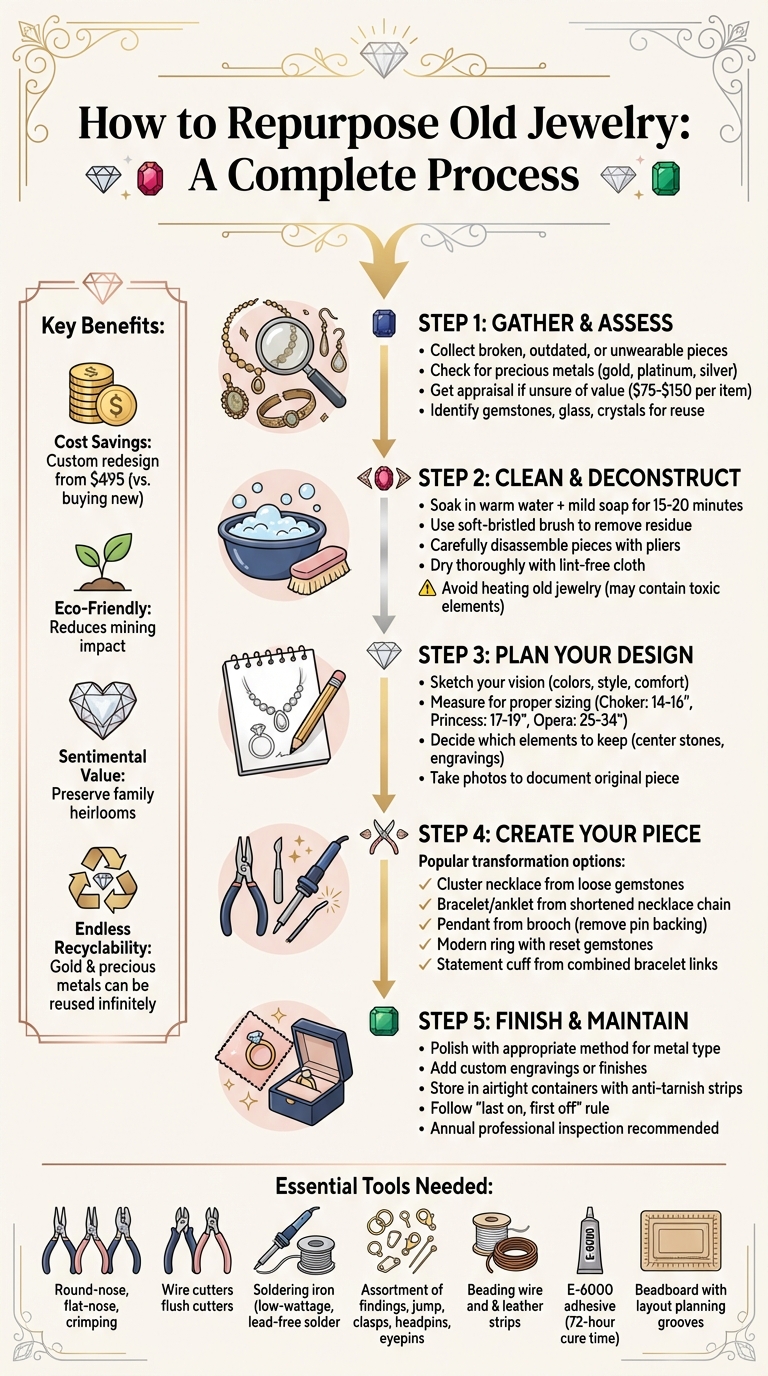
Step-by-Step Guide to Repurposing Old Jewelry: From Assessment to Finished Piece
Materials and Tools You'll Need
Creating high-quality repurposed jewelry starts with the right tools. As LaCkore Couture puts it, "You cannot create high-quality pieces if you are working with cheap tools. Low-quality tools can make it difficult for even the most advanced jewelry makers to create a stunning piece". Ordinary household tools simply won’t cut it when working with precious metals and delicate gemstones.
Basic Tools
Your toolkit should include a few essential items specifically designed for jewelry-making. Start with specialized pliers - you’ll need round-nose pliers, flat-nose pliers, and crimping pliers. Add wire cutters and flush cutters for clean, precise cuts that won’t damage your materials. A ruler is also handy for measuring standard necklace lengths (Choker: 14″–16″, Princess: 17″–19″, Opera: 25″–34″), and a beadboard can help you lay out and plan your designs.
If soldering is part of your process, invest in a low-wattage soldering iron and use lead-free solder along with flux. To ensure strong solder joints, clean your metal pieces with files or sandpaper before starting. Always prioritize safety - wear protective goggles and work in a well-ventilated area. Avoid using harsh chemicals like bleach or ammonia, as they can damage both metals and gemstones.
Once you’ve gathered these tools, you’ll also need the right materials to bring your designs to life.
Materials for Repurposing
Alongside tools, you’ll need a variety of findings and components to assemble your creations. Stock up on jump rings, clasps (like lobster claws or toggles), headpins, eyepins, and crimp beads. For stringing, beading wire is a versatile choice, but leather strips or silk thread can add a modern, textured flair. When selecting decorative elements, prioritize quality - glass, crystal, or genuine gemstone beads not only look more refined but also last longer than plastic or Lucite alternatives. For non-soldered connections, a high-strength adhesive like E-6000 is a reliable option; just allow it to cure for 72 hours for the best results.
Professional goldsmith Molly Hollingsworth from Jewelsmith highlights the timeless value of precious materials, stating, "Gold and other precious metals are endlessly recyclable and can be made into new jewelry over and over". This serves as a reminder of the durability and sustainability of the materials you’re working with.
With the right tools and materials in hand, you’re ready to prepare your old jewelry for its exciting transformation.
Preparing Your Old Jewelry
With your tools and materials ready, the next step is preparing your old jewelry for its transformation. This process is crucial - skipping it might lead to damaged pieces or the loss of components that could have been reused.
Inventory and Assessment
Start by gathering all the jewelry you plan to repurpose. Focus on items with broken parts, loose stones, or missing components. Pieces that can’t be repaired, like vintage watches with non-functional mechanisms, are perfect candidates for disassembly.
Take a close look at the materials. Precious metals like gold and platinum, along with gemstones, glass, and crystals, are excellent for reuse. However, materials like plastic or Lucite may not offer the same durability or aesthetic appeal. If you’re unsure about the authenticity or value of a piece, it’s wise to get it appraised before making any changes. As the Gemological Institute of America (GIA) advises, "If you don't know the historical or monetary value of your heirloom jewelry piece, take it to a jeweler or jewelry appraiser before altering it in any way". Professional appraisals typically cost between $75 and $150 per item.
Consider wearability, too. If a ring is too tight or a brooch feels outdated, it may be ready for a redesign. Keep in mind that some designs or metals might not be easy to modify manually. For valuable gemstones, sending them to an independent lab like GIA for a grading report can document treatments or synthetic origins before resetting.
Once you’ve assessed your pieces, clean and carefully deconstruct them to prepare for their new purpose.
Cleaning and Deconstruction
Before diving into design, clean each piece to reveal its true condition. Use warm water, mild dish soap, and a soft-bristled brush to remove dirt and residue from hairspray, lotion, or skin oils. For diamonds, soaking them in a mild soap solution for 15–20 minutes can help loosen stubborn grime. Avoid soaking pearl strands; instead, wipe them gently with a damp, soft cloth to protect the silk thread. Always dry your jewelry thoroughly with a lint-free cloth before moving forward.
When it’s time to take pieces apart, work slowly and carefully. Removing gemstones manually can be tricky and risky, so proceed with caution. Professionals often rely on chemical methods to dissolve metal and free stones safely, though these processes aren’t suitable for organic materials like opals or pearls. If you plan to glue components later, roughen metal surfaces with sandpaper to improve adhesion.
Avoid heating old jewelry unless you’re certain about its composition. Many older pieces may contain toxic elements like cadmium, lead, or mercury in their solders, which can release harmful fumes when exposed to heat. If you’re melting down old gold for recasting, jewelers typically add fresh metal to prevent flaws like "pitting" in the final product.
Once everything is cleaned, disassembled, and prepped, you’ll have a solid foundation for your new creation.
Planning Your New Design
Sketch out your ideas, making sure the colors, style, and comfort of the piece align with your vision. Plan your layout carefully and take accurate measurements. For example, standard necklace lengths range from chokers (14″–16″) to opera lengths (25″–34″).
Decide which elements to keep. Center stones, melee diamonds, and unique engravings often deserve a place in your new design. Even damaged items can provide rhinestones or decorative accents for your project. If a piece holds sentimental value, consider taking photos to document its original form before redesigning it. As YouTalent aptly says, "Jewelry has its stories… Now let's get ready to add yours by giving these old treasures a new life".
Step-by-Step Techniques for Repurposing Jewelry
Once your old jewelry is prepped and ready, it’s time to breathe new life into those pieces. Here’s how you can transform outdated designs into fresh, wearable creations.
Creating a Cluster Necklace
Start by sorting your jewelry by material and sentimental value. Gemstones from rings, earrings, or pendants can be removed by a jeweler for reuse. Plan your design with symmetry in mind - consider a gradient layout where stones are tightly packed on one side and gradually spread out. This creates a balanced, eye-catching look.
Kendra K. Wollert, CGA at Olufson Designs, shares a popular trend:
"A gorgeous trend right now is taking all your small diamonds and/or gemstones and flush setting them into a wider ring or bracelet or setting them into a disc pendant".
You can mount these stones in bezel settings or flush-set them into a disc pendant. Be sure the gemstone’s depth is checked to prevent discomfort from the pointed bottom. Attach the bezel-set stones to a chain or focal point to complete the necklace. Don’t forget to have the piece professionally cleaned and polished for that final touch. If you’re not using old gold or platinum settings, consider trading them in for credit toward your custom design. As Scott's Custom Jewelers explains:
"When you recycle your gold, platinum, or sterling silver jewelry, the jeweler will remove the gemstones, and then you can trade in the metal for the purchase of a new design".
Next up, let’s explore how to turn a necklace into other wearable accessories.
Turning a Necklace into a Bracelet or Anklet
To create a bracelet or anklet, simply cut the chain to your desired length and reattach the clasp. For a layered bracelet look, wrap a long necklace around your wrist multiple times. You can also remove pendants or charms from old necklaces or single earrings and attach them to a chain to create a custom charm bracelet. Add clasps or extenders to make the length adjustable.
For practicality, bezel settings are ideal for bracelets and anklets since they’re smooth and less likely to snag on clothing. Once your design is complete, polish the piece to remove tarnish and clean it with an ultrasonic cleaner to ensure it shines like new. Molly Hollingsworth, a professional goldsmith, reminds us:
"Gold and other precious metals are endlessly recyclable and can be made into new jewelry over and over".
Transforming Brooches into Pendants or Earrings
To repurpose a brooch, carefully remove the pin backing using jewelry pliers. For pendants, attach a bail to the brooch’s top. Platinum, while difficult to melt, can still be repurposed mechanically - for instance, by reshaping an old band to create a collet or bail for your pendant. For earrings, attach ear wires to the brooch. If the brooch is large, you can cut it in half to create a matching pair.
When soldering, identify the metal type - gold, silver, or plated - to ensure the heat won’t damage the piece. Vintage items often include glass or plastic stones that can’t withstand heat, so remove them before soldering and reset them afterward. Annabelle from Quick Jewelry Repairs explains:
"Jewelry conversion is the process of changing an item to a completely different type of jewelry by removing, tweaking, and/or adding components to the original piece".
This approach helps preserve the sentimental value of older pieces while giving them a modern twist.
Resetting Gemstones into Modern Rings
If you have gemstones in old settings, a jeweler can remove and inspect them for chips or scratches. Before resetting, you might want to send the stones to an independent lab like GIA for a grading report. This will confirm whether they’re natural or synthetic and document any treatments.
Old gold can be melted and recast with fresh metal to avoid pitting. Using techniques like lost-wax casting or hand-fabrication, your gold, platinum, or silver can be turned into new ring bands. Same Molecule Refining is another option - it separates pure metal from alloys, allowing sentimental gold to be refined to 24K purity and then re-alloyed to your desired color or karat.
For a modern aesthetic, bezel settings are sleek and practical, especially for active lifestyles. Pairing colorless diamonds with platinum or white gold enhances their brilliance, offering a fresh alternative to traditional yellow gold. You can also add unique finishes like hammered textures, matte surfaces, or custom engravings. Save any leftover metal scraps from resizing or clasps - they can often be credited toward your new design. Incorporating a piece of the original band is a thoughtful way to preserve its history.
Designing a Statement Cuff from Old Bracelets
Combine bracelet links to create a bold, statement cuff. If you’re working with different metals, a jeweler can adjust the color by adding specific alloys - nickel for white gold or copper for rose gold - during the melting process. Use a beadboard to arrange your design, allowing you to measure the exact length and keep components in place.
Custom finishes like hammered textures or matte surfaces can add character to your cuff. As Jared The Galleria Of Jewelry puts it:
"Redesigning a piece that doesn't work for you in its current style is a way to let you carry that story from one generation to the next".
Repurposing old jewelry can be more economical than buying new pieces, as you’re supplying the most expensive materials - metal and gemstones - and only paying for the design and labor.
Finishing Touches and Care for Your New Jewelry
Polishing and Personalization
Once your repurposed jewelry is complete, it’s time to give it that final shine. For sterling silver, a baking soda paste works wonders - just rub gently for 2–3 minutes. Gold-plated items benefit from a quick 1–2 minute wash with a mild soap solution, while copper can sparkle after a 30-second dip in a mix of lemon juice and salt. Always test cleaning solutions on a hidden spot first to avoid any mishaps. For everyday upkeep, a soft microfiber cloth is your best friend.
Personal touches can make your jewelry truly one-of-a-kind. Consider custom engravings, birthstones, or unique finishes like hammered textures. If you’re working with an original engraved band, you can protect its sentimental value by adding a platinum or gold sleeve to preserve the inscription while refreshing the exterior. For sentimental gold pieces, Same Molecule Refining is an incredible option. It allows you to refine the gold to 24K purity and re-alloy it into your preferred shade - white, rose, or yellow - while keeping the original molecules intact. After polishing, finish with a thin layer of jewelry protectant to keep tarnish at bay.
With your piece polished and personalized, the next step is proper care to maintain its brilliance.
Care and Storage
To keep your jewelry looking as dazzling as the day it was finished, proper care is essential. Follow the golden rule: "last on, first off." Put on your jewelry after applying perfume, hairspray, or makeup, and remove it before washing, exercising, or sleeping. Marisa Hordern, CEO of Missoma, emphasizes:
"Make gold-plated jewelry the last thing you put on and the first thing you take off".
Avoid wearing jewelry while swimming or exposing it to chlorinated water, as this can cause damage. With careful handling, high-quality gold-plated pieces can last up to five years, especially if kept away from salt, sweat, and humidity.
Storage is just as important as daily care. To prevent scratches and tarnish, store silver jewelry in airtight containers with anti-tarnish strips. Gold pieces should be kept separately in soft-lined compartments. For routine cleaning, soak your jewelry in warm water mixed with non-antibacterial dish soap for a few minutes, then dry it thoroughly with a lint-free cloth. Be cautious with gold-plated items - avoid using polishing cloths, as they can strip away the delicate gold layer.
Regular inspections are key, especially for repurposed pieces with reset stones. Check your jewelry weekly and schedule a professional examination annually. Over time, settings and prongs can wear down, so keeping an eye on them ensures your jewelry stays secure. For valuable heirlooms, consider specialized jewelry insurance to protect against damage, theft, or loss, as standard homeowners' policies often fall short.
At LaCkore Couture, we take pride in ensuring every repurposed piece remains as radiant and meaningful as the memories it holds, from the moment it’s designed to every step of its care.
Conclusion
Repurposing jewelry bridges the past and the future beautifully. By giving heirlooms or forgotten pieces a fresh look, you’re not only reducing the environmental toll of mining but also preserving cherished memories while showcasing your personal style. Precious metals like gold can be melted down and reshaped endlessly without losing their quality or beauty, making them perfect for sustainable reuse. This process protects the planet while turning sentimental items into stunning, wearable art.
As professional goldsmith Molly Hollingsworth explains:
"Gold and other precious metals are endlessly recyclable and can be made into new jewelry over and over."
But repurposing goes beyond sustainability - it’s a meaningful way to keep loved ones close. Whether you’re resetting a grandmother’s diamond into a bold new ring or melting down old gold chains to craft personalized pendants, you’re creating new heirlooms that carry family stories forward. The GIA sums it up perfectly:
"Jewelry is meant to be worn, so reinventing an heirloom into a piece of new jewelry that reflects your taste makes it more likely that you'll wear it, and is a great way to keep the memories of loved ones alive."
By embracing repurposing, you’re not just working with materials - you’re reimagining the stories tied to them. You don’t need to be a professional to get started; with patience, the right tools, and the techniques shared in this guide, you can create truly unique pieces that mass-produced jewelry could never replicate. For more intricate designs, collaborating with a skilled jeweler ensures your vision comes to life while keeping costs reasonable - most of your investment goes toward craftsmanship rather than raw materials.
At LaCkore Couture, we celebrate the artistry and individuality of handcrafted jewelry. Whether you’re revitalizing a family treasure or exploring your own creative ideas, repurposing blends sustainability with personal connection, allowing you to wear your story every day.
FAQs
What are the environmental advantages of repurposing old jewelry?
Repurposing old jewelry brings notable environmental advantages by cutting down on the need for mining and refining, both of which require significant energy. Recycling metals like gold, silver, and platinum can lead to a massive reduction in greenhouse gas emissions. For example, using recycled gold can result in up to 99.8% fewer emissions compared to mining new gold.
Beyond emissions, reusing jewelry helps protect natural resources and reduces waste. By giving a second life to precious metals and gemstones, we avoid the environmental damage associated with mining, such as habitat destruction and water pollution. Plus, this approach keeps materials out of landfills, prolonging their usefulness and shrinking the jewelry industry's overall environmental impact.
How can I keep the sentimental value of my jewelry intact when repurposing it?
To maintain the emotional connection to your jewelry when repurposing it, start by reflecting on its history and sentimental significance. Document family stories, special moments, or personal memories tied to the piece - these details can guide the redesign process. Partner with a jeweler you trust, someone who truly gets your vision and can weave meaningful elements like original stones, metals, or distinctive features into the new design. This way, you can keep the sentimental essence intact while transforming the piece into something fresh and modern.
What tools do I need to repurpose old jewelry at home?
Repurposing old jewelry at home can be an enjoyable and imaginative project, especially if you have a few essential tools on hand. Here's what you'll need:
- Punches: Perfect for marking or adding unique textures to metal pieces.
- Chisels: Great for carving and shaping metal with precision.
- Hex keys: Handy for adjusting tiny screws and jewelry findings.
- Jewelry mandrel: Ideal for shaping rings or bracelets - don’t have one? Items like knitting needles or copper pipes work as substitutes.
- Bench pin: Provides a stable surface to hold your workpiece while filing or hammering.
- C-clamps: Keeps your materials steady, making crafting easier and safer.
With these tools, you can transform old or broken jewelry into fresh, stylish designs. A little creativity goes a long way in giving your collection a second life!