Skip to content




Top 5 Texture Pairings for Jewelry Styling
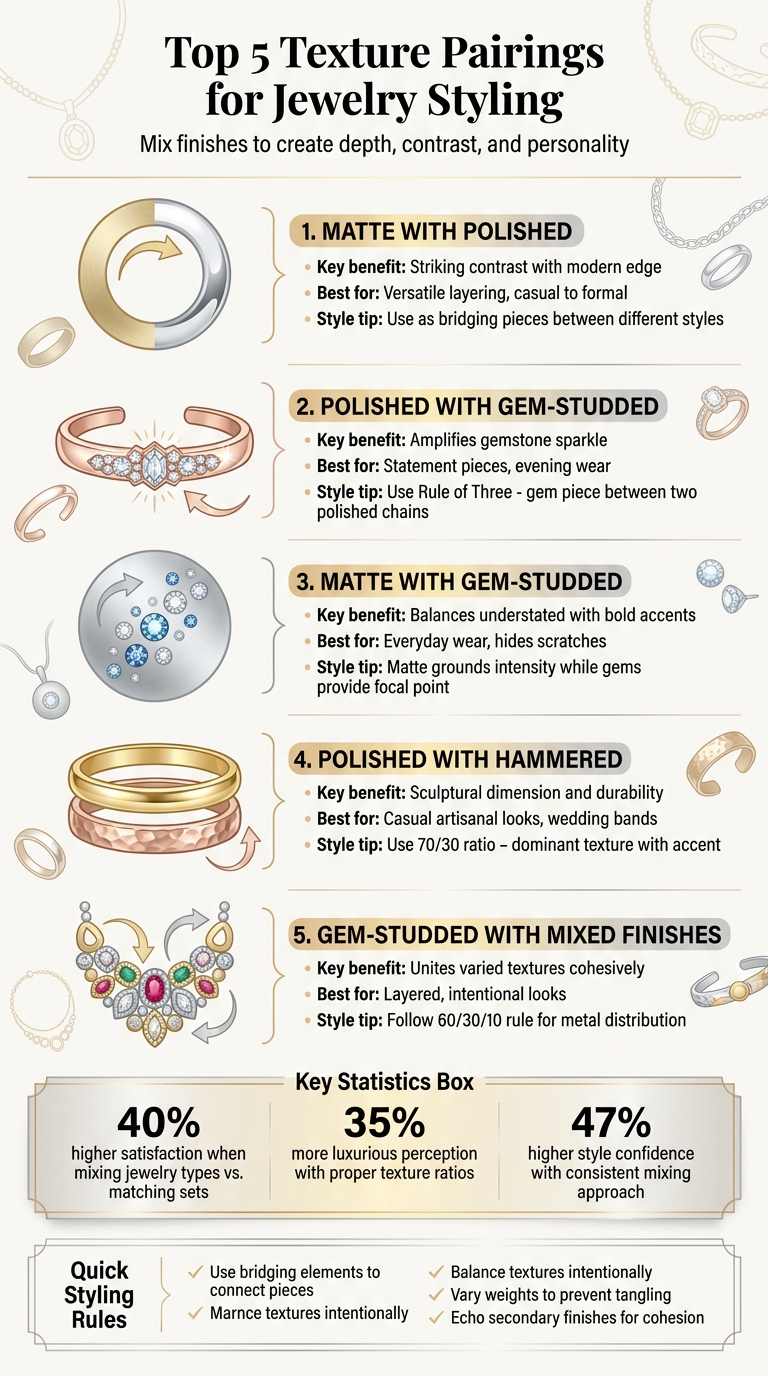
Mixing textures in jewelry is a game-changer for creating depth, contrast, and personality in your style. Forget about perfectly matching sets - today’s trends focus on pairing finishes like matte, polished, hammered, and gem-studded to achieve striking looks. Here’s a quick breakdown of the top texture pairings and how to use them:
- Matte with Polished: Combines subtle elegance with eye-catching shine for a modern, versatile style.
- Polished with Gem-Studded: Highlights gemstones while polished metal amplifies sparkle.
- Matte with Gem-Studded: Balances understated finishes with bold gemstone accents.
- Polished with Hammered: Blends sleek surfaces with organic textures for added dimension.
- Gem-Studded with Mixed Finishes: Unites varied textures and metals for a layered, intentional look.
Each pairing offers unique styling opportunities for stacking jewelry, casual wear, or formal events. The key is stacking your bracelets while balancing textures and using bridging elements to tie your pieces together. By experimenting with these combinations, you can elevate your jewelry collection and make every piece stand out.
5 Jewelry Texture Pairing Combinations Guide
1. Matte with Polished
Visual Contrast and Harmony
Combining matte and polished finishes creates a striking contrast that adds depth and a modern edge to jewelry. Instead of relying solely on color, this approach uses texture to make a statement.
Maya Thompson from Robinson's Jewelers highlights this beautifully:
"The high polish catches the light, creating a brilliant focal point, while the matte finish grounds the piece, adding a layer of sophisticated texture and subtlety..."
The secret lies in intentional design. Polished surfaces reflect light in ways that stand out against matte textures, making the contrast feel purposeful. This balance ensures smooth transitions, especially when layering multiple pieces.
Versatility for Layering
Pieces that mix matte and polished finishes act as perfect connectors, bringing together different styles in a jewelry collection. For layering, a ring or bracelet with both finishes can tie varied pieces together seamlessly. The textural differences also add visual separation, preventing layered chains or bracelets from blending into a single, indistinct mass.
To maintain harmony, echo the secondary finish in other pieces. This subtle repetition keeps the overall look cohesive. Whether you're layering or wearing a single piece, this combination works effortlessly across different settings.
Styling Flexibility for Different Occasions
Matte finishes bring a refined, understated vibe to casual outfits, while polished accents add sparkle for formal occasions. By choosing one finish as the primary element and using the other as a subtle accent, you can strike the right balance for any look.
At LaCkore Couture, you'll find a range of handcrafted jewelry that blends matte and polished textures. These designs offer endless versatility, making them suitable for any occasion.
2. Polished with Gem-Studded
Visual Contrast and Harmony
Blending polished and gem-studded textures taps into the modern aesthetic of mixing finishes to create eye-catching designs. Polished metals act as a sleek canvas, allowing gem-studded accents to take center stage. The reflective, smooth surface of polished metal enhances the sparkle of gemstones, creating a striking contrast that draws the eye. This interplay of textures adds depth and interest to any piece.
Gemstones also serve as a unifying element for different metal tones. For instance, a sapphire can seamlessly tie together white and yellow gold pieces when worn together. Clara Whitmore, Senior Gemstone Editor at Gemstones.life, highlights this adaptability:
"Diamonds' neutral sparkle complements colored gemstones, adding brilliance without clashing."
This combination of textures and tones opens the door to creative layering and styling possibilities.
Versatility for Layering
The Rule of Three simplifies layering. Position a gem-studded centerpiece between two polished chains to achieve balance and avoid visual overload. This method works because the polished chains frame the gemstones, letting them stand out without competition.
For rings, try the Sandwich Technique: place a gem-studded band between two polished bands to make the gemstones the focal point. When layering necklaces, heavier gem-studded pendants can anchor lighter polished chains, reducing the risk of tangling.
These techniques not only enhance the interplay of textures but also adapt to a variety of personal styles and occasions.
Styling Flexibility for Different Occasions
Adjusting the size and number of gemstones lets you tailor your look for any setting. Small diamond accents on polished chains are perfect for a professional environment, while bold, statement stones like sapphire or spinel paired with high-polish white gold add elegance to evening attire.
| Occasion | Styling Approach | Recommended Pieces |
|---|---|---|
| Everyday/Office | Minimalist & Subtle | Thin polished bands, small diamond studs, delicate gold chains |
| Casual/Brunch | Eclectic & Personal | Stacked rings with mixed gemstones, charm bracelets with polished links |
| Evening/Special Event | Bold | Large gem-studded necklaces, polished tennis bracelets, layered sapphire drops |
For stacking, place durable gemstones like diamonds or sapphires on the outer layers to shield softer stones and polished surfaces from scratches. When layering necklaces, aim for about one inch of spacing between each layer to create a clean, cascading look.
3. Matte with Gem-Studded
Building on the idea of polished contrasts, the combination of matte finishes with gem-studded accents brings a fresh angle, enriching the visual and textural interplay.
Visual Contrast and Harmony
Matte finishes create a subtle backdrop that allows gemstones to take center stage. Maya Thompson from Robinson's Jewelers describes this pairing as a "conversation between shine and shadow" - where the matte surface provides balance, and the gemstones deliver a striking focal point.
When you pair matte textures with faceted stones, the result is a depth that transforms simple designs into small-scale works of art. For example, a matte-finished stud with a central gemstone feels more dimensional compared to the same stone set in polished metal. This blend of textures also opens up opportunities for layering in versatile and eye-catching ways.
Versatility for Layering
Matte jewelry pieces act as grounding elements in layered looks, seamlessly connecting polished heirlooms with contemporary minimalist designs. They tone down visual intensity without losing their charm. For instance, when stacking rings, placing a gemstone-studded band between slim matte bands helps the centerpiece stand out, with the matte elements framing it beautifully.
For necklaces, a matte-finished chain can serve as a base layer beneath a gem-studded pendant, creating a sophisticated vertical line that adds depth without overpowering your overall look. Plus, the matte texture hides minor scratches from daily wear, making these pieces practical for everyday use. This adaptability makes it easy to tailor the look for any occasion.
Styling Flexibility for Different Occasions
Matte finishes are both durable and elegant, making them a perfect choice for transitioning from casual wear to formal settings. For everyday looks, pairing matte metals with organic gemstones like druzy citrine creates an artisanal vibe that pairs well with textured fabrics. In professional settings, satin or brushed finishes combined with small, faceted stones add depth while maintaining a polished and understated appearance.
For evening events, matte finishes act as a subtle frame that enhances the brilliance of diamonds or sapphires, making them appear larger and more radiant. The low-glare finish creates a contrast that amplifies the gemstone's sparkle. To keep the look cohesive, stick to metals and stones within the same temperature family - like pairing cool-toned silver with lapis lazuli.
If you're looking for expertly crafted designs that showcase this blend of matte textures and gem-studded accents, LaCkore Couture offers a stunning collection that embodies this aesthetic beautifully.
4. Polished with Hammered
Combining polished surfaces with hammered textures creates a striking contrast that transforms jewelry into sculptural art pieces. This mix has become a hallmark of 2026 designs, as many jewelers move away from uniform finishes and embrace more deliberate contrasts.
Visual Contrast and Harmony
Polished surfaces reflect light, drawing attention to focal points, while hammered textures scatter light, adding depth and dimension. This interplay keeps jewelry from appearing flat or monotonous. GIA Graduate Gemologist Elara Vance notes:
"pairing polished with matte, hammered with smooth, or textured with sleek builds visual interest without relying solely on color contrast".
To maintain balance, stylists often recommend a 70/30 ratio of dominant to accent textures. For example, a hammered finish can dominate while polished edges provide clean definition without overwhelming the design. This approach aligns with the broader trend of mixing textures to break away from traditional, uniform finishes.
Versatility for Layering
The dynamic contrast between polished and hammered textures also enhances layering. Combining these textures ensures each piece stands out, creating a well-defined and balanced look. For instance, pairing a smooth snake chain with a hammered link chain keeps the elements visually distinct and prevents tangling. Adding a hammered piece to a collection of polished heirlooms can also modernize the overall aesthetic, bridging classic and contemporary styles effortlessly.
On a practical level, hammered finishes are highly durable. They harden the metal and mask everyday scratches, making them perfect for high-contact areas like the center of rings or cuff bracelets. This combination of aesthetics and functionality makes layered pieces with mixed textures both stylish and practical for various occasions.
Styling Flexibility for Different Occasions
This texture pairing works across a range of settings. For casual wear, a hammered finish paired with a polished accent creates a relaxed, artisanal look that complements denim and other laid-back fabrics. In professional environments, a single textured piece - like hammered earrings - paired with a brushed or low-sheen bracelet adds subtle depth without being overly flashy. For formal events, polished edges provide sharp contrast against evening fabrics like satin or velvet, while hammered textures deliver a soft sparkle that photographs beautifully.
One standout use of this pairing is in wedding bands, where hammered centers meet polished edges to combine elegance with durability. Wide cuff bracelets featuring hammered centers and polished borders are also gaining popularity as statement pieces that blend streetwear influences with high-fashion appeal. For a cohesive look, try polished earrings with a hammered chain necklace to create a calm yet dynamic foundation that balances sparkle and texture. This pairing not only enhances visual appeal but also offers durability, making it a favorite among modern jewelry trends.
5. Gem-Studded with Mixed Finishes
Visual Contrast and Harmony
Mixed textures can take layered jewelry looks to the next level, especially when paired with gem-studded pieces. Combining gemstones with mixed metal finishes - like pairing a sapphire with white and yellow gold or using opals to connect varied textures - creates a cohesive, intentional style. The sparkle of the gemstones naturally draws attention, allowing different metal tones to blend seamlessly without clashing.
A helpful guideline here is the 60/30/10 rule: dedicate 60% to a primary metal or finish, 30% to complementary accents, and 10% to bold statement pieces, such as gem-studded jewelry. This ratio keeps your look polished and avoids a chaotic appearance. In fact, jewelry combinations that follow these principles are often perceived as 35% more luxurious compared to random pairings. For added depth, consider combining raw, unpolished gemstones with faceted cuts. The contrast between natural textures and refined craftsmanship can elevate your overall aesthetic.
Versatility for Layering
Gem-studded, mixed-finish pieces are perfect for layered styling, offering both visual separation and balance. Using different chain styles - such as rope, box, snake, or paperclip designs - prevents layers from blending into one another and keeps the overall look organized. Heavier gem-studded pendants serve as anchors, stabilizing lighter chains and ensuring they don’t tangle or flip.
Celebrity stylist Karla Welch emphasizes layering essentials:
"The most successful layered necklace combinations contain a delicate everyday piece, a medium-weight chain, and something with personal significance like a pendant or charm".
For practicality, place harder gemstones on the outer layers to protect softer stones or delicate metal finishes from scratches. This balance between style and functionality makes gem-studded, mixed-finish jewelry an ideal choice for everyday wear.
Styling Flexibility for Different Occasions
This jewelry pairing adapts beautifully to a range of occasions, from casual outings to formal events. For a relaxed, boho-inspired look, pair earthy stones like turquoise or tiger's eye with silver chains and organic textures like leather. In professional settings, minimalist stacks with thin bands featuring gemstones such as ruby or peridot add subtle color while remaining polished. For wristwear, mix leather, fabric, metal, and gem-studded cuffs to create a tactile, modern vibe.
For formal events, asymmetry can make a bold statement - try wearing one gem-studded earring alongside a simple stud. Layer diamond tennis bracelets with polished metal cuffs for a refined, multi-textured effect. Statement gemstones like sapphire or spinel are perfect for adding glamour to evening wear. In professional settings, follow the "rule of three": place a gem-studded statement piece between two simpler chains to create balance and focus.
Explore these versatile styling options with our exclusive collection at LaCkore Couture, where every piece is handcrafted to showcase both quality and creativity.
Conclusion
Mixing jewelry textures opens up a world of styling possibilities using pieces you already own. By combining matte with polished, hammered with gem-studded, or experimenting with mixed finishes, you can create endless combinations from your collection. In fact, shoppers who embrace mixing jewelry types report 40% higher satisfaction with their accessory collections compared to those who stick to matching sets.
Intentionality is key when pairing textures. Whether it’s blending matte with polished or hammered with gem-studded, thoughtful combinations elevate your look. Stick to the 60/30/10 balance to maintain harmony, use bridging pieces to tie different textures together, and vary jewelry weights to avoid tangling. These small adjustments can significantly enhance how your combinations are perceived. Interestingly, consumers who develop a consistent yet evolving jewelry mix report 47% higher confidence in their overall style.
These strategies work beautifully across casual, professional, and formal settings, making them versatile for any occasion. The modern approach to jewelry celebrates individuality and variety, moving away from rigid matching rules. As stylist Rachel Zoe aptly puts it:
"The tension between old and new creates the most compelling jewelry stories".
FAQs
How do I pick a “bridging” piece to connect different textures?
To find the perfect "bridging" piece for pairing different jewelry textures, go for something that balances contrasting finishes, such as matte and polished. Pieces with subtle or mixed textures often work well to create a sense of harmony. Another tip is to choose a piece that echoes the color or material of the surrounding jewelry, helping the overall look feel more intentional and well-coordinated.
What’s the easiest way to start layering textures without overdoing it?
To easily layer textures, begin with a standout piece, like a chunky or textured necklace, to serve as the focal point of your look. From there, incorporate one or two contrasting textures - think matte finishes, polished metals, or gem-studded pieces. Mixing different metal tones or experimenting with varying lengths can add depth and create visual appeal. Start with a minimal combination and build gradually to keep the overall look balanced without overpowering your outfit.
How can I prevent scratching when mixing gem-studded and metal pieces?
To keep your gem-studded and metal jewelry free from scratches, store each piece separately in soft-lined boxes or pouches. This prevents them from rubbing against each other. When cleaning or handling, use microfiber cloths to avoid abrasions. It’s also a good idea to choose settings like bezels for gemstones, as they offer extra protection by minimizing contact with surfaces. Taking these steps ensures your jewelry stays in top condition.