Skip to content




Ultimate Guide to Styling Platinum Jewelry
Platinum jewelry is prized for its durability, natural white sheen, and low maintenance, making it an excellent choice for daily wear or special occasions. Unlike white gold and platinum differences, platinum doesn’t require replating and retains its mass even with scratches. Its hypoallergenic nature also makes it ideal for sensitive skin.
Here’s what you’ll learn:
- Why platinum is long-lasting and easy to care for
- How to style platinum rings, necklaces, and bracelets for different occasions
- Best practices for pairing platinum with necklines, sleeves, and other metals
- Simple cleaning and storage tips to preserve its beauty
Whether you’re layering chains for a casual look or choosing a bold statement piece for a formal event, platinum is versatile and timeless. Read on for practical tips to style and care for your platinum jewelry.
What Makes Platinum a Good Choice for Styling
Platinum combines three standout features - its timeless appearance, impressive strength, and minimal upkeep - making it a fantastic option for versatile styling. Let’s break down how these qualities can elevate your jewelry choices.
Natural Shine and Timeless Look
Platinum’s cool, silvery-white tone is completely natural, which means its color stays consistent over time without requiring additional treatments. On the other hand, white gold has a yellowish base that relies on rhodium plating to maintain its white finish - a coating that can wear off with use.
This neutral tone makes platinum jewelry incredibly adaptable. Whether you’re going for a bold statement or a subtle accent, it pairs effortlessly with any outfit or neckline. Plus, its understated brilliance enhances the sparkle of both diamonds and colored gemstones.
"Platinum jewelry is a timeless investment in your style. Use it to anchor your look and mix textures for a sophisticated but effortless vibe." - Elena Morales, Top Fashion Stylist
But platinum isn’t just about looks - it’s also built to last.
Durability for Daily and Special Wear
Unlike gold, which loses small amounts of metal when scratched, platinum simply displaces the material, keeping its mass intact over time. This makes it a long-lasting choice, even for daily wear.
Its strength is especially valuable for securing gemstones. Platinum prongs are less likely to thin out or break, making them ideal for holding high-value diamonds. With a density of 21.45 g/cm³, platinum is 40–60% heavier than gold, giving it a solid, luxurious feel.
Low Maintenance and Long Lifespan
Platinum resists tarnishing, rust, and reactions to everyday elements like sweat, body oils, or cosmetics. Over time, it develops a soft patina that adds character and can be restored to its original shine with professional polishing every two to three years. Compare this to white gold, which requires frequent and costly rhodium replating to maintain its appearance. For everyday cleaning, all you need is warm water, mild soap, and a soft brush.
This low-maintenance quality ensures platinum remains beautiful year after year, making it a reliable choice for styling across any occasion.
If you’re looking for expertly designed platinum pieces that reflect these qualities, check out the exclusive collections at LaCkore Couture.
Platinum Jewelry Types and Their Styling Potential
Platinum works beautifully across almost every jewelry category. Knowing how to style each type - whether a ring, necklace, earring, bracelet, or charm - helps you create a collection that feels wearable and versatile. Each piece brings something unique to the table, enhancing outfits for a variety of occasions. Let’s dive into the styling possibilities of platinum rings, necklaces, and other standout pieces that can elevate your look.
Rings as Statement or Subtle Pieces
Platinum rings can either make a bold statement or add a subtle touch of elegance. A slim, polished band is perfect for everyday wear or stacking, offering a refined, understated look. On the other hand, a bold design - like an emerald-cut solitaire or a halo setting - can become the centerpiece of your outfit. For 2026, two-stone settings are gaining popularity, demonstrating platinum's adaptability to modern trends.
When stacking rings, simpler designs allow the natural shine of platinum to take center stage. For a statement, let one striking piece do the heavy lifting, ensuring it stands out against more minimal accessories.
Necklaces for Layered or Solo Looks
A platinum pendant on a sleek chain is a timeless choice, ideal for professional settings or minimalist attire. If you’re looking to add more dimension, layering thinner chains at varying lengths creates depth without feeling overwhelming. Platinum’s natural shine enhances both solo and layered looks equally well.
LaCkore Couture specializes in handcrafted necklaces designed to work beautifully on their own or as part of a layered set. They also offer options to personalize your look with charms and pendants, making each piece uniquely yours.
Earrings, Bracelets, and Charms
Platinum stud earrings are a go-to for almost any occasion, effortlessly transitioning from casual to business to formal settings. For a bit more flair, platinum hoops are a great choice, especially for evenings out or relaxed weekend vibes.
When it comes to bracelets, stacking thin bangles can add texture and interest, particularly when paired with a simple watch. Charms bring a personal touch to your jewelry collection. LaCkore Couture’s customizable charm options let you start with a base piece and add elements like zodiac signs, initials, or hearts over time. This approach allows your collection to evolve while keeping it fresh, without the need to replace entire pieces.
As your collection grows, understanding how to style and care for each piece ensures they’ll remain a timeless part of your wardrobe for years to come.
Pairing Platinum with Necklines, Sleeves, and Silhouettes
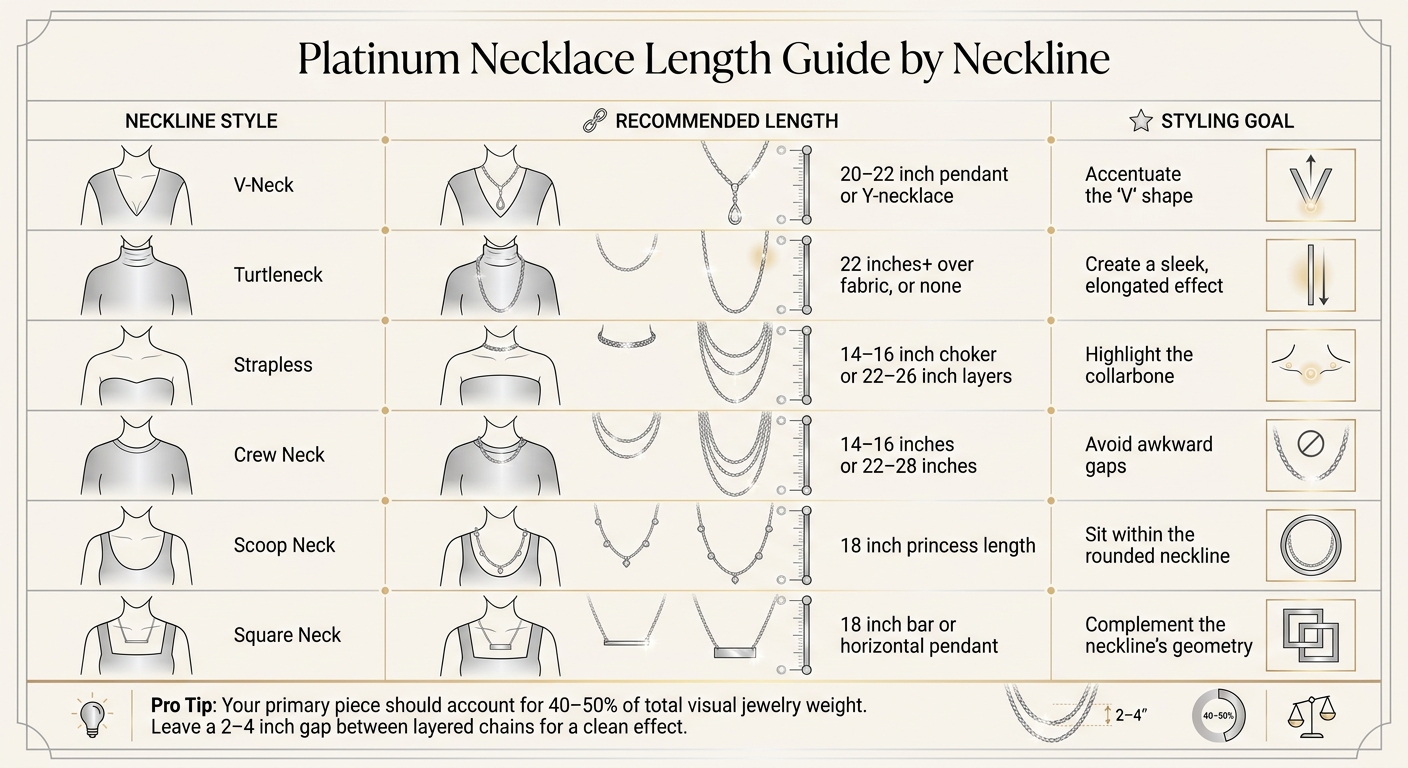
Necklace Length Guide: Pairing Platinum Necklaces with Every Neckline
Platinum jewelry is timeless, and knowing how to style it with different outfits can elevate your look. Once you’ve built your platinum collection, it’s all about wearing each piece in a way that complements your clothing and enhances your overall style.
Matching Necklaces to Necklines
The key to pairing necklaces with necklines is matching the necklace length to the shape of your neckline. For instance, a V-neck pairs beautifully with a 20–22 inch pendant or Y-necklace that mirrors the "V" shape. On the other hand, a crew neck can create an awkward gap with necklaces between 17–20 inches - opt for shorter lengths (14–16 inches) or go longer (22+ inches) to avoid this issue. Turtlenecks are unique: you can either skip a necklace entirely or wear a long chain (22–28 inches) over the fabric for a polished look.
Here’s a quick guide to help you decide:
| Neckline Style | Recommended Length | Styling Goal |
|---|---|---|
| V-Neck | 20–22" pendant or Y-necklace | Accentuate the "V" shape |
| Turtleneck | 22"+ over fabric, or none | Create a sleek, elongated effect |
| Strapless | 14–16" choker or 22–26" layers | Highlight the collarbone |
| Crew Neck | 14–16" or 22–28" | Avoid awkward gaps |
| Scoop Neck | 18" princess length | Sit within the rounded neckline |
| Square Neck | 18" bar or horizontal pendant | Complement the neckline’s geometry |
Each neckline has its own personality, and the right necklace can amplify that. But don’t forget about bracelets - they’re just as important when it comes to styling.
Choosing Bracelets Based on Sleeve Length
Sleeve length plays a big role in determining the best bracelet for your outfit. For sleeveless or off-shoulder styles, stacked bangles or a mix of slim platinum chains add visual interest to your bare arms. If you’re wearing short sleeves, a single mid-to-heavy gauge curb bracelet (3.5–4.5 mm) works well without overwhelming your look.
For long sleeves or outfits with professional cuffs, slim box chains or knife-edge links (2.0–2.3 mm) are a practical yet stylish choice - they slide easily under a cuff without adding bulk. If you’re also wearing a watch, place the bracelet on the opposite wrist to keep your look balanced and uncluttered.
Balancing Jewelry with Your Overall Silhouette
Once you’ve matched individual pieces to specific parts of your outfit, it’s time to think about the bigger picture: your overall silhouette. Longer platinum chains (20–24 inches) create a vertical line that draws the eye downward, making them ideal for balancing broader shoulders or a rounder face. On the other hand, shorter chains (16–18 inches) are better suited for petite frames or those with longer necks.
Here’s a helpful tip: your primary piece should account for about 40–50% of the total visual weight of your jewelry. For example, if you’re wearing a bold pendant, keep the rest of your jewelry minimal to avoid a cluttered look. When layering chains, leave a 2–4 inch gap between each one to create a clean, layered effect rather than tangled appearance.
"The foundation should represent roughly 40–50% of your total visual weight across all layers. This proportion ensures that additional pieces enhance rather than compete with your primary statement." - Rachel Fontaine, Design Signal
Styling Platinum for Everyday, Work, and Evening Occasions
Platinum jewelry is incredibly versatile, making it a go-to choice for any occasion. Whether you're heading out for a casual day, dressing for work, or attending an elegant evening event, platinum adapts effortlessly. Here's how to style it for different settings.
Casual and Everyday Looks
When it comes to everyday wear, keeping it simple is the way to go. Pair a delicate 1.4–1.7 mm platinum chain with a classic white T-shirt and jeans for a look that's both relaxed and polished. The cool, neutral tone of platinum complements shades like gray or navy, helping it stand out subtly.
Want to add some depth? Try stacking two or three thin platinum rings or layering a slim cable chain with a longer wheat-link chain. A single standout piece, like a small pendant or a low-profile cuff, can also add just the right amount of detail without feeling overdone.
Professional and Work Outfits
For the office, the goal is to strike a balance between understated and polished. A classic "chain-and-stud" combination works perfectly: think diamond or pearl studs (0.3–0.7 carat), a 16–18 inch fine cable or rope chain, and a slim bracelet or watch. This combination is subtle enough for most professional settings while still looking refined.
The finish of your platinum jewelry matters in work environments. Brushed or satin-finish platinum is a smart choice - it hides micro-scuffs and reduces glare under office lighting. For video calls, opt for slightly larger pieces, like 0.5–1.0 carat studs or chains with a 1.5–2.5 mm gauge, to ensure your jewelry remains visible on screen. In conservative industries like law or finance, stick to smaller, classic pieces. On the other hand, creative fields allow for more adventurous options, such as a sculptural bangle or a bold 1-carat pendant.
Evening and Formal Events
Platinum truly shines during formal occasions. Its natural brightness enhances the sparkle of diamonds, making it the perfect choice for statement pieces. For black-tie events or galas, consider a diamond-accented necklace or an eternity band with marquise-cut stones - these pieces catch the light beautifully in warm, dim settings.
Matching your necklace length to your outfit is key. A 15–18 inch chain pairs well with high-neck or crew-neck gowns, while a 21–23 inch chain is ideal for lower necklines and provides space for a pendant. If you're skipping a necklace, platinum bezel-set diamond studs near the face offer a clean, radiant look without overwhelming your attire. The trick is to let one piece - like a necklace or earrings - take center stage while keeping other accessories understated to support the overall elegance of your outfit.
Finishes, Layering, and Mixing Metals
Polished vs. Matte Finishes
When it comes to platinum jewelry, the finish you choose plays a huge role in both its appearance and how it holds up over time. Platinum, known for its durability and timeless appeal, can take on different personalities depending on the finish. A high-polish finish gives your jewelry a bright, mirror-like shine that’s perfect for formal occasions. However, it’s more prone to showing hairline scratches and will naturally develop a patina as it ages. On the other hand, matte or satin finishes offer a more understated, low-glare look that hides daily wear and tear better, making them a practical choice for active lifestyles or those who prefer a modern edge.
Here’s a simple tip: match the finish to your lifestyle. If your hands are often in contact with surfaces - whether you’re handling tools, working out, or constantly on the move - a matte or hammered finish will keep its appearance longer. Save high-polish pieces for those moments when their shine can truly stand out. A great compromise is a dual-finish design, such as a satin center paired with polished edges. This offers a striking contrast while keeping maintenance manageable.
How to Layer Necklaces and Bracelets
Layering necklaces and bracelets is all about balance and spacing. For platinum necklaces, aim for a 2-inch gap between each piece to keep them from tangling and to create a clean, layered look. A good starting point is a 16–18-inch chain for the shortest layer, followed by a 20–22-inch chain in the middle, and a 24-inch chain as the longest. When it comes to bracelets, stacking three to five pieces per wrist creates a stylish yet cohesive vibe. Mixing textures - like combining a slim platinum bangle with a chunkier chain bracelet - adds depth without looking overdone.
Combining Platinum with Gold and Silver
Mixing metals can be effortless if you follow a straightforward formula like the 60-30-10 rule. Let platinum dominate about 60% of your look, use a secondary metal like yellow or rose gold for 30%, and finish with a bridging piece - such as a mixed-metal pendant or two-tone watch - for the remaining 10%.
Platinum pairs beautifully with yellow and rose gold, thanks to the striking contrast between its cool tones and the warmth of gold. Jewelry designer Sophia Perez highlights this trend, saying, "The combination of platinum and yellow gold has quietly become one of the most interesting shifts in jewellery... it creates contrast in a way that feels effortless on the hand."
One thing to keep in mind: platinum is much denser than sterling silver, so when the two metals rub against each other, it can cause slight friction damage. To avoid this, store different metals in separate soft pouches when they’re not being worn. Smart choices in finishes, layering, and metal combinations ensure your jewelry not only looks stunning but also stays in great condition for years to come.
Cleaning and Storing Platinum Jewelry
Platinum's lasting beauty deserves the right care to keep it looking its best. With proper cleaning and storage, you can maintain its timeless charm.
Simple Cleaning Methods for Regular Use
Cleaning platinum at home is easier than you might think. Start by filling a bowl with warm water and adding a few drops of ammonia-free dish soap. Let your jewelry soak for 20–30 minutes. Then, use a soft-bristled or baby toothbrush to gently clean any crevices. Rinse the piece with lukewarm water and pat it dry with a soft, lint-free cloth. Skip paper towels - they might leave tiny scratches on the surface.
For a quick touch-up, a two-part jewelry polishing cloth works wonders. Use the treated side to polish and the untreated side to buff. Stay away from abrasive cleaners like toothpaste or baking soda, as they can dull platinum over time. If you’re after that mirror-like finish, a professional polish can restore the shine for $30–$100, depending on the piece and jeweler. Once your piece is sparkling, proper storage keeps it that way.
How to Store Platinum to Avoid Damage
To prevent scratches, store each platinum piece separately. Use soft fabric pouches, flannel bags, or individual compartments in a lined jewelry box.
Follow the "last on, first off" rule: put your jewelry on after applying makeup, perfume, or hairspray, and take it off before washing your hands or applying lotion. This helps avoid unnecessary exposure to chemicals. Remove platinum rings before gardening, working out, or using cleaning products containing bleach or chlorine. These substances can damage the finish and weaken soldered joints. To keep gemstones secure, have a jeweler inspect prongs and settings every six to twelve months.
What to Know About Platinum Patina
Even with the best cleaning and storage, platinum naturally develops a patina over time - a soft, satin-like finish caused by daily wear. Unlike silver tarnish, which results from chemical reactions, platinum's patina is simply a change in texture. The metal isn’t lost, just displaced, so your jewelry retains its weight and volume for decades.
Deciding whether to keep or remove the patina is purely a personal choice. Blake Lapides, Senior Director of Marketing at Blue Nile, explains:
"Platinum patina is not harmful to jewelry, does not weaken the metal and does not affect the value of the piece."
Some people love the vintage character patina adds, while others prefer the original high-gloss finish and opt for professional polishing every one to three years. Since no metal is lost during polishing, your piece can be refreshed as often as you like without affecting its size or weight.
At LaCkore Couture, we believe that proper care ensures your platinum jewelry remains a timeless treasure for years to come.
Conclusion: Getting the Most Out of Platinum Jewelry
Platinum stands out as one of the most adaptable metals for jewelry. Its naturally white hue complements virtually any outfit, its 95% purity ensures it’s gentle on sensitive skin, and its durability means it can last for generations without losing mass or requiring replating. Whether you’re layering delicate chains for a laid-back weekend or showcasing a bold statement ring at a formal event, platinum fits effortlessly into any style. The key to styling it lies in pairing pieces with your neckline, sleeve length, and the occasion - while mixing metals and finishes to reflect your unique taste.
To keep your platinum jewelry looking its best, clean it monthly with mild soap, store it separately in soft pouches, and have it inspected by a jeweler once a year.
Once you’ve nailed the art of styling and upkeep, curating your collection becomes second nature. LaCkore Couture offers handcrafted designs that embody this versatility. Each piece, made by owner Erin and her team of artisans, is designed to mix, match, and layer effortlessly - whether your style leans toward sleek minimalism or bold, layered statements.
FAQs
How do I choose the right platinum pieces to start a collection?
When building your jewelry collection, begin with pieces that match your personal style and fit seamlessly into your daily life. Start with essentials like sleek band rings, minimalist chains, or classic stud earrings. For everyday wear, focus on comfort and durability by choosing low-profile ring settings, sturdy medium-weight chains with reliable clasps, and designs that are either timeless or on-trend. Always verify the metal's purity and ensure it comes with certification from a trusted source.
What platinum necklace length works best for my neckline?
To pick the perfect platinum necklace length, consider your neckline and personal style. Chokers (14–16 inches) are a great match for high necklines, such as turtlenecks, creating a snug, elegant look. For V-necks or scoop necklines, longer chains (20–24 inches) enhance the neckline's shape beautifully. If you're wearing strapless or off-shoulder tops, you have options - pair them with a choker for a refined touch or go for a longer chain to make a bold statement.
Can I mix platinum with gold or silver without damaging it?
Yes, you can combine platinum with gold or silver to create stylish and contemporary looks. However, since platinum is denser, it may cause wear on softer metals like sterling silver. To prevent damage, store your pieces separately when not wearing them and try to reduce friction between metals when layering. When cleaning, treat mixed-metal pieces with care, using a gentle method suitable for the most delicate metal to keep them looking their best.