Skip to content




How To Layer Heart And Evil Eye Necklaces
Layering heart and evil eye necklaces combines love and protection in a single look. The heart symbolizes emotion and connection, while the evil eye wards off negativity. Together, they create an intentional message: "I protect what I love." To achieve this layered style:
- Start with necklace lengths: Use varied lengths like a choker (14–16 inches), princess (18 inches), or matinee (20–24 inches) to keep each piece distinct.
- Choose a focal necklace: Highlight either the heart or evil eye as your main piece.
- Mix chain textures and metals: Combine different styles like cable and rope chains, or mix gold and silver for contrast.
- Space layers properly: Leave 2–4 inches between necklaces to prevent tangling and clutter.
- Match your neckline: Adjust lengths to complement your outfit, whether it’s a V-neck, crew neck, or turtleneck.
Brands like LaCkore Couture offer handcrafted heart and evil eye designs, starting at $47, made with durable materials like 24K gold or sterling silver. With the right layering technique, these necklaces can reflect both your personal style and deeper meaning.
Selecting Necklace Lengths for Layering
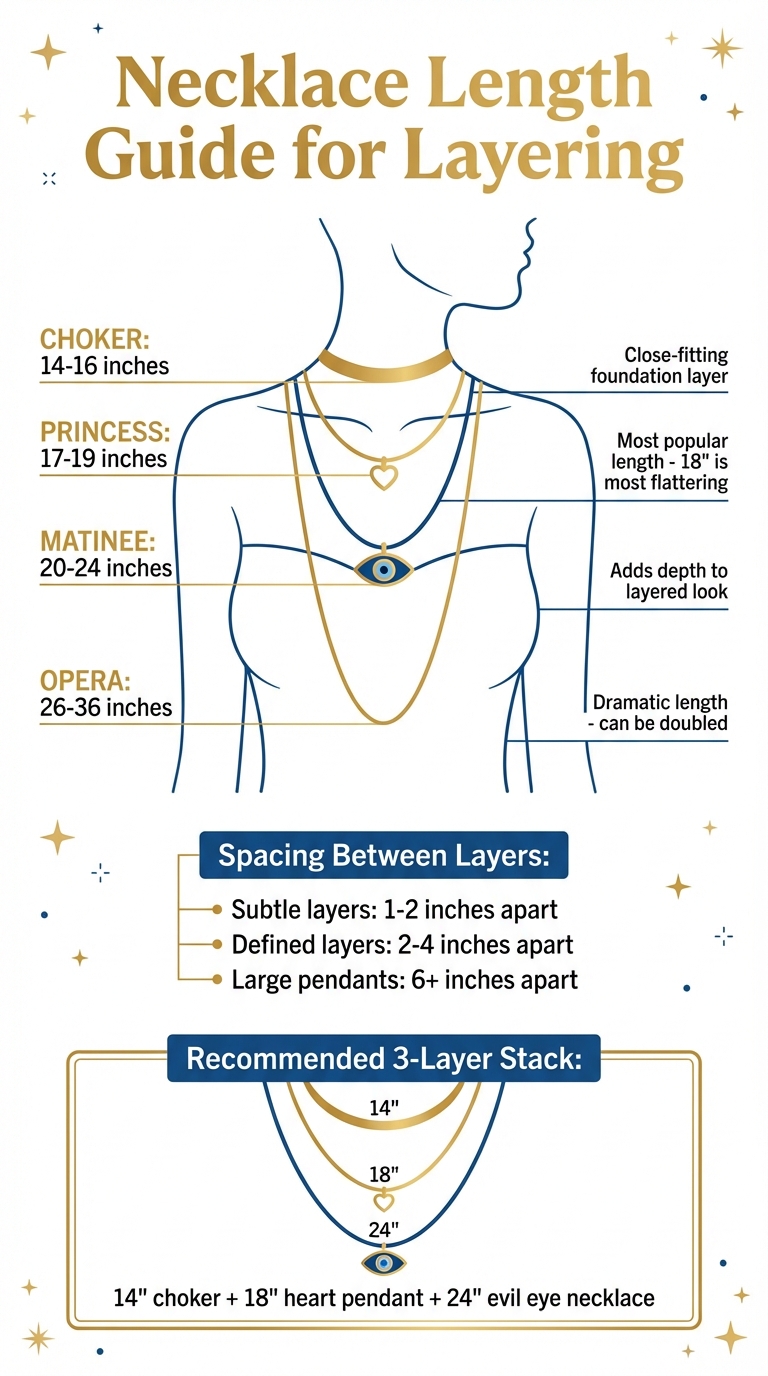
Necklace Length Guide for Layering Heart and Evil Eye Necklaces
Creating a stylish layered necklace look starts with understanding necklace lengths and how they sit on your body. Each length occupies a specific "zone", and spacing them correctly ensures each piece - like heart and evil eye necklaces - gets its moment to shine. Knowing these lengths is the foundation for building a balanced stack.
Standard Necklace Lengths
- Choker (14–16 inches): This sits snugly at the base of your throat, forming a close-fitting foundation layer.
- Princess length (17–19 inches): Falling just below the collarbone, this is the most popular length for pendants. An 18-inch chain is especially flattering on most people.
- Matinee length (20–24 inches): Positioned between your collarbone and bust, this length adds depth to your layered look.
- Opera length (26–36 inches): Extending to or below the bust, this dramatic length can be worn long or doubled for added versatility.
"The only real fundamental 'rule' of necklace layering is that you have to vary the lengths of the necklaces - that's what produces the 'layered' part." - Kailin Witte, Senior Editor, Etsy
To keep layered necklaces from tangling, space them 1–2 inches apart for subtle layers. For more defined layers, aim for 2–4 inches between chains, and leave at least 6 inches of spacing for large pendants.
Best Length Combinations for Heart and Evil Eye Necklaces
Now that the standard lengths are clear, let’s talk about how to layer heart and evil eye necklaces effectively.
Start with the princess length (18 inches) as your anchor. Position your heart necklace at or just below your collarbone to make it the focal point of your stack. Then, choose where to place your evil eye necklace:
- At choker length (14–16 inches) for a top-heavy look, with the protective symbol closer to your neck.
- Or at matinee length (20–24 inches) for a lower placement, balancing the stack with the evil eye hanging below.
For a well-balanced three-layer look, try a 14-inch choker, an 18-inch heart pendant, and a 24-inch evil eye necklace. If the chains are too close in length, use extenders or mini safety pins to adjust them.
Mixing chain textures - like pairing a cable chain with a satellite chain - can also help reduce tangling. Identical chains tend to move together and twist, so contrasting textures keep your layers neat while letting each piece stand out. These tips ensure your heart and evil eye necklaces not only shine individually but also enhance the overall meaning behind your layered look.
How to Layer Heart and Evil Eye Necklaces
Building on your knowledge of necklace lengths, here’s how to create a balanced, layered look that highlights both your heart and evil eye pieces.
Step 1: Choose Your Statement Necklace
Start with your standout piece - the one that will grab attention and anchor your layered look. This “hero” necklace could be a heart pendant or a detailed evil eye design from LaCkore Couture.
"There should be one foundational piece - the 'hero' chain, the one that stands out - that becomes the focal point of your layered chains, effectively letting the others act as complements." - Tara Dosh, Jewelers Mutual
For a bold look, opt for a necklace with a substantial pendant or a heavier chain. If you’re keeping it simple, a minimalist evil eye necklace works perfectly for everyday wear. When layering three necklaces, position your main piece in the middle - typically at princess length (around 18 inches) - to ensure it stands out without being overshadowed.
Step 2: Add a Contrasting Layer
Once your focal necklace is selected, pick a second piece that contrasts in design. For instance, if your main necklace features a heart pendant, pair it with an evil eye necklace - or vice versa. The key is to complement your statement piece without competing with it. A dainty chain with a small charm pairs beautifully with a bolder necklace. Place this second layer either above or below your main piece, ensuring there’s enough space between them for a clean, layered effect.
Step 3: Adjust Necklace Lengths
To avoid tangling or overlapping, ensure your necklaces are spaced out properly. Necklace extenders can help you customize the lengths. Layer your pieces from shortest to longest, so you can clearly see how each one sits. To keep everything organized and prevent twisting, consider using a necklace spacer or detangler at the clasp.
Step 4: Experiment with Metals and Textures
Mixing metals like gold and silver adds a modern touch to your layered look. Start with one dominant metal - like gold - and then introduce secondary metals or natural stone accents for depth. Gold-dipped pieces, for example, pair beautifully with silver or beaded chains.
"Mixing metals and textures is a great way to add a unique edge to your look. We recommend opting for simple, dainty necklaces when mixing metals to ensure things don't look too chaotic." - LaCkore Couture
Play with chain textures as well. A smooth cable chain can look stunning alongside a textured rope or beaded chain. Combining different textures not only enhances the visual appeal but can also reduce tangling. Balance heavier pendants with lighter chains to maintain a cohesive, polished appearance.
Step 5: Ensure Comfort and Fit
Once your necklaces are layered, test their fit and comfort. Each piece should rest naturally on your skin, with every layer distinct and visible. If chains bunch up, adjust their positioning or use a clasp spacer to keep them in place. Check how the necklaces move by turning your head or leaning forward - they should stay in place without constant adjustments. If a particular layer shifts too much, try swapping it out for a chain with a different weight or texture.
Styling Layered Heart and Evil Eye Necklaces
Pairing Necklaces with Different Necklines
The neckline of your top can make or break the way layered necklaces look. For V-neck tops, longer necklaces or lariats work beautifully, as they naturally follow the "V" shape of the fabric. If you're wearing a plunging V-neck, let your longest necklace layer mimic that deep neckline for a seamless look.
Crew neck tops, on the other hand, pair best with shorter chains that sit just above the fabric. Want to mix it up? Go bold with an extra-long necklace (think 24 to 34 inches) that falls dramatically below the neckline. Strapless or off-the-shoulder styles are a playground for creativity, giving you the freedom to stack multiple layers in varying lengths.
For high necklines or turtlenecks, longer, chunkier necklaces are the way to go. These work well against heavier fabrics, while delicate chains might get overshadowed. To keep things balanced, opt for striking pendants that sit just above the collar and hold their own against the material.
Once you've matched your necklaces to your neckline, the next step is pulling your outfit together with complementary colors.
Coordinating Colors with Your Outfit
Color plays a huge role in making your layered necklaces pop. Blue evil eye beads, for instance, look stunning when paired with gold vermeil or sterling silver. For a unified aesthetic, stick to warm tones like gold, bronze, or copper.
Feeling adventurous? Try mixing silver and gold for a bold contrast, or combine rose gold with yellow gold for a softer, more polished vibe. If you're rocking a monochrome outfit, heart and evil eye pendants with enamel or gemstone accents can add just the right amount of depth without clashing. Casual days invite playful, colorful enamel beads or statement pieces, while minimalist gold or silver chains are perfect for office wear. In the summer, delicate layers complement breezy fabrics, and in winter, chunky, high-shine pendants hold their own against thick knits.
These styling tips go beyond just accessorizing - they highlight the personal significance of each piece. If you’re searching for one-of-a-kind, handmade designs, LaCkore Couture offers a stunning range of heart and evil eye necklaces tailored for layering. Check out their collection to find pieces that combine fashion with a touch of individuality.
Layering Mistakes to Avoid
Once you've got the basics of layering down, it's just as important to steer clear of common missteps that could throw off your look.
Preventing Tangling and Clutter
Wearing necklaces of the same length is a recipe for tangled chains and clashing pendants. When necklaces sit at the same height, they tend to twist, collide, and shift awkwardly forward. To avoid this, experts suggest leaving 2 to 4 inches of space between each layer to keep everything visible and tangle-free.
Overcrowding is another issue to watch out for. Sticking to three or four necklaces strikes a good balance - too many can overwhelm your neckline and hide the details of individual pieces. If tangling remains an issue, using a layering clasp can help keep chains in place and prevent them from crossing.
Another tip: Put on your necklaces from longest to shortest. This simple trick can reduce the chances of chains crossing as you fasten them.
Mixing Metals and Motifs Properly
Mixing metals is a stylish choice, but it can look messy if done haphazardly. To pull it off, repeat each metal tone - such as gold or silver - at least twice in your stack. Pairing different chain styles, like a sleek snake chain with a textured paperclip or rope chain, adds depth while also minimizing the chance of chains interlocking.
Using only one chain style can make your stack look flat and uninspired. Instead, create contrast and interest by designating one necklace as your "hero" piece - perhaps a statement pendant like a detailed evil eye or a bold heart - and surround it with lighter, simpler chains.
Layering Technique Comparison
| Feature | Crowded/Unbalanced Arrangement | Balanced/Intentional Stack |
|---|---|---|
| Spacing | Less than 1-inch difference | 2–4-inch staggered intervals |
| Chain Style | All the same (e.g., fine cable chains) | Mixed textures (e.g., snake + paperclip) |
| Focal Point | Multiple heavy pendants competing | One clear "anchor" with supporting layers |
| Metals | Random mix of single pieces | Intentional repetition of tones |
| Tangle Risk | High (thin chains, same lengths) | Low (varied weights, use of spacers) |
Odd numbers of necklaces - like three or five - often create a more visually pleasing balance than even numbers. Placing your heaviest pendant on the longest chain can act as an anchor, keeping the entire look in place and preventing lighter chains from tangling with heavier ones. By focusing on intentional combinations and varied layering, you can achieve a polished and cohesive look every time.
Conclusion
To achieve a balanced and stylish layered necklace look, stick to a few key principles: keep 1–2 inches of space between each necklace, limit your stack to three pieces, and make a statement with a bold pendant.
"Choosing necklaces of varying lengths is perhaps the most important guideline to follow." - LaCkore Couture
What makes this style so special is how it blends personal expression with deeper meaning. Each piece you layer can tell a part of your story, creating a look that feels uniquely yours.
Quality materials are just as important as design. LaCkore Couture's necklaces, dipped in 24K gold and crafted from tarnish-free materials, are built to last and come with a Lifetime Guarantee. Starting at $47, these handcrafted pieces allow you to create a durable and personalized stack. Plus, their Charm Bar offers options like initials, birthstones, or symbolic charms to make each necklace even more meaningful.
Whether it’s a 16-inch choker, an 18-inch heart pendant, or a 20-inch evil eye, thoughtful layering paired with premium materials ensures your look remains polished. By focusing on intentional spacing, a standout focal piece, and quality craftsmanship, your layered necklaces will exude both balance and style.
FAQs
What’s the easiest 2-necklace combo to start with?
The easiest way to begin layering necklaces is by pairing a choker (14–16 inches) with a mid-length necklace (17–19 inches). This duo strikes a perfect balance and looks effortlessly stylish. If you're just starting out, stick to similar chain styles in different lengths. This helps prevent tangling while keeping the overall look polished and put-together.
How do I stop layered necklaces from tangling?
To keep necklaces from tangling, store them individually using tools like hooks, jewelry trees, or separate compartments. When layering necklaces, pick chains with different lengths and use extenders or layering clasps to maintain their position. Choose chains with similar weights to ensure they hang evenly, and add small spacers or charms to keep them separated. These simple tricks can help you enjoy your layered look without the hassle of tangles.
Can I mix gold and silver in the same stack?
Combining gold and silver in the same jewelry stack is a bold and modern way to elevate your style. This approach brings a touch of personality and flair to your look, making it uniquely yours.
To pull off this trend effortlessly, start by working with just two metals. This keeps the mix balanced and prevents it from feeling overwhelming. Stick to a cohesive theme - whether it's minimalist, boho, or classic - and use proportions and tones that complement each other. This way, your mixed-metal combination will look intentional and polished, rather than mismatched.