Skip to content




Checklist for Choosing Gala Jewelry
The right gala jewelry does 3 things at once: it fits the dress code, works with your gown, and stays comfortable for 4–6+ hours.
If I were choosing gala jewelry, I’d keep it simple:
- Check the event first: white-tie, black-tie, black-tie optional, and venue style all change what looks right
- Match jewelry with your gown: metal tone, fabric, color, and neckline should guide the piece
- Pick one main focus: statement earrings, a necklace, or a bracelet - not everything at once
- Test comfort before the night: heavy earrings, rough prongs, and loose clasps can become a problem fast
- Do one last check: walk, sit, reach, and remove one piece if the look feels too busy
A few rules do most of the work. Strapless and sweetheart necklines can take a necklace. High-neck, halter, one-shoulder, and lace-heavy dresses usually look better without one. Dresses with sequins or beadwork often need less jewelry, while satin or silk can handle more. And if a gala lasts half the night, comfort is part of style, not a side issue.
Quick comparison
| What I check | What I look for | What I avoid |
|---|---|---|
| Dress code | Jewelry that fits the event formality | Pieces that look too casual or too grand |
| Venue | Ballroom: classic sparkle; modern space: sculptural lines | Jewelry that clashes with the setting |
| Gown color | Warm tones with rose gold vs yellow gold; cool tones with silver, white gold, platinum | Metal tones that fight the dress |
| Fabric | Simple jewelry with beading/sequins; bolder pieces with satin/silk | Dress and jewelry competing for attention |
| Neckline | Necklace only when the neckline leaves room | Crowding the neck area |
| Comfort | Secure clasps, smooth prongs, wearable weight | Snagging, pinching, slipping, noise |
| Final styling | One focal piece | Too many statement pieces together |
In short: I’d use a checklist, not guesswork. That makes it much easier to choose jewelry that looks right, feels right, and lasts through the full event.
Start With the Dress Code and Venue
Before you pick a necklace or earrings, look at the invitation or event details first. The dress code tells you a lot about how formal your jewelry should feel.
Know the Gala Type and Venue
The type of gala sets the mood. A corporate gala usually leans polished and understated. A charity gala in a ballroom or historic mansion can handle color and bold statement jewelry. A museum or arts gala often gives you more space to wear something artistic or sculptural.
Use the tone of the event to decide if your jewelry should feel restrained, classic, or more expressive.
Ballrooms and historic mansions usually work best with classic elegance and higher-sparkle pieces. Museums, galleries, and modern venues tend to suit sculptural styles. It also helps to check what the evening includes. Dinner, dancing, and a red-carpet entrance can all affect comfort and security.
Once you know the tone of the event, match the jewelry to the gown.
Match Jewelry to the Formality Level
The dress code on the invitation is your clearest guide. White-tie is the most formal and the rarest. Black-tie calls for polished statement pieces. Creative black-tie gives you room to go bolder or more artistic. Black-tie optional sits one step below, where refined and slightly restrained choices usually look best.
| Dress Code | Gown Style | Best Jewelry Scale |
|---|---|---|
| White Tie | Full-length ball gown | Grand, classic pieces such as tiaras, opera-length pearls, or high-carat diamonds |
| Black Tie | Floor-length gown in satin, velvet, silk, or lace | Statement pieces such as chandelier earrings or bold necklaces |
| Creative Black Tie | Fashion-forward gowns or formal jumpsuits | Bold, artistic, or colorful statement pieces |
| Black-Tie Optional | Floor-length, midi, or refined cocktail dress | Elegant but restrained pieces such as pendant necklaces or classic studs |
With the formality set, the next step is looking at how the jewelry works with the dress itself.
Coordinate Jewelry With the Gown
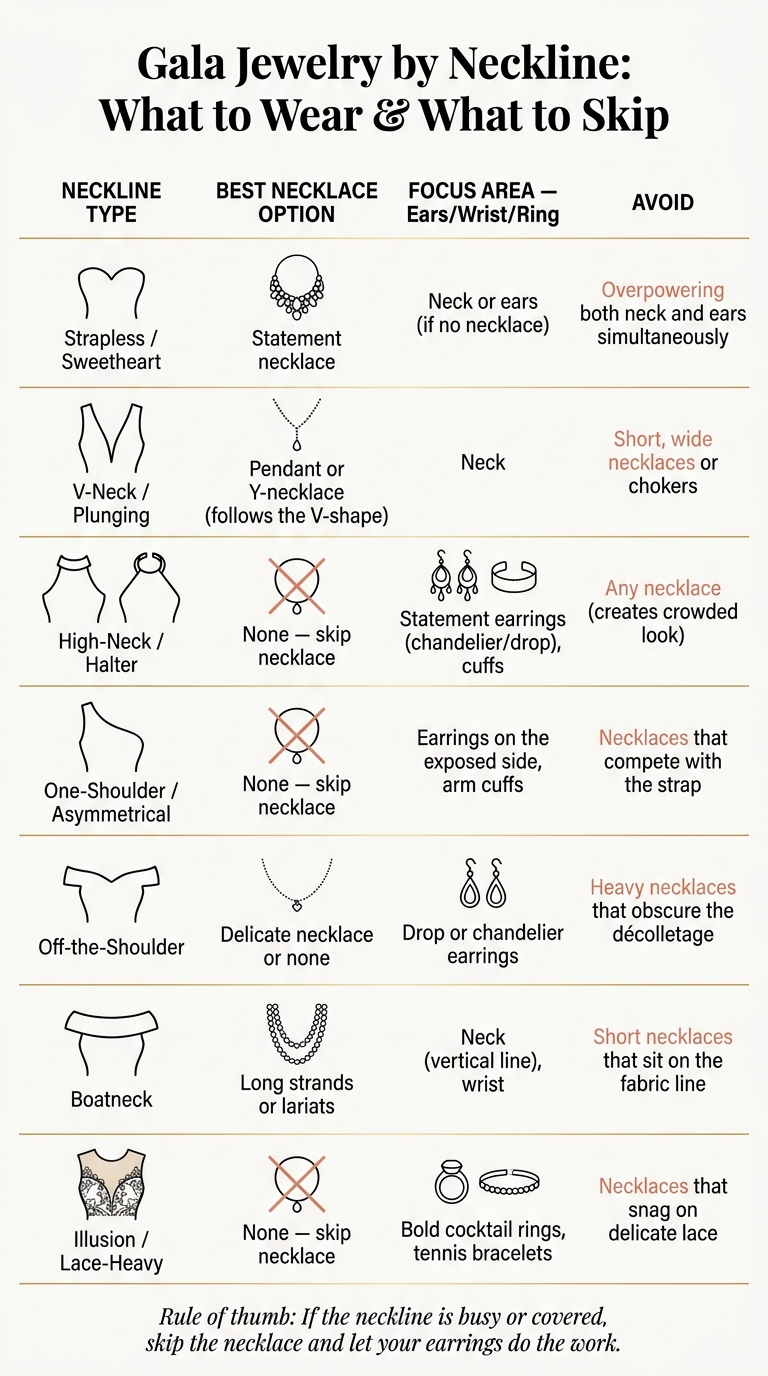
Gala Jewelry by Neckline: What to Wear & What to Skip
Match Metal Tone to Gown Color and Fabric
Start with the gown’s color, then look at the fabric and finish. Jewelry tends to look best when the metal tone lines up with the gown’s undertone. Warm gown colors like red, gold, and champagne pair well with yellow gold or rose gold. Cool gown colors like navy, emerald, silver, and black usually look best with silver, white gold, or platinum.
Rose gold gives you a bit more range. It can soften a black dress, and it also works well with softer shades like blush and lavender without looking out of place.
After color, pay attention to the fabric itself. A gown covered in beads or sequins already does a lot of the visual work, so jewelry should stay simple. Classic studs or a plain tennis bracelet usually fit better here. Satin or silk is different. Those fabrics give you a cleaner base, which means bolder or more textured jewelry can stand out in a good way.
One easy rule: don’t mix metal tones that fight each other, and don’t pair a highly ornate gown with jewelry that’s just as busy.
It also helps to check the gown’s hardware. If the dress has a visible zipper, belt buckle, or metallic thread-work, match your jewelry metal to those details so the whole look feels pulled together.
Choose Jewelry by Neckline
The neckline usually tells you if a necklace makes sense or not. Strapless and sweetheart gowns leave the collarbone open, so they pair well with a statement necklace. V-necks work best with a pendant or Y-necklace that follows the line of the dress. Keep the pendant ending at least 1 to 2 inches above the lowest point of the V.
High-neck, halter, one-shoulder, illusion, and lace-heavy necklines are a different story. In those cases, skip the necklace. Adding one can make the look feel crowded, and it may catch on delicate fabric. Put the focus on chandelier earrings or a cuff bracelet instead.
| Neckline | Best Necklace Option | Focus Area (Ears/Wrist/Ring) | Avoid |
|---|---|---|---|
| Strapless / Sweetheart | Statement necklace | Neck or ears (if no necklace) | Overpowering both neck and ears simultaneously |
| V-Neck / Plunging | Pendant or Y-necklace (follows the V-shape) | Neck | Short, wide necklaces or chokers |
| High-Neck / Halter | None - skip necklace | Statement earrings (chandelier/drop), cuffs | Any necklace (creates crowded look) |
| One-Shoulder / Asymmetrical | None - skip necklace | Earrings on the exposed side, arm cuffs | Necklaces that compete with the strap |
| Off-the-Shoulder | Delicate necklace or none | Drop or chandelier earrings | Heavy necklaces that obscure the décolletage |
| Boatneck | Long strands or lariats | Neck (vertical line), wrist | Short necklaces that sit on the fabric line |
| Illusion / Lace-Heavy | None - skip necklace | Bold cocktail rings, tennis bracelets | Necklaces that snag on delicate lace |
Once the silhouette is set, check metal quality, stone choice, and comfort before you buy.
Check Materials, Build Quality, and Comfort
Once you've matched your jewelry to the gown, take a close look at the piece itself. A necklace can look perfect with a dress and still be the wrong choice if it irritates your skin, snags fabric, or starts bothering you an hour into the night.
Pick Formal-Event Metals and Stones
Gold, white gold, silver, and platinum are standard picks for formal events. Go with metals that fit the piece’s finish and work well for your skin, especially if you’re prone to irritation.
For stones, diamonds are the easiest all-around option. They pair well with almost anything. Pearls and emeralds tend to work best in earrings or pendants, while sapphires or rubies are often a better fit for rings and bracelets.
Check Build Quality Before the Event
Before the event, inspect each piece by hand. Clasps should close securely. Earring backs should grip the post firmly. Prongs and edges should feel smooth when you touch them.
A simple test helps here: run a fingernail over prongs and edges. If anything feels rough, it can snag silk or satin.
Also check that stone settings don’t feel loose, and make sure the piece is nickel-free if you have sensitive skin.
After that, move on to comfort.
Test Comfort for a Multi-Hour Event
Wear your earrings for at least an hour before the event so you can tell whether the weight still feels okay over time. A pair that feels fine for five minutes can start to feel like a chore later.
Test bracelets and bangles while sitting, reaching, and moving your arms. You want to make sure they won’t get in the way during dinner or make too much noise every time you move.
Confirm your ring size before the event. And put on lotion, perfume, and hairspray before your jewelry, then let them dry all the way.
Once the piece clears those checks, you can turn to scale and styling before heading out.
Balance the Look and Run a Final Check
After you’ve matched the gown and checked each piece, step back and look at everything together.
This is the part where the outfit either clicks or feels a bit too busy. You’re not judging each item on its own anymore. You’re judging the whole look.
Keep Scale and Styling Balanced
The goal is balance, not volume.
Pick one focal piece and let the rest stay quiet. If the look still feels heavy, take off one item. In many cases, that means the necklace or a ring.
| Look | Accessory Combination | Issue | Checklist Fix |
|---|---|---|---|
| Minimalist Gown | Small studs + thin chain | Feels underdone for a gala | Swap for a statement necklace or chandelier earrings |
| Heavily Beaded Gown | Chandelier earrings + statement necklace | Visual overload; accessories compete with the dress | Remove the necklace; switch to simple studs or a delicate tennis bracelet |
A good rule here: if your eye doesn’t know where to land, there’s too much going on.
Add Personal Style Without Losing Formality
Once the balance feels right, add just one personal detail.
Keep your pieces in the same metal tone or finish, then bring in one polished motif, like a zodiac, heart, or evil eye design. That gives the look some personality without pulling it away from the formal dress code.
Final Pre-Event Jewelry Checklist
Before you head out, do one last pass.
- Recheck formality against the full look, then remove anything that feels too dressy or too plain
- Recheck metal tone against the gown and hardware
- Confirm the necklace still suits the neckline after dressing
- Do one last clasp and setting check
- Sit, reach, and walk once more
- If the look feels crowded, remove one item
- Pack spare earring backs and a soft pouch in your clutch for the night
FAQs
How do I choose jewelry if my gown already has embellishments?
If your gown has dramatic embellishments, detailed accents, or heavy beading, keep your jewelry simple to create balance. A dress with that much going on is already the main focus, so minimal accessories help you avoid a cluttered look.
Skip bold statement necklaces. Instead, go with delicate pieces like diamond studs, a simple gold or silver bracelet, or refined rings. That way, your whole look feels polished and elegant.
What jewelry should I skip for a high-neck or one-shoulder dress?
With a high-neck dress, skip the necklace. It can make the outfit feel busy and compete with the neckline. Instead, let other pieces do the work: statement earrings, bracelets, or rings.
With a one-shoulder dress, keep the necklace minimal or leave it out altogether. The neckline already draws the eye, so adding more near the neck can feel like too much. A simple way to balance the look is to wear one bold earring on the exposed side and a chunky cuff or bracelet on the opposite wrist.
How can I tell if gala jewelry will stay comfortable all night?
Choose hypoallergenic materials, like cultured pearls, to help prevent irritation. If you'll be wearing your jewelry for hours, lightweight, tarnish-free options like steel can feel a lot better by the end of the night.
Before the gala, take a minute to check that clasps are secure. Skip anything that feels heavy or gets in the way when you move. Jewelry that fits well is less likely to bother you during a four- to six-hour evening.