Skip to content




Daily Habits to Protect Handmade Jewelry
My rule for handmade jewelry: put it on last, take it off before water or chores, and wipe it before storage. I also spend about 30 seconds checking for loose parts before wearing a piece.
I follow the maker’s instructions first and let the most delicate part guide my care. A sturdy metal band doesn’t mean its stone, plating, or glued setting can handle the same cleaning.
Here’s the daily checklist I use:
- Apply products first. Get dressed and let lotion, perfume, and hair products dry before adding jewelry.
- Remove it before water or chemicals. Keep pieces away from showers, pools, cleaners, and hand sanitizer.
- Take it off for sleep, exercise, and chores. Avoid sweat, snags, pressure, and knocks.
- Handle clasps and chains gently. Don’t pull on charms or force tangled links apart.
- Keep layers apart. Start with about 2 inches between necklace lengths, then check for rubbing.
- Wipe and store separately. Use a soft cloth, let moisture dry, and keep each piece in its own pouch or lined compartment.
- Check for damage. Set aside jewelry with loose stones, bent links, or faulty clasps until it’s repaired.
<u>When I’m unsure about a material or cleaning method, I ask the maker before trying it.</u>
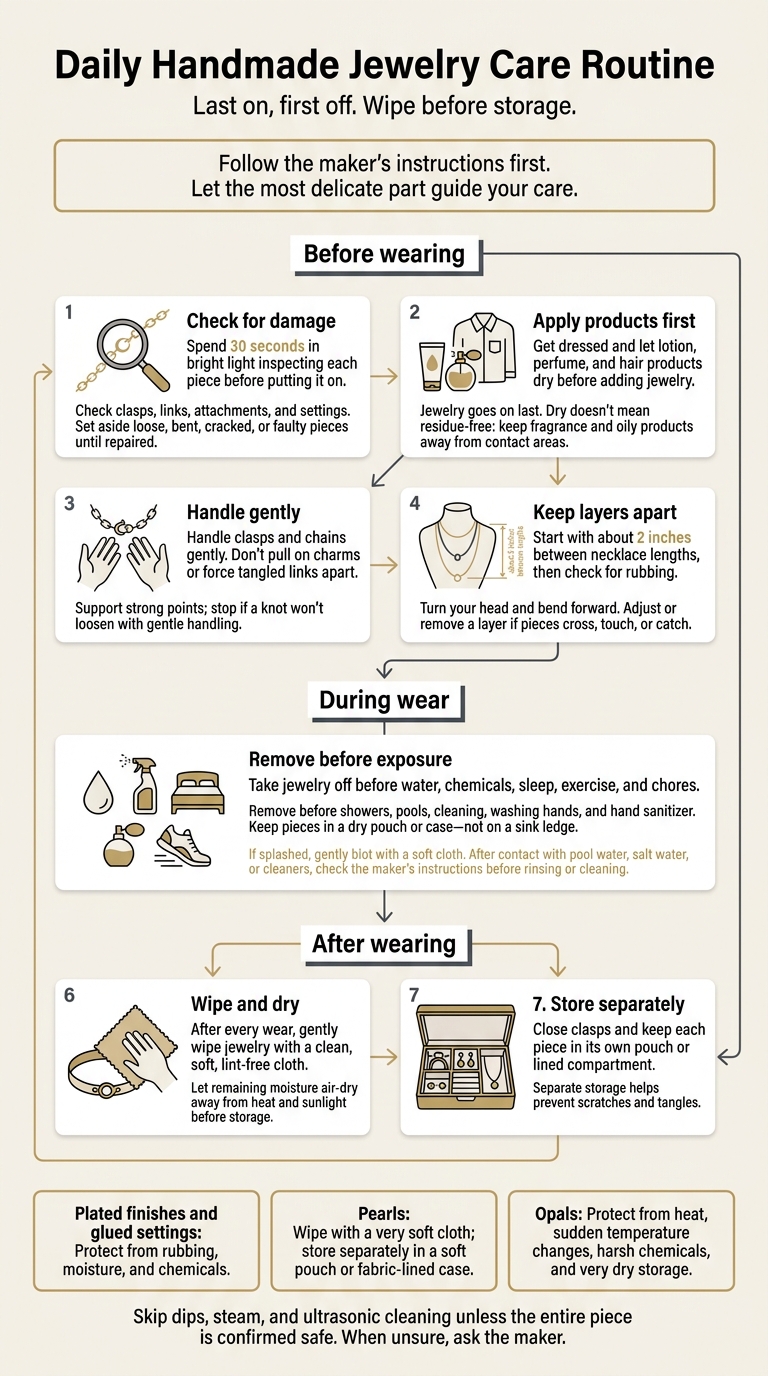
Daily Handmade Jewelry Care Routine
Know Your Jewelry’s Metals, Finishes, and Stones
Check the listing, receipt, packaging, or stamp to confirm your jewelry’s metal, finish, and stones. Solid gold is gold or a gold alloy throughout; 14K and 18K indicate its gold content. Sterling silver contains at least 92.5% silver and is often marked “925.” Gold color alone won’t tell you what the metal is. If the markings aren’t clear, ask a jeweler rather than trying an abrasive home test.
Gold-filled jewelry has a thicker bonded gold layer over a base metal. Gold-electroplated jewelry has a thinner gold layer. Repeated rubbing, sweat, chemicals, and water can wear through plated finishes, so protecting them matters more than aggressive cleaning. Pay attention to when you apply products and how much moisture your jewelry encounters.
Let the most delicate component guide your care. Scratch resistance is only one part of durability. Settings and glued components may respond differently to moisture, chemicals, friction, and cleaning tools. Skip dips, steam, and ultrasonic cleaning unless you’ve confirmed that the entire piece can handle them.
Pearls need soft, separate storage and should stay away from perfume, hairspray, cosmetics, and cleaning agents. After each wear, wipe them with a very soft cloth. Store them separately in a soft pouch or fabric-lined case, and avoid ultrasonic cleaners and steam.
Opals need protection from heat, sudden temperature changes, and harsh chemicals. Keep them in a padded compartment away from harder gemstones, and avoid very dry storage.
1. Put Jewelry on After Dressing and Applying Products
Damage prevented
Once you know the materials, follow one simple daily rule: jewelry goes on last. Getting dressed first helps prevent chains, earrings, and charms from snagging on collars, sweaters, or hair and pulling on delicate connections. Products can also leave residue on settings, links, and clasps.
Daily care routine
Finish dressing, applying makeup, and styling your hair before putting on jewelry. Apply lotion, sunscreen, perfume, and hair products first, then wait until they’re fully dry and no longer tacky.
Wash and dry your hands if they have product on them. Put on necklaces once collars are in place, earrings after styling your hair, and bracelets and rings after lotion has absorbed. Handle pieces by their clasps, bands, or settings instead of pulling on delicate attachments.
Remove jewelry before reapplying products during the day, and keep it away from water, sweat, and cleaning products.
Material-specific precautions
Dry doesn’t mean residue-free. Keep fragrance and oily products away from areas where jewelry touches your skin. Lotion beneath rings or bracelets can still transfer to settings and finishes. If a product gets on a piece, wipe it with a clean, soft, dry cloth. Follow the maker’s care instructions or learn how to clean gold plated jewelry for treated surfaces.
2. Take Jewelry Off Before Water or Chemical Exposure
Damage prevented
After products, moisture and cleaners pose the next biggest threat to jewelry. Repeated exposure to moisture and soap can leave residue around charms and settings. Chlorine and bleach can damage gold alloys, while salt water can discolor or corrode metals. Materials react differently, so natural stones, plating, and glued details may need extra protection.
Daily care routine
Take jewelry off before showering, bathing, swimming, using a hot tub, washing dishes, or cleaning. Remove rings and bracelets before washing your hands or applying hand sanitizer. Place pieces in a dry pouch or case, not on a sink or tub ledge.
If jewelry gets splashed, remove it promptly and gently blot it with a soft, lint-free cloth. Skip hard rubbing, hair dryers, and other heat sources.
Material-specific precautions
Keep gold-plated pieces dry, and protect plated finishes, pearls, porous stones, and glued settings from moisture and cleaners.
If jewelry comes into contact with bleach, pool water, or cleaners, check the maker’s instructions before rinsing or cleaning it. For LaCkore Couture pieces, use the product-specific care guidance rather than a generic cleaning method.
If you spot cloudiness, discoloration, peeling, or a loose setting, contact the maker or a qualified jeweler. Do not use household cleaners, polishing products, steam, or ultrasonic cleaning. Let the piece dry fully before storing it.
3. Take Jewelry Off Before Sleep, Exercise, and Chores
Damage prevented
After removing jewelry for water or products, leave it off for sleep, exercise, and hands-on tasks. Delicate handmade details, including fine links, charms, and settings, can bend or snag.
Chains and earrings can catch while you sleep. Exercise exposes jewelry to pressure and impact, while chores and gardening can scratch metal and strain clasps.
Daily care routine
Remove jewelry before bed, workouts, or chores. Make this part of getting ready, checking for any pieces that might catch on something or take a hit.
Choose a safe storage spot, such as a soft pouch or lined box. Close clasps before putting pieces away, and don’t leave jewelry loose in pockets.
After a workout, wait until you’ve showered and dried your skin completely before putting jewelry back on. Handle each piece gently, and keep it from rubbing against other jewelry.
Material-specific precautions
Take off plated pieces, fine chains, hoops, and charm-heavy styles before sleep, exercise, or heavy chores. Protect natural stones from impacts.
4. Handle Chains, Clasps, and Charms Gently
Damage prevented
Handle the hardware, not the decorative parts, when putting jewelry on or taking it off. Tugging on a charm, pendant, or extender puts strain on jump rings, clasps, and fine links. Support the piece at the clasp or another strong point - not by its pendant, prongs, or extender.
Daily care routine
Fasten necklaces and bracelets over a folded microfiber cloth or towel on a clear surface. Hold the chain near the clasp, open the clasp fully, and close it slowly. Don’t stretch the piece to make it reach.
To untangle a chain, keep it flat and work slowly in bright light. Gently separate the loops with your fingertips. Never pull both ends or use pins, needles, or tweezers. These can tighten knots, scratch finishes, or bend links. If a knot won’t loosen with gentle handling, stop and take the piece to a jeweler.
Material-specific precautions
Use an especially light touch around plated finishes, thin silver links, pearls, and natural-stone settings. Keep stones away from sharp tools.
Check clasps, links, and prongs before wearing your jewelry. If a chain looks warped, a clasp feels stiff, or a prong is loose, don’t wear the piece until a jeweler checks it.
5. Keep Layers From Rubbing or Tangling
Once each piece is secure, check how the layered chains move together.
Damage prevented
Layered necklaces need room to move freely. Rubbing can scratch finishes, wear down plating, strain links, and chip stones.
Daily care routine
Put on the shortest, lightest necklace first, then add longer chains one at a time. Leave about 2 inches between lengths. Keep heavier pendants lower so they don’t pull across other layers.
Before heading out, turn your head and bend forward. Check whether any pieces cross, touch, or catch. If they do, adjust the lengths, change their order, or remove a layer.
For LaCkore Couture stacking jewelry styles, start with two pieces, check the contact points, then add another only if the chains stay separate.
Check the layers again after taking off a coat or scarf.
Material-specific precautions
Keep plated pieces and sterling silver away from rough or textured chains that could rub against them. Give pearls, opals, and other sensitive natural stones extra space from heavy or sharp-edged pendants.
If you can’t avoid contact, wear sensitive stones separately. Follow the maker’s guidance for any treated or unidentified stone.
After wearing your necklaces, wipe each piece and store it separately to prevent more rubbing.
6. Wipe Jewelry After Wearing and Store It Separately
Damage prevented
Wiping jewelry after wear removes sweat, oils, and lotion before they build up. Storing pieces separately helps prevent scratches and tangles that can strain delicate chains, clasps, and charms.
Daily care routine
After every wear, gently wipe jewelry with a clean, soft, lint-free cloth. Remove residue from sturdy surfaces before it sets, avoiding settings and finishes. If any moisture remains, let the piece air-dry away from heat and sunlight before putting it away.
Close clasps and store each piece flat in its own pouch or lined compartment. Keep the storage case away from bathrooms, humidifiers, heaters, radiators, and direct sunlight.
Material-specific precautions
For silver and other metals that tarnish, jewelry anti-tarnish strips may help. Place them in the storage container, not directly against gemstones or delicate finishes. Replace them according to the manufacturer's instructions.
Pearls and opals need different storage care. Avoid overly dry conditions, and ask the maker before adding humidity-control products. Wipe pearls with a very soft cloth after each wear.
For plated, intentionally oxidized, or unidentified materials, use only an untreated dry cloth until the maker confirms another method. Avoid toothpaste, abrasives, harsh chemicals, and treated polishing cloths unless they're approved for that exact piece.
7. Check for Loose Parts and Damage Before Wearing
Damage prevented
A quick check before each wear can catch small problems before you lose a stone or charm, or break a strand. Stop wearing the piece if the clasp fails, a jump ring has a gap, a stone moves, or a prong snags. A loose stone can damage both the gem and its setting.
Daily care routine
Spend 30 seconds in bright light inspecting each piece before putting it on. Test the clasp and check jump rings, chain links, and charm attachments. Make sure earring posts are straight, backs fit securely, and hook or lever-back closures latch fully.
Look for tilted stones, gaps in settings, and bent or missing prongs. On strands, check for frayed thread, loose knots, cracked beads, and weakened elastic. Set aside anything that looks loose, bent, cracked, or out of place. Don't try to repair it yourself.
Contact the maker with the item name, order number, a short description of the problem, and photos. For LaCkore Couture pieces, use the brand’s customer-service channel for repair guidance.
Material-specific precautions
Normal tarnish or patina isn't the same as flaking, pitting, corrosion, cracks, or sharp edges. Inspect pearls, opals, and other delicate stones without pressing or tapping them. If a finish changes unexpectedly or a stone seems loose, ask the maker before polishing or cleaning.
Keep any piece that fails this check off until it's repaired.
Quick Reference: When to Remove or Protect Jewelry
Use this checklist for a fast yes-or-no decision. The last column shows which pieces need extra care.
| Daily situation | Why remove or protect the jewelry | Best action | Needs extra care |
|---|---|---|---|
| Showering or bathing | Soap and moisture can dull finishes and leave residue. | Remove before showering or bathing; dry fully before storing. | Plated or vermeil pieces, sterling silver, natural stones, glued details. |
| Swimming, hot tubs, or salt water | Chlorine, salt, and heat can damage materials. | Remove before entering pools, hot tubs, the ocean, or saunas. | Pearls, coral, turquoise, opals, plated finishes, delicate settings. |
| Exercise or heavy perspiration | Sweat, friction, and impact can damage delicate parts. | Remove before workouts; wipe after accidental exposure. | Fine chains, dangling charms, delicate clasps, plated finishes, glued or fragile settings. |
| Sleeping | Bedding and hair can snag jewelry. | Remove before bed; store separately. | Fine chains, layered necklaces, delicate earring backs, dangling charms, complex components. |
| Applying skincare, sunscreen, perfume, or hairspray | Products can leave buildup or discolor materials. | Apply products first, let them dry, then put jewelry on last. | Pearls, coral, turquoise, opals, amber, plated finishes, treated stones. |
| Layering necklaces, bracelets, or rings | Contact can cause scratches and tangles. | Leave space between layers; avoid sharp edges and snags; separate pieces after wear. | Fine chains, charms, natural stones, pearls, delicate finishes. |
| Storage between wears | Contact causes scratches; humidity can speed tarnishing. | Wipe with a soft, lint-free cloth; store separately in soft-lined pouches or compartments. | Softer stones, pearls, plated or vermeil pieces, detailed designs, charm chains. |
| Accidental moisture exposure | Trapped moisture and residue can damage materials. | Pat dry, then let air-dry fully before storing; follow the maker’s instructions for any remaining residue. | Pearls, coral, opals, turquoise, porous or treated stones, glued parts, unknown or vintage materials. |
| Household chores | Cleaners, knocks, and snags can damage jewelry. | Remove before chores or handling chemicals. | All handmade pieces, especially rings and charm bracelets. |
For handcrafted jewelry, the most delicate part sets the care rules. Follow the maker’s instructions first, since stones, finishes, charms, and settings can vary from piece to piece.
A splash is not a soak. If jewelry touches pool water, salt water, or cleaners, check the maker’s instructions before rinsing or cleaning it.
Conclusion: Keep a Gentle Daily Care Routine
Small daily habits help protect handmade jewelry from friction, moisture, and knocks. Stick to last on, first off: put jewelry on last and take it off first.
After each wear, wipe each piece with a soft, lint-free cloth. Fasten clasps and let pieces dry before storing them separately. Before wearing them again, check for damage. If a stone moves or a clasp won’t close securely, stop wearing the piece and place it in a labeled pouch until it’s repaired.
Follow the maker’s care instructions instead of using a generic cleaning method. Take extra care with gold charms, fine links, and natural stones to help keep them secure, clean, and ready to wear.
FAQs
What if a soft cloth doesn't remove buildup?
Use a soft-bristled brush to gently remove dirt and residue. For stubborn grime, soak the piece for a few minutes in warm water mixed with mild, non-antibacterial dish soap - but only if the solution is non-abrasive and safe for your jewelry’s materials.
After cleaning, dry the piece thoroughly with a lint-free cloth. Keep harsh chemicals, abrasive tools, and polishing cloths away from delicate gold-plated jewelry.
How can I tell if my necklaces are rubbing?
Check chain links, clasps, and charm or pendant attachment points regularly for signs of wear. Discoloration, thinning metal, or snagging on clothing or skin may point to friction from daily use.
Store necklaces separately in soft-lined compartments or airtight containers. Keeping them from touching other jewelry helps prevent scratches, tangles, and damage.
How should I pack delicate jewelry for travel?
Pack each piece separately to prevent scratches and tangling. Use jewelry boxes with soft-lined compartments, fabric pouches, or muslin and foam to protect each item. For sterling silver, add anti-tarnish strips to an airtight container to reduce exposure to air and humidity.
Before packing, check that every piece is clean and completely dry to help prevent rust or damage. Keep your jewelry away from extreme temperatures and moisture throughout your trip.