Skip to content




How To Care for Engraved Jewelry: 7 Tips
My rule for engraved jewelry: gentle care, not harder scrubbing. I follow the maker’s instructions first because metals, plating, gold initials charms, and finishes need different care.
Here’s the seven-step routine I recommend:
- Remove before exposure: Take jewelry off before water, chemicals, exercise, and manual work.
- Wipe after each wear: Use a clean, soft cloth to remove oils and dust.
- Wash only when safe: Use mild soap and lukewarm water only if the maker allows it.
- Dry fully: Check grooves and settings before putting jewelry away.
- Choose dry storage: Avoid heat and sunlight, but follow stone-specific storage needs.
- Keep pieces separate: Use individual pouches or compartments to prevent scratches and tangles.
- Check monthly: Spend about five minutes looking for buildup, worn finishes, loose stones, and damaged clasps.
Care can slow wear, but it won’t stop it. <u>If a stone or attachment is loose, stop wearing the piece and ask a qualified jeweler for help.</u>
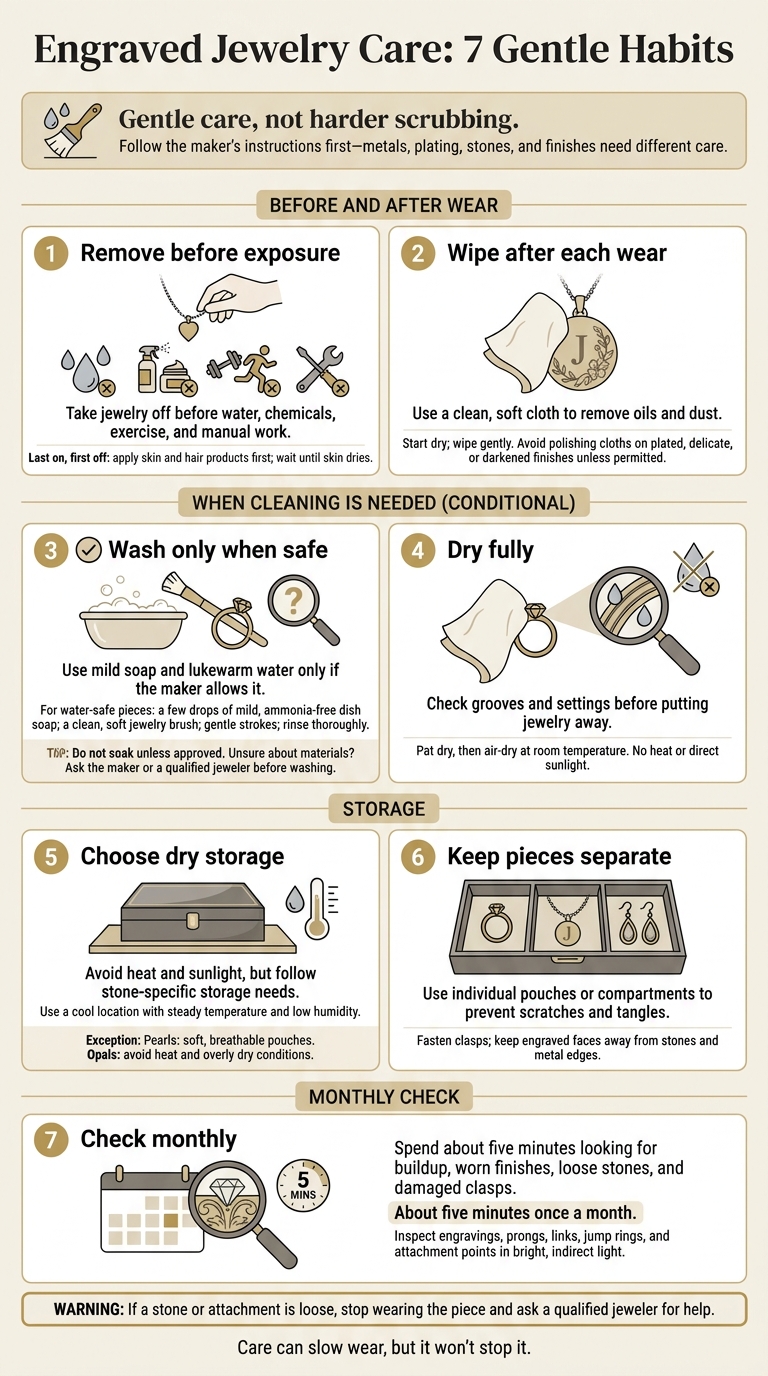
Engraved Jewelry Care: 7 Gentle Habits
1. Remove Jewelry Before Water, Chemicals, and Physical Activity
Daily habits are your first line of protection for engraved details.
Take off engraved jewelry before showering, bathing, or swimming. Soap, shampoo, chlorine, salt water, and humidity can dull metal and leave residue in recessed engraving. Chlorine can also pit gold alloys and weaken settings, so keep jewelry out of pools and hot tubs.
Remove jewelry before exercise, cleaning, gardening, or other manual work. Sweat, friction, impacts, and contact with tools can scratch metal, bend prongs, or snag chains.
With skin and hair products, follow a last on, first off routine. Apply lotion, sunscreen, perfume, and hairspray before putting on jewelry, and wait until your skin dries. This helps keep wet products from dulling the finish or clogging the engraving.
Before bed, take off necklaces and dangling charms to prevent snags, twists, and strain on clasps.
2. Wipe Jewelry After Each Wear
Wipe jewelry after each wear to remove residue before it settles into the engraving. Use a clean, soft microfiber jewelry cloth to remove surface oils and dust.
Cover the front, back, edges, engraving, chain or links, and clasp. Debris collects in engraved lines first, so use a corner of the cloth for shallow grooves - but don’t press it into recesses. Hold chains steady and wipe gently rather than dragging them across a surface.
Start with a dry cloth. If the care instructions allow it, use a barely damp cloth on leftover residue, then dry the piece immediately. Replace the cloth once it picks up grit, which can scratch the surface.
Do not use polishing cloths on plated, delicate, or darkened finishes unless the piece’s care instructions permit them. Abrasive or chemically treated cloths can strip plating or reduce the contrast of the engraving. If residue remains, try a gentle wash only if the material allows it.
3. Clean With Mild Soap Only When Safe
Check the maker’s care instructions before wet cleaning. If wiping leaves residue, try a gentle wash ONLY if the piece is rated for water-safe cleaning. Porous stones such as turquoise and coral, pearls, glued settings, treated gems, and specialty finishes may need specific care. Not sure what your piece contains? Ask the maker or a qualified jeweler before washing it. Don’t soak it unless the maker says it’s safe.
For water-safe pieces, fill a shallow bowl with lukewarm water and add a few drops of mild, ammonia-free dish soap. Clean the recessed lettering gently with a clean, soft jewelry brush. Follow the engraving with short strokes rather than scrubbing back and forth. Stop if a stone shifts or a prong catches. Take extra care around engraved recesses and settings.
Rinse thoroughly in a separate bowl of clean lukewarm water, making sure to rinse the engraved recesses. Pat dry with a soft, lint-free cloth, paying close attention to the lettering and crevices around settings.
Avoid hot water, bleach, toothpaste, abrasive cleaners, polishing compounds, jewelry dips, ultrasonic cleaners, and steam cleaners.
4. Dry Jewelry Fully Before Storage
Before putting jewelry away, check for moisture left behind after blotting. Look closely at engraved grooves, chain links, clasps, ring interiors, the backs of pendants, and areas around settings. Bright light helps you spot droplets that could lead to tarnishing and discoloration.
To dry these hard-to-reach spots, gently press a folded corner of a soft, lint-free cloth against any moisture. Don’t rub or push the cloth into grooves. Then lay the piece on a clean, dry cloth, leaving clasps open and chains spread out.
Let jewelry air-dry at room temperature - never use heat or direct sunlight. Heat can damage sensitive gemstones, especially pearls and opals. Drying time depends on the piece, so leave the box or pouch open until every crevice is dry.
5. Choose a Cool, Dry Storage Spot
Once your engraved jewelry is dry, store it in a bedroom drawer or on a closet shelf with a steady temperature and low humidity. Keep it away from moisture, heat, and direct sunlight.
Choose a soft-lined box to help prevent scratches. For sterling silver, add an anti-tarnish pouch or cloth that's safe for the material.
If your home is humid, place an intact, sealed silica gel packet inside the box. Keep it separate from the jewelry and out of reach of children and pets.
Stone-specific storage needs come first: store pearls in soft, breathable pouches, and keep opals away from heat and overly dry conditions.
6. Store Each Piece Separately
Once you’ve chosen a dry storage spot, give each piece its own pouch or compartment. This keeps engraved surfaces from rubbing against metal edges or stones. Skip shared dishes and open trays, where pieces can scratch or dent each other.
Fasten necklace and bracelet clasps before storing them. Give each chain its own compartment or hook to prevent tangles, and keep engraved faces away from clasps, gemstones, and metal edges.
Place each ring in a separate ring slot or pouch. Store loose charms individually, too. Packing several into one pocket lets them knock together or snag nearby chains.
For travel, tuck individual pouches into one of the best travel jewelry cases to keep pieces separated on the go.
7. Inspect Engravings and Settings Monthly
Careful wear and storage don’t replace a monthly check. Spend about five minutes once a month inspecting each piece in bright, indirect light. Look for buildup, scratches, dents, discoloration, and worn plating in the grooves. If you have an older photo, compare it with the engraving.
Less contrast often points to buildup or finish wear. Use only a material-safe cleaning method, let the piece dry, then check again. Friction, repeated polishing, and chemicals can also change how the engraving looks. Don’t scrape the grooves or use abrasive polish to restore them.
Check ring prongs for bending or thinning. Look for stones that move, tilt, or have gaps around them. For necklaces and bracelets, inspect clasps, links, jump rings, and attachment points for thinning or openings. Check each charm’s loop or bail for damage, too.
Wearing a damaged piece can lead to a lost stone or failed attachment. Stop wearing any piece with loose or damaged parts. Leave repairs, replating, and engraving restoration to a qualified jeweler.
Conclusion: Keep Jewelry Care Simple
These seven habits help protect engraved details. Take off engraved jewelry before contact with water, sweat, or products, and wipe it after each wear. Choose cleaning methods that are safe for the material, and let each piece dry fully before storing it.
Store pieces separately in a cool, dry place. Set a monthly reminder to check engravings, clasps, prongs, and settings.
Care slows wear, but it can’t stop plated or colored finishes from wearing over time. Handle pieces gently to help keep engraved lines clear and readable.
FAQs
How can I tell if my engraving is dirty or worn?
Check the engraving under bright light. Dirt or residue usually appears as a dull film in the lettering’s grooves. You can often remove it with a soft, lint-free cloth or mild soap and water.
Wear is a change in the metal itself: it becomes thinner, or the engraved details soften from friction and daily contact. If the engraving still looks faded or shallow after gentle cleaning, it likely has permanent wear.
Can faded engraving be restored without damaging my jewelry?
Trying to restore faded engraving can damage your jewelry. Engraving physically changes the metal and is generally permanent. Friction, aggressive polishing, and refinishing can soften the details or reduce their contrast.
If you spot fading or damage, talk to the maker or a qualified jeweler before having any restoration work done. Don’t attempt repairs yourself.
What should I do if my engraved jewelry gets wet?
Remove it promptly, then gently pat it dry with a soft, lint-free cloth. Don’t rub hard, as this can damage the finish or engraved details. Before storing it, let it air-dry completely in a cool, dry place. Keep it away from direct heat, including hair dryers and radiators.
Check the care instructions for your LaCkore Couture piece. Moisture affects different metals, plating, and stones in different ways.