Skip to content




10 Yellow Gemstones and Their Meanings
Yellow gemstones usually point to joy, confidence, money, and new starts. If I’m choosing one, I’d look at 3 things first: what it means, how hard it is, and where I plan to wear it.
Here’s the short version:
- Best for daily rings: yellow diamond, yellow sapphire, yellow topaz
- Best for pendants, beads, and softer wear: amber, yellow jade, yellow agate
- Best if I want a bright, clean look: lemon quartz, heliodor, golden beryl
- Most common meanings in this group: joy, prosperity, protection, confidence, and clarity
- Hardness matters: diamond ranks 10, sapphire 9, topaz 8, and amber only 2 to 3 on the Mohs scale
A yellow stone can look soft like lemon or rich like honey. It can also shift in meaning based on the setting. Yellow gold gives a warmer, sunlit look. White gold or platinum adds contrast and can make the stone look brighter.
If I want a simple way to compare all 10 stones at once, this chart helps.
Quick Comparison
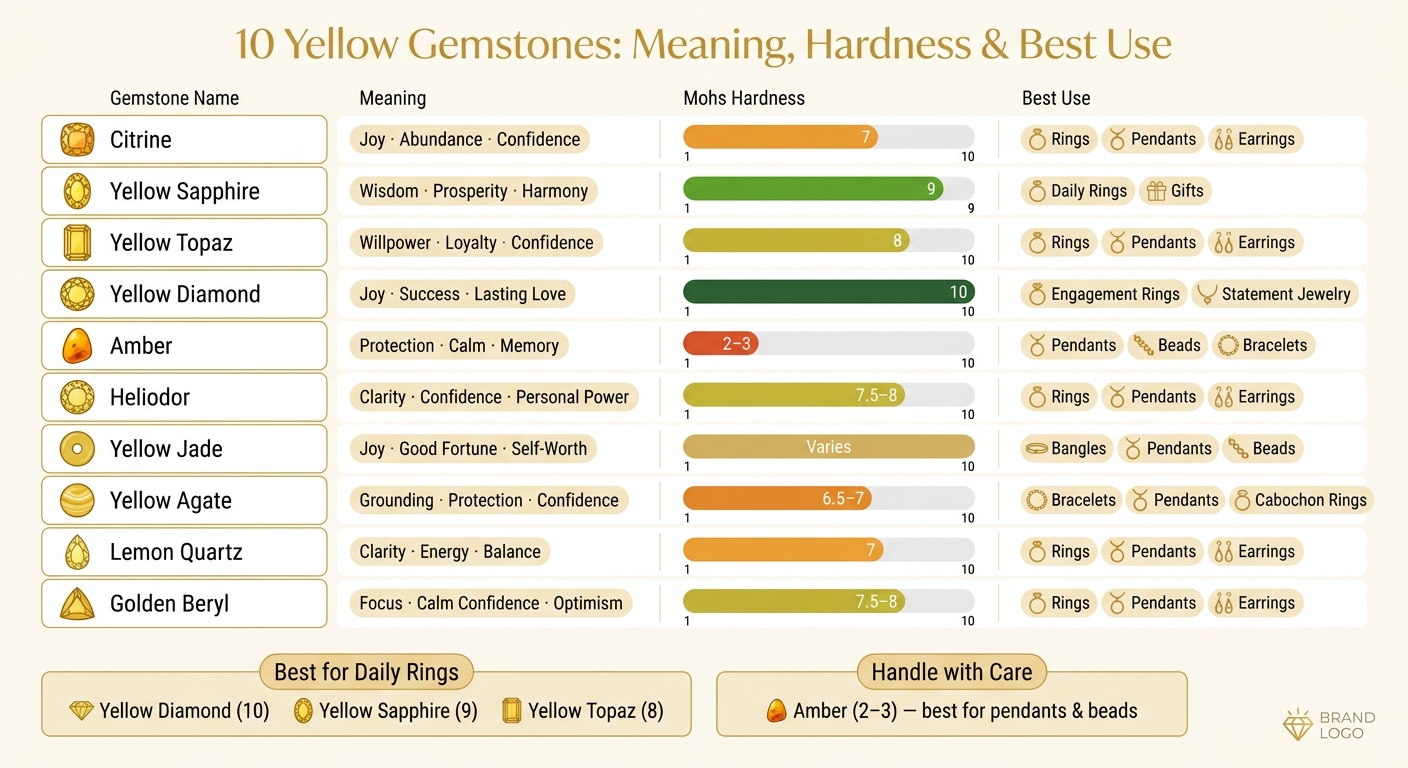
10 Yellow Gemstones Compared: Meaning, Hardness & Best Use
| Gemstone | Main meaning | Mohs hardness | Best use |
|---|---|---|---|
| Citrine | Joy, abundance, confidence | 7 | Rings, pendants, earrings |
| Yellow Sapphire | Wisdom, prosperity, harmony | 9 | Daily rings, gifts |
| Yellow Topaz | Willpower, loyalty, confidence | 8 | Rings, pendants, earrings |
| Yellow Diamond | Joy, success, lasting love | 10 | Engagement rings, statement jewelry |
| Amber | Protection, calm, memory | 2–3 | Pendants, beads, bracelets |
| Heliodor | Clarity, confidence, personal power | 7.5–8 | Rings, pendants, earrings |
| Yellow Jade | Joy, good fortune, self-worth | Varies by type | Bangles, pendants, beads |
| Yellow Agate | Grounding, protection, steady confidence | 6.5–7 | Bracelets, pendants, cabochon rings |
| Lemon Quartz | Clarity, energy, balance | 7 | Rings, pendants, earrings |
| Golden Beryl | Focus, calm confidence, optimism | 7.5–8 | Rings, pendants, earrings |
Bottom line: if I want toughness, I’d start with yellow diamond, yellow sapphire, or yellow topaz. If I care more about mood and color, I’d look at amber, jade, agate, lemon quartz, heliodor, or golden beryl.
Why Yellow Gemstones Are Popular in Jewelry
That symbolism helps explain why yellow gemstones stay so popular in jewelry. It usually comes down to three things: color, meaning, and ease of wear. Their shades run from pale lemon to deep honey, which gives them a lot of room to work with different skin tones and outfits. Lighter yellows tend to look soft on fair and medium complexions, while deeper shades stand out more against darker skin tones.
Metal pairing is a big part of the draw. Yellow gemstones look natural in both yellow gold and sterling silver. Yellow gold gives the piece a matched, unified feel. Sterling silver or white gold creates contrast and can make the yellow look brighter and more current. That kind of range means the same stone can lean classic or modern based on the setting alone.
Style isn’t the only reason people buy them. Their meaning plays a big part too. Yellow stones are often picked as gifts tied to prosperity, celebration, and rings with personal meaning. Citrine, for example, is often chosen for entrepreneurs or professionals. And yellow stones in engagement rings bring warmth and a lighter, more playful feel than white diamonds.
Durable yellow gems also fit daily wear, especially in rings and bracelets. Most are easy to clean with mild soap and water. Their warm color can also do you a small favor: it tends to hide minor smudges better than stones that are very pale or very dark.
Those traits play out a little differently in each stone below.
1. Citrine
Iron gives citrine its pale yellow to golden-orange color. Darker stones are often called Madeira citrine. That clear, warm glow is a big reason citrine is so often tied to optimism and abundance.
Symbolism
Citrine stands for joy, abundance, prosperity, optimism, and confidence. People often call it the merchant's stone or stone of abundance. It’s also worn as a small, daily reminder of a goal, whether that means starting a business, going after a promotion, or keeping your spirits up during a hard stretch.
Historical Significance
Those ideas go back a long way. Citrine has been prized since ancient Greece, saw another wave of popularity in the 1940s, and is linked to the 13th wedding anniversary.
Jewelry Use
Its warm color makes all of that easy to wear. Citrine’s durability and common availability in larger sizes make it a strong choice for rings, pendants, and earrings. Yellow gold brings out its warmth, while sterling silver or white gold gives it a brighter, more modern contrast. At LaCkore Couture, citrine works especially well in layered necklaces and charm bracelets.
2. Yellow Sapphire
Yellow sapphire gives yellow gemstone jewelry a more polished, ceremonial feel. It’s the yellow form of corundum, which places it in the same mineral family as other sapphires. Its color comes from iron and can range from pale lemon to deep gold. Among these shades, medium, vivid yellow tends to be the most sought after.
Symbolism
Yellow sapphire is linked with wisdom, prosperity, success, and marital harmony. It’s also tied to good judgment and financial stability.
Historical and Cultural Significance
In Vedic astrology, yellow sapphire - Pukhraj - is associated with Jupiter, or Guru. Because of that link, many people favor it for career growth, education, finances, and marriage. It also holds a place in the Hindu navaratna tradition, which includes nine sacred gemstones.
Jewelry Use
Yellow sapphire scores 9 on the Mohs scale, so it’s one of the hardest gemstones used in jewelry - just behind diamond. That makes it a strong pick for daily wear. In terms of metal pairing, yellow gold and rose gold bring out its warmth, while white gold or platinum gives it a crisp contrast. Between its symbolism and wearability, it works especially well for everyday rings and gifts meant to mark an important moment.
3. Yellow Topaz
Yellow topaz has a warmer, deeper yellow than many other yellow gems. People often tie it to willpower, loyalty, and confidence. It’s also a tough stone, ranking 8 on the Mohs scale. Its color can range from a pale straw yellow to a rich, warm gold, sometimes with light brownish or orangey notes. The most prized shade is a rich golden yellow. Compared with citrine, yellow topaz usually looks warmer, deeper, and more light-filled when it’s cut well.
Symbolism
Yellow topaz is linked with willpower, confidence, and loyalty. In spiritual jewelry, it’s often tied to self-esteem and drive. Many people also connect it with friendship, which makes it a thoughtful gift for close friends or partners. Some ancient Egyptian traditions connected its golden color with Ra, the sun god.
Those same themes show up in its long-standing role in protection lore and birthstone history.
Historical and Cultural Significance
Greeks and Romans prized topaz for protection and strength, and later folklore said it could warn of poison by changing color. The stone also appears in the Bible. Topaz is listed as one of the twelve gems set into the breastplate of the Hebrew high priest Aaron, where it stood for one of the twelve tribes of Israel.
Yellow topaz is also a traditional November birthstone, although citrine has mostly taken its place in many modern birthstone lists.
Jewelry Use
Yellow topaz looks great in cocktail rings, pendants, and drop earrings, where a larger stone has room to show off its golden color and sparkle. Oval and pear cuts tend to show its clarity and depth especially well. That said, topaz has perfect cleavage, which means it can chip if it takes a hard hit. For rings worn every day, bezel or halo settings give it more protection.
Metal choice can shift the whole feel of the piece:
- Yellow gold brings out its warm tones
- White gold or platinum adds contrast and makes the color stand out more
4. Yellow Diamond
Yellow diamond brings together the sunny look of yellow gems with the long-lasting fire diamonds are known for.
It ranks 10 on the Mohs scale, which makes it a strong pick for daily wear and engagement rings.
Color Tone
Yellow diamonds can look very light, like soft butter yellow, or deep and rich, like vivid gold. Fancy Vivid Yellow is the most saturated and highest-value grade. It's often called a canary diamond.
Symbolism
Yellow diamonds are tied to joy, optimism, abundance, and success. They also carry the usual diamond meanings: strength, commitment, and lasting love.
Because they're rare, they can also suggest individuality and personal achievement.
Jewelry Use
In the U.S., yellow diamonds often show up as center stones in engagement rings. You'll also see them in statement necklaces, drop earrings, and cocktail rings. A halo setting helps the yellow center stone pop. Yellow gold gives the piece a smooth, tone-on-tone look, while white gold or platinum can make the yellow color look brighter.
That mix of rarity and toughness makes yellow diamond one of the most important yellow stones in jewelry.
5. Amber
Amber takes this list in a slightly different direction. It isn't a mineral gem at all, but an organic material with the same golden, sunlit feel. It's fossilized tree resin, and that gives it a more natural, earthy character. Some pieces even hold inclusions like trapped air bubbles, plant fragments, or insects - small traces of ancient life sealed inside.
Color Tone
Amber usually shows up in pale yellow, honey, or cognac shades. Lighter colors tend to feel softer and gentler, while darker ones look richer and warmer. That color range helps explain why amber is so often linked with warmth and renewal.
Symbolism
The ancient Greeks called amber elektron, meaning "formed by the sun", and connected it with solar energy and divine light. Over time, many societies tied amber to protection, renewal, and emotional balance. Today, it's often seen as a stone of renewal that helps clear negativity and bring a sense of calm. And because amber can preserve ancient life, people also connect it with memory, continuity, and ancestral wisdom.
Historical Significance
Those ideas go back a long way. Amber jewelry dates to about 12,000 years ago, which makes it one of the oldest ornamental materials used by humans. In ancient Rome, amber signaled wealth and status. In Medieval Europe, it was used in rosaries and talismans thought to guard against illness and evil spirits. Baltic cultures used amber as currency and shaped it into protective amulets. Over time, those uses strengthened amber's link with protection and status.
Jewelry Use
Amber is soft - just 2 to 3 on the Mohs scale - so jewelers usually cut it into cabochons or beads. It's a natural fit for pendants, earrings, and bracelets. But it needs a bit of care, since heat, harsh chemicals, and harder stones can damage it.
6. Heliodor
Heliodor, also known as golden beryl, is the yellow to golden-yellow variety of beryl - the same mineral family as emerald and aquamarine. Its name comes from the Greek helios (sun) and doron (gift), which translates to gift of the sun.
Color Tone
Heliodor ranges from pale lemon yellow to rich golden yellow. In some lighting, it can show a faint greenish cast. What stands out most is its bright, clear look. Instead of heavy saturation, heliodor tends to glow with a clean, sunlit feel.
Symbolism
Heliodor is tied to clarity, confidence, optimism, and personal power. In metaphysical traditions, it is connected with the solar plexus, where it stands for willpower and self-assurance. That link to light and inner strength also helps explain why the stone has held a place in jewelry for so long.
Historical Significance
The beryl family has a long history in jewelry and ornament, which gives heliodor a broad link to ideas of light and warmth. Beryl gemstones were among the twelve stones set into the breastplate of the Hebrew high priest Aaron, connecting heliodor to long-standing associations with illumination. Today, that same bright look makes heliodor a strong fit for clean, faceted jewelry styles.
Jewelry Use
With a Mohs hardness of 7.5 to 8, heliodor works well in rings, pendants, and earrings when the setting protects it well. Its transparency looks especially good in faceted cuts such as oval, emerald, pear, and cushion. For metal choice, white gold or silver prongs paired with a yellow gold band can help the stone stay bright, while an all-yellow setting may soften its color. Heliodor is rarer than many other beryl varieties, which gives it extra appeal for collectors and custom jewelry.
7. Yellow Jade
After heliodor’s bright faceting, yellow jade feels softer and more grounded. It has a warm glow that reads calm, not flashy.
Color Tone
Yellow jade appears in both jadeite and nephrite. Its color can range from soft, muted buttery and pale yellow tones to brighter, warm golden shades. Nephrite usually leans creamier and more subdued, while jadeite can show stronger, more saturated color. In the U.S. market, yellow jade is sometimes sold as honey jade, a market term for warm, golden-yellow jade.
Symbolism
Yellow jade is often linked with joy, confidence, and motivation. In metaphysical traditions, it’s also tied to self-worth, willpower, and motivation. That helps explain why it shows up so often in meaning-driven jewelry, especially pieces meant to support creativity, career confidence, or financial goals.
Historical and Cultural Significance
In Chinese culture, jade has long stood for virtue, health, longevity, and good fortune. Yellow also carried imperial status. Put those ideas together, and yellow jade often suggests prestige, wealth, courage, and strength.
Jewelry Use
Yellow jade is used in bangle bracelets, beaded necklaces, pendants, and carved charms. It’s durable enough for everyday wear, and its polished surface gives off a soft radiance instead of a sharp sparkle.
8. Yellow Agate
Yellow agate has the same warm, grounded mood as yellow jade, but with more pattern and visual depth.
Color Tone
Yellow agate is a chalcedony variety that ranges from pale pastel yellow and creamy beige to rich golden, honey, and wheat-like tones. Most pieces have a semi-translucent look with soft banding, cloudy swirls, or mottled patterns.
Symbolism
Yellow agate is tied to joy, grounding, protection, and steady confidence, with solar plexus links that are said to support willpower and self-esteem.
That meaning comes from agate’s long history as a protective stone.
Historical and Cultural Significance
Since antiquity, agate has been used in amulets, seals, and talismans. Yellow agate also carries harvest and sun symbolism, with links to abundance, eloquence, and gentle protection.
Jewelry Use
Yellow agate fits easily into beaded bracelets, pendants, cabochon rings, earrings, and layered necklaces. With a Mohs hardness of about 6.5–7, it’s durable enough for everyday wear. It also pairs well with gold-toned metals, which bring out its warm look.
9. Lemon Quartz
Color Tone
After yellow agate’s earthy glow, lemon quartz moves into a brighter, cooler kind of yellow. Its color can range from soft pale yellow to a bold lemon-yellow, but what sets it apart is that crisp, citrus-like brightness. It feels cooler than citrine’s warmer golden tone. The yellow-green variety is sold as Ouro Verde.
Symbolism
Lemon quartz is linked with clarity, optimism, and energy. Compared with citrine’s warmer feel, lemon quartz leans more toward fresh starts, mental clarity, and a clean, modern sense of energy.
Historical and Cultural Significance
Lemon quartz is a fairly modern stone. It was first created in the 20th century and didn’t reach commercial sale until the 1980s. Its color is usually produced through gamma-ray irradiation and heat treatment, often with iron present. That modern origin helps explain why it looks so sharp and polished in faceted jewelry.
Jewelry Use
With a Mohs hardness of 7, lemon quartz is durable enough for rings, pendants, and earrings worn on a regular basis. It’s prized for its strong transparency and brilliance, especially in faceted cuts. Its bright, cool color fits especially well in modern jewelry designs.
10. Golden Beryl
Color Tone
Golden beryl is part of the beryl family, like heliodor, but it tends to look warmer and cleaner. Its color usually falls between soft golden yellow and rich honey tones, with a clear, luminous look. In most cases, it appears warmer and less green than heliodor. That color comes from iron in the crystal structure.
Symbolism
Golden beryl is often linked with clarity, calm confidence, optimism, and focused energy. It has a bright, polished look that stands out in faceted jewelry.
Historical and Cultural Significance
Beryl varieties have been prized for a long time for their beauty, clarity, and durability. Yellow-golden stones, in particular, were admired as signs of light and prestige. Beryl is also mentioned in the Book of Exodus as one of the gemstones set into the breastplate of the Hebrew high priest Aaron, where the stones represented the twelve tribes of Israel.
Jewelry Use
With a Mohs hardness of 7.5–8, golden beryl holds up well in everyday jewelry, though it still needs care to avoid scratches and hard knocks. One thing that makes it stand out is that it is often very clean, with few inclusions, which makes it a strong fit for faceted cuts where brightness and brilliance matter. You’ll often see it used in rings, pendants, earrings, and bracelets, especially in yellow gold or white metal settings.
Yellow Gemstone Meanings: Quick Reference Table
Here’s a quick side-by-side look at what each yellow gemstone stands for, where it shows up in history, and how people usually wear it.
If you want the short version, scan the table by meaning, history, and best use.
| Gemstone | Symbolism | History/Culture | Uses |
|---|---|---|---|
| Citrine | Happiness, abundance, positivity | Sun energy; modern November birthstone alternative | Rings, pendants, earrings, bracelets |
| Yellow Sapphire | Wisdom, prosperity, marital harmony | Tied to Jupiter in Vedic astrology; worn for good fortune | Engagement rings, halo-style rings, pendants |
| Yellow Topaz | Drive, success, determination | Stone of the sun; traditional November birthstone | Rings, necklaces, earrings |
| Yellow Diamond | Luxury, strength, joy | Symbol of wealth and status | Statement rings, engagement rings, pendants |
| Amber | Protection, warmth, vitality | Used as a protective amulet in ancient times | Pendants, necklaces, earrings, bracelets |
| Heliodor | Solar warmth, clarity, perseverance | Name means gift of the sun; yellow beryl | Rings, pendants, earrings |
| Yellow Jade | Joy, confidence, good fortune | Long history in East Asian art and jewelry; symbol of virtue | Beaded bracelets, pendants, charms, earrings |
| Yellow Agate | Motivation, optimism, stability | Ancient protective stone; tied to grounding and mental balance | Pendants, beaded bracelets, necklace beads |
| Lemon Quartz | Clarity, perseverance, balance | Sold in some markets as Ouro Verde ("green gold") | Rings, pendants, earrings, bracelets |
| Golden Beryl | Mental clarity, focus, calm confidence | Beryl family stone prized for brilliance | Rings, pendants, earrings |
Some stones are better suited for everyday jewelry than others.
Yellow diamond, yellow sapphire, and heliodor are common picks for fine jewelry and daily wear. Amber, yellow jade, yellow agate, and lemon quartz tend to work better in pendants, beads, charms, and other protected settings. And because they’re softer, amber and yellow agate are usually best in pendants, beads, and protected settings.
Metal choice can also shift the feel of a stone. It can sharpen its meaning or give it a softer look.
How Gold Settings Affect the Meaning of Yellow Stones
Once you know what a yellow stone stands for, the setting changes how strongly that meaning comes through. Put simply, metal choice shapes the mood.
When yellow gold surrounds a yellow stone, the tone-on-tone look makes the gem seem warmer and more pulled together. That’s why citrine or yellow sapphire set in yellow gold often feels warmer and more self-assured. The karat level shifts that feel even more.
14K yellow gold has a slightly softer, more practical look. 18K yellow gold looks deeper and more luxe. For everyday pieces like stacking rings or small pendants, 14K works especially well because it helps bright stones look crisp and modern. 18K, on the other hand, adds depth to stones like yellow sapphire or yellow diamond and gives the piece a richer look. If you want an heirloom-style design, 18K paired with oval, cushion, or emerald cuts feels classic and built to last.
The setting style matters too. A bezel setting wraps the stone in gold, which gives it a protected, grounded feel. That’s a good match for talisman-like pieces made for daily wear. A halo setting - with small stones around the center gem - creates a sunburst effect that adds more radiance, which is why it shows up so often in celebratory rings. Slim, delicate bands keep things light and easy to wear, while wider bands add more visual weight and a stronger sense of commitment.
Gold’s long history adds one more layer. Across many societies, from ancient Egypt to modern fine jewelry, gold has long been linked to the sun, wealth, and divine favor. That history carries into the finished piece and quietly reinforces what the stone already suggests, whether that’s the abundance of citrine, the prosperity of yellow sapphire, or the bold confidence of a yellow diamond. Handcrafted yellow gold designs can lean into that effect in a way that feels personal and deliberate.
Conclusion
Taken together, these stones show that one color can say very different things. Yellow gemstones sit in the same bright color family, but each one points in its own direction. Some are tied to abundance. Others suggest wisdom, protection, or confidence.
After symbolism, durability is the next thing to look at. Picking the right yellow gemstone comes down to three simple factors: what it means to you, how it looks, and how you plan to wear it. For everyday rings, go with harder stones like yellow sapphire or yellow topaz. For pendants or earrings, color and symbolism can take the lead.
Once you’ve picked the stone, the metal setting shapes the overall feel. It also changes the finish. Yellow and rose gold bring out more warmth, while white gold and platinum create sharper contrast. LaCkore Couture's handcrafted, customizable natural-stone pieces make that pairing easier.
The best yellow gemstone is the one that fits your meaning, your style, and the way you’ll wear it.
FAQs
Which yellow gemstone is best for everyday wear?
For everyday wear, durability matters most. Pick a yellow gemstone with a hardness of 7 or higher on the Mohs scale, especially for rings or bracelets.
Stones like citrine are often linked with hope, happiness, and prosperity, but it’s still smart to check the hardness of the exact stone you’re buying. Softer stones tend to work better in earrings or pendants, where they’re less likely to get knocked around.
How do I choose between citrine, yellow topaz, and yellow sapphire?
Choose based on durability and meaning.
For daily wear, yellow sapphire is the better pick. It ranks 9 on the Mohs hardness scale, so it holds up well and resists scratches.
If meaning matters more to you, citrine carries a different feel. It’s linked to the solar plexus chakra and is often tied to energy, confidence, and prosperity. Yellow sapphire is tied to optimism, while citrine is often called the stone of abundance.
What metal looks best with yellow gemstones?
Yellow gold is often the best match for yellow gemstones like citrine because it plays up their warm, sunny color and helps them stand out.
Mixed metals can work too, especially if you want a more flexible look. But yellow gold is still the classic pick when the goal is to show off the warmth and sparkle of yellow gemstones.