Skip to content




Why Gold-Plated Jewelry Tarnishes and How to Stop It
Gold-plated jewelry looks beautiful but is prone to tarnishing because the thin gold layer wears off, exposing the base metal underneath. Factors like moisture, chemicals, and friction accelerate this process. Here’s how to preserve its shine:
- Avoid moisture and chemicals: Remove jewelry before swimming, showering, or applying lotions and perfumes.
- Store properly: Use airtight bags or soft pouches with silica gel to prevent oxidation.
- Clean gently: Use warm water, mild soap, and a soft cloth - avoid abrasive cleaners or harsh chemicals.
- Prevent scratches: Don’t stack jewelry or let it rub against hard surfaces.
With proper care, gold-plated jewelry can last 2–5 years. If tarnish occurs, professional re-plating can restore its appearance.
Why Gold-Plated Jewelry Tarnishes
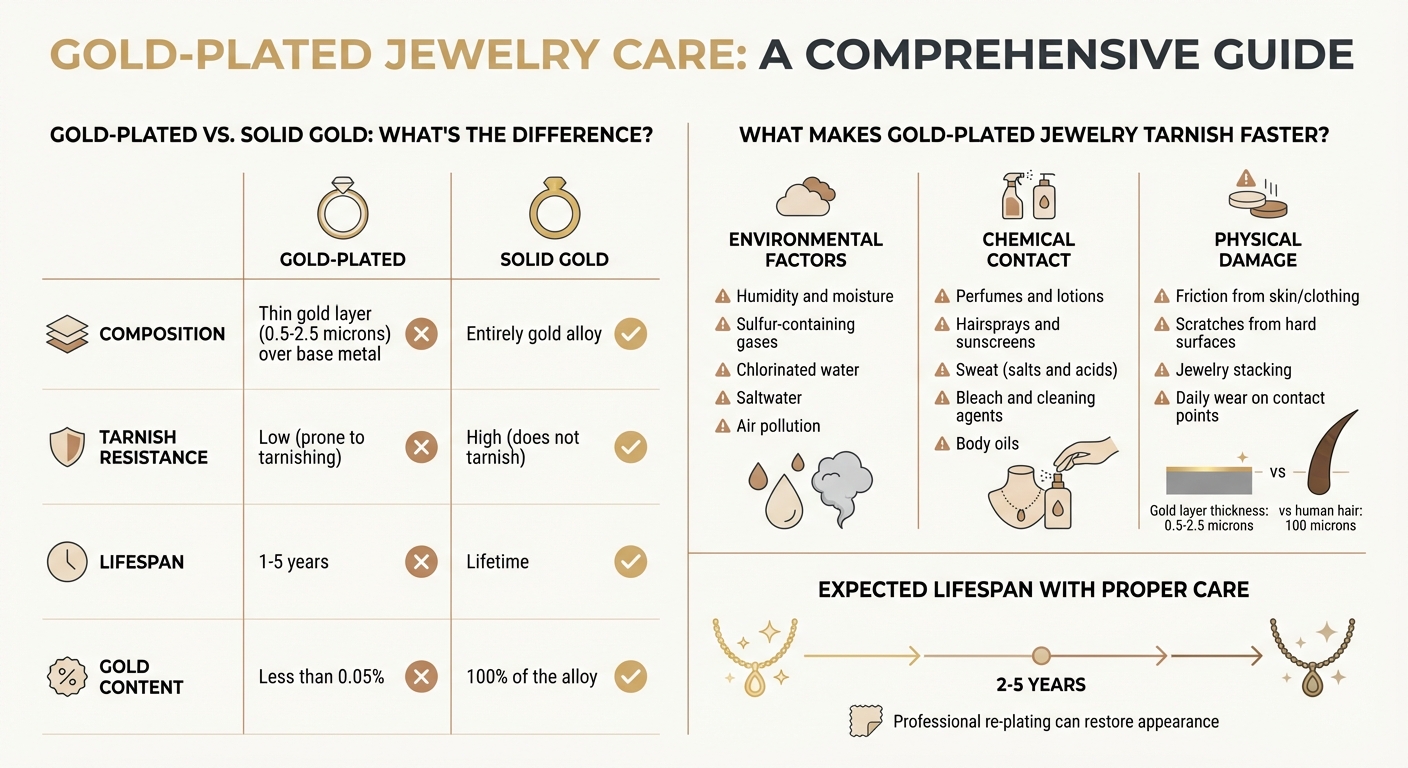
Gold-Plated vs Solid Gold Jewelry: Key Differences and Tarnish Factors
What Gold-Plated Jewelry Is
Gold-plated jewelry is made by applying a thin layer of gold to a less expensive base metal through a process called electroplating. This gold layer is incredibly thin, typically ranging from 0.5 to 2.5 microns. Common base metals include copper, brass, nickel, bronze, or sterling silver. For higher-quality pieces, manufacturers may add a "strike" or "flash" layer of nickel between the base metal and the gold. This extra layer helps the gold adhere better and slows down tarnishing. However, flash-plated jewelry contains only trace amounts of gold - often less than 0.05% of the entire piece.
"Gold plating may look like solid gold, but it's more like the icing on a cake - a thin layer applied over a base metal."
By understanding the structure of gold-plated jewelry, it becomes easier to see how exposure of the base metal underneath contributes to tarnishing.
How Base Metals Cause Tarnishing
Gold itself doesn’t tarnish because it resists oxidation. However, the thin gold plating on jewelry can wear off over time due to daily friction or exposure to chemicals. Once the base metal underneath is exposed, it reacts with elements like oxygen, moisture, sulfur, or even the natural acids from your skin. This reaction leads to tarnishing. The type of discoloration depends on the base metal - copper, for example, may develop a green or brown patina, while sterling silver often turns gray or black, requiring a specific guide on how to clean silver jewelry.
"Once the base metal (whatever was dipped in the gold) is exposed, it can react with elements like oxygen, moisture or sulfur. This reaction, known as oxidation or tarnishing, causes the base metal to change color."
- Matt Wodenka, Jewelers Mutual
The choice of base metal plays a big role in how quickly tarnishing occurs. Metals like stainless steel and titanium are more resistant to corrosion compared to brass or copper. This behavior sets gold-plated jewelry apart from solid gold items.
Gold-Plated vs. Solid Gold
The primary difference between solid gold and gold-plated jewelry lies in their composition. Solid gold pieces are made entirely of a gold alloy, meaning their color and resistance to tarnishing are consistent throughout the item. In contrast, gold-plated jewelry has only a surface-level gold layer, making it more prone to wear and tarnish.
| Feature | Solid Gold | Gold-Plated |
|---|---|---|
| Composition | Entirely gold alloy | Thin gold layer over base metal |
| Tarnish Resistance | High (does not tarnish) | Low (prone to tarnishing) |
| Lifespan | Lifetime | Typically 1–5 years |
| Gold Content | 100% of the alloy | Often less than 0.05% |
"While solid gold retains its color with proper care, all plated pieces are destined to fade over time."
- Elizabeth Hadden, Applied Jewelry Professional, Blue Nile
This distinction highlights why solid gold is seen as a long-term investment, while gold-plated jewelry is more of a short-term option that may need refinishing or replacing after regular use.
What Makes Gold-Plated Jewelry Tarnish Faster
Gold-plated jewelry may look stunning, but it’s no secret that it tends to tarnish faster than solid gold. This happens because the thin layer of gold can break down under certain conditions, exposing the reactive base metal underneath. Let’s explore the main factors that speed up this tarnishing process and how they work against your jewelry.
Environmental Conditions
Humidity and moisture are some of the biggest enemies of gold-plated jewelry. High humidity accelerates oxidation, making tarnish appear much sooner. Air pollution, especially from sulfur-containing gases, also reacts with the metal surface, forming a dull, corroded layer.
Water exposure is another major issue. Chlorinated water, like what you find in swimming pools, is particularly harsh. It breaks down the bond between the gold layer and the base metal. As Quick Jewelry Repairs explains, "The chemical [chlorine] literally eats into gold, leaving it with little 'pits' in the surface. If it can do this to solid gold pieces, imagine what would happen to gold plated items!".
Chemical Contact
Everyday chemicals are another big culprit. Perfumes, lotions, hairsprays, and sunscreens often contain compounds that erode gold plating. Even sweat, which contains salts and acids, can speed up oxidation. Matt Wodenka from Jewelers Mutual notes, "Chemicals like chlorine, bleach and harsh cleaning agents can damage the gold plating and speed up the tarnishing process".
Your body’s natural chemistry also plays a role. Some people notice faster discoloration or even green or black marks on their skin after wearing gold-plated jewelry. Additionally, body oils left on jewelry trap moisture, creating the perfect environment for oxidation to occur.
Physical Damage
Gold-plated jewelry is incredibly delicate. The gold layer is typically just 0.5 to 2.5 microns thick - compare that to a human hair, which is about 100 microns wide. This means even light contact can wear it down over time. Everyday friction from skin, clothing, or even typing on a keyboard can gradually rub away the gold.
Scratches are another issue. Hard or rough materials can create tiny gaps in the gold layer, allowing oxygen and moisture to reach the base metal underneath. Jewelry stacking - wearing multiple pieces together - can also cause rubbing and clinking, leading to scuffs and faster fading. Areas that experience constant contact, like the underside of rings or necklace clasps, tend to show wear first.
| Factor Type | Specific Threats | How It Damages Gold Plating |
|---|---|---|
| Environmental | Humidity, Sulfur, Oxygen, Saltwater, Chlorine | Promotes oxidation of the base metal beneath |
| Chemical | Perfume, Lotion, Bleach, Sweat, Hairspray | Gradually erodes the thin gold layer |
| Physical | Friction, Scratches, Stacking, Rough Surfaces | Mechanically wears away the gold coating |
Recognizing these factors can help you better protect your gold-plated jewelry from tarnishing. With the right care, you can enjoy its beauty for much longer.
How to Prevent Gold-Plated Jewelry from Tarnishing
Want your gold-plated jewelry to maintain its shine for up to five years? A little extra care can go a long way in keeping your pieces looking like new.
How to Store Gold-Plated Jewelry
After wearing your jewelry, use a lint-free cloth to clean gold-plated jewelry by gently wiping away oils and sweat. This simple step can prevent tarnish from setting in. To avoid scratches, store each piece separately in soft pouches. For added protection, use airtight containers or small zip-top bags, ensuring you squeeze out as much air as possible. According to Gold Plating Services, "The lack of oxygen in the bag will help keep the gold plated jewelry bright and shiny".
Choose a cool, dry, and dark spot for storage - steer clear of humid areas like bathrooms. Ideally, indoor humidity should stay below 50% for optimal results. To combat moisture, toss a few silica gel packets (like the ones from shoe boxes) into your jewelry box. If you’re feeling crafty, a piece of chalk can work just as well as a DIY moisture absorber.
While proper storage is key, knowing when and how to wear your jewelry is just as important.
When to Wear and Remove Your Jewelry
Stick to the "last on, first off" rule: put your jewelry on after applying perfume, hairspray, lotion, or makeup, and wait until everything is fully dry. These products often contain chemicals that can erode the delicate gold plating.
Take your jewelry off before swimming, showering, working out, or doing household chores. Chlorine in pools and harsh cleaning products can cause tarnishing or even corrode the base metal. As Matt Wodenka from Jewelers Mutual explains, "Chlorine in pool water and other chemicals in cleaning products can react with the base metal and cause it to tarnish or corrode". Sweat from exercise is another culprit - it contains salts and acids that accelerate oxidation. So, before hitting the gym, make sure your pieces are safely stored.
Timing isn’t the only factor to consider; physical protection plays a big role in preserving your jewelry.
Preventing Scratches and Wear
Gold-plated jewelry is delicate, with a thin layer of gold that’s typically only 1–3 microns thick. To avoid wearing down the coating, don’t stack multiple rings or bracelets - constant friction can expose the base metal underneath.
Keep your jewelry away from hard surfaces and rough materials to prevent scratches. Even minor damage can let oxygen and moisture reach the base metal, speeding up tarnish. Store your pieces in padded boxes lined with fabric, and avoid tossing them together in a drawer where they might bump into each other. Small steps like these can make a big difference in keeping your gold-plated jewelry looking its best.
How to Clean and Care for Gold-Plated Jewelry
Taking care of gold-plated jewelry is all about balance - keeping it clean while ensuring the delicate gold layer stays intact. A simple, safe cleaning method involves mixing one cup of warm water with a few drops of mild dish soap in a small bowl. Soak one or two pieces at a time for about 10 minutes, just enough to loosen dirt without harming the plating. However, if your jewelry features glued-on gemstones or pearls, skip soaking entirely, as water can weaken the adhesive. For intricate designs, use a soft cotton swab to clean tight spots. Avoid sharp objects like pins or knives, which can scratch through to the base metal.
"A simple solution of warm water and dish soap usually does the trick. Remember to rinse the jewelry thoroughly with warm water and dry it gently with a soft cloth to prevent water spots." - Matt Wodenka, Jewelers Mutual
Let’s dive into safe cleaning methods, common mistakes to avoid, and how to protect your jewelry for the long haul.
Safe Cleaning Methods
After wearing your jewelry, gently wipe it down with a damp microfiber cloth to remove oils and residue. Rinse it under warm water and pat it dry using a lint-free cloth. Once it's completely dry, use a soft polishing cloth to bring back its shine. The key here is to treat your jewelry with care - gold plating is incredibly thin, so even mild abrasives can damage it.
What Not to Use When Cleaning
Certain cleaning agents and tools can ruin gold-plated jewelry. Avoid baking soda, toothpaste, or powdered cleaners - their gritty textures can wear away the gold layer. Steer clear of harsh chemicals like bleach, ammonia, or vinegar-hydrogen peroxide mixtures, as they can corrode the plating.
"Avoid using abrasive cleaners like baking soda and hot water or vinegar and hydrogen peroxide or you could irreparably damage the gold plating." - Mary Marlowe Leverette, Housekeeping and Fabric Care Expert
Even some commercial jewelry cleaners and antibacterial soaps are too harsh for plated items. Rubbing alcohol, while sometimes used to restore shine, can strip the gold over time if used frequently. Stick with soft microfiber cloths and avoid paper towels or stiff brushes, which can leave micro-scratches.
| Cleaning Agent | Safety Status | Reason |
|---|---|---|
| Mild Dish Soap | Safe | Gentle and effective at removing oils |
| Microfiber Cloth | Safe | Non-abrasive; great for buffing and drying |
| Baking Soda | Avoid | Abrasive texture can wear away the gold |
| Toothpaste | Avoid | Contains abrasives that may scratch plating |
| Bleach/Ammonia | Avoid | Harsh chemicals can corrode or strip gold |
Once your jewelry is clean, consider taking additional steps to protect it from everyday wear.
Using Protective Coatings
Adding a protective layer can do wonders for the longevity of your gold-plated jewelry. Anti-tarnish strips or acid-free paper in your storage container can help absorb moisture and pollutants that cause tarnishing. Clear lacquer or transparent sealants can act as a barrier against air and moisture while maintaining the jewelry's appearance. For a quick DIY fix, a light coat of clear nail polish can temporarily protect your jewelry and prevent skin discoloration, though it may need reapplication over time.
If the gold layer starts to wear thin and exposes the base metal, professional re-plating can bring your jewelry back to life. For a more durable option, consider Physical Vapor Deposition (PVD) coating, which is significantly thicker and more resistant to sweat and chemicals than standard gold plating.
At LaCkore Couture, we believe that proper care is essential to preserving the beauty of your handcrafted jewelry. By following these tips, you can enjoy your cherished pieces for years to come.
Conclusion
Gold-plated jewelry tarnishes when the thin gold layer wears away, exposing base metals like copper or brass to oxygen, moisture, and everyday chemicals. Common culprits like perfumes, lotions, chlorine, and even natural skin oils can speed up this process. The good news? A little extra care can go a long way in keeping your pieces looking their best.
To start, let your cosmetics dry completely before putting on your jewelry, and always take it off before swimming, showering, or working out. When not in use, store each piece separately in airtight bags or soft pouches, adding a silica gel packet to help control moisture. After wearing, gently wipe your jewelry with a soft cloth to remove oils and residue.
"While proper care can help to prolong the lifespan of gold-plated jewelry, it's not a guarantee against tarnish. Environmental factors, exposure to chemicals, and daily wear and tear can all contribute to tarnish." - Matt Wodenka, Jewelers Mutual
Cleaning is just as important. Stick to warm water and a few drops of mild dish soap - avoid baking soda, toothpaste, or any harsh chemicals that could damage the delicate plating. And if your jewelry does lose its shine, professional re-plating can bring it back to life.
At LaCkore Couture, every handcrafted piece deserves the best care. With the right attention, your gold-plated jewelry can stay beautiful for over two years. Handle them with care, and they’ll keep sparkling like new.
FAQs
How can I tell if my jewelry is gold-plated or solid gold?
To figure out whether your jewelry is solid gold or just gold-plated, start by looking for a hallmark or stamp. Solid gold pieces usually display their karat value, like 14K or 18K, whereas gold-plated items might be marked with labels such as GP (gold-plated) or GEP (gold electroplated). Another clue is the weight - solid gold tends to feel heavier and denser than its plated counterpart. Also, take a close look at any worn areas. If you see a different metal peeking through, it’s probably gold-plated. Solid gold, on the other hand, maintains a consistent color and material throughout.
How can I properly store gold-plated jewelry to keep it from tarnishing?
To keep your gold-plated jewelry looking great, make sure to store it in a cool, dry spot away from direct sunlight, heat, or humidity. A soft jewelry pouch or a box with separate compartments works well to prevent scratches and limit moisture exposure. Tossing in a small silica gel packet or an anti-tarnish strip can also help by absorbing excess moisture and slowing down tarnishing.
It's a good idea to take off your jewelry before swimming, showering, or using products like lotions or perfumes. When you're done wearing it, gently wipe each piece with a microfiber cloth to clear away oils or residue before putting it away. These easy habits can help your gold-plated jewelry keep its shine and charm for years.
Is it worth getting tarnished gold-plated jewelry professionally re-plated?
Gold-plated jewelry, while beautiful, can lose its luster over time. This happens because the thin layer of gold gradually wears away, revealing the base metal underneath. If you have a piece with sentimental or monetary value, professional re-plating can bring back its original shine and extend its life. Keep in mind, though, that the cost of re-plating varies depending on the item and the jeweler. It’s worth considering whether the expense aligns with how much the piece means to you.
To slow down tarnishing, focus on proper care. Avoid exposing your jewelry to water, sweat, or harsh chemicals, and always store it in a dry, airtight container. If you're looking for long-lasting options, investing in well-made, high-quality pieces - like those from LaCkore Couture - can help your jewelry retain its beauty for years to come.