Skip to content




Ultimate Guide to Seasonal Jewelry Layering
Good jewelry layering is simple: match your chain length, weight, and stone color to the season, your neckline, and your fabric. If I want a stack to look put together, I keep 2–4 inches of space between layers, use one main piece, and scale the jewelry to the clothes - lighter chains for summer, heavier pieces for winter.
Here’s the whole idea in a few lines:
- Spring: fine chains, pearls, soft stones, open necklines
- Summer: 2–3 necklaces, light chains, bare-skin-friendly metals, fewer bulky pieces
- Fall: richer metals, more texture, darker stones, stronger contrast with heavier fabrics
- Winter: longer chains, bolder links, high contrast, pieces that stay visible over knits and coats
- Always: start short to long, keep spacing clear, and let one focal piece lead
A few numbers make styling easier:
- 14"–16" works for short base layers
- 18"–22" fits most mid-length stacks
- 20"–30" shows up better over turtlenecks and thick knits
- Mixed metals look better when one tone makes up about 60%–70% of the stack
- If removing one piece still leaves the look complete, I stop there
This guide comes down to one rule: the heavier the clothing, the stronger the jewelry should be. From there, it’s just picking the right lengths, textures, and colors for the weather.
Layering Basics: Length, Spacing, Texture, and Focal Pieces
Build from Short to Long with Clear Spacing Between Pieces
Start with a choker or a 14–16 inch base, then add mid-length and longer layers under it. Leave about 1.5–2 inches between each length so every piece stays visible and is less likely to tangle.
Necklines make a big difference here. A V-neck pairs well with 16", 18", and 22" lengths because the layers follow the shape of the neckline. Crew necks usually look better when the first necklace starts at 18", so it sits over the fabric instead of slipping behind the collar. With turtlenecks, go longer - about 20" to 24" - so the chains drape over the knit instead of getting lost in it. When the first length matches the neckline, the whole stack looks easier to read at a glance.
Mix Chain Thickness and Texture Without Overloading the Look
Texture is often the difference between a stack that looks styled and one that just looks busy. A smooth cable chain next to a paperclip or rope chain adds depth without adding too much weight. One easy formula is:
- one smooth chain
- one textured chain
- one beaded or gemstone piece
That mix gives enough contrast to keep things interesting without making the stack feel crowded.
Try to keep it to one statement element per stack. If you're wearing a bold pendant, let the other chains stay simple. Add two strong pieces at once, and the eye doesn't know where to land.
Pick One Anchor Piece and Build Around It
Every good layered stack needs a focal point. That's the piece that gives the rest of the look some order. It could be a pendant necklace, a charm bracelet, a gemstone ring, or a bold chain. The other pieces should frame it, not compete with it.
"One statement necklace will ensure that all of the other pieces of jewelry aren't fighting for attention." - LaCkore Couture
LaCkore Couture's handcrafted necklaces, bracelets, rings, and charms and charm bars can be mixed and matched around one anchor piece. Once you've picked that anchor, add simpler layers around it in different textures or weights so the main piece still stands out. After that, season comes into play - some looks call for lighter pieces, while others can handle a bit more weight.
These basics don't change, but the season, the fabric, the neckline, and the contrast will shape how you use them.
Spring and Summer Layering: Light Materials, Open Necklines, and Brighter Color
Warm weather changes how jewelry looks. When there’s less fabric and more skin showing, layers need to feel light, easy, and clear to the eye. The core layering rules still apply, but in spring and summer they need to stay visible against lighter fabrics and open necklines.
Spring Layers for Blouses, Dresses, and Light Jackets
Spring is a good match for delicate chains, pearls, and pastel gemstones. Baroque pearls sit nicely with linen blouses and floral dresses. Turquoise, moonstone, and clear quartz bring in color without taking over softer spring shades.
Mixed metals can work well in spring, but there’s one simple rule: each metal should show up at least twice in the stack. That keeps the mix from looking random. Spring stacks tend to look best when the neckline, chain length, and metal pairing all stay open and light.
For a V-neck blouse, a 16-inch base chain, an 18-inch pendant that lands at the apex of the V, and a 20–22-inch chain underneath creates a clean, lengthening line that follows the neckline in a natural way.
"Layering necklaces is about finding balance and harmony. It's like making art for your neck." - Anna Sui
Spring gives you more room for color and softer details. Summer, on the other hand, usually looks better with lighter chains and fewer layers. As the temperature climbs, it helps to cut down on weight and keep the stack closer to the skin.
Summer Layers for Tanks, Linen, and Vacation Outfits
In hot weather, comfort matters just as much as style. Heavy chokers can feel uncomfortable in the heat, so lighter layers are often the better move. Keep stacks to 2–3 necklaces and stick with fine chains like cable, box, or rope. 14k gold, gold-filled, and sterling silver all wear well against bare skin.
For strapless and off-shoulder tops, the neckline already does a lot of the visual work. A 14-inch choker can anchor the look, with one or two fine layers at 18 inches and 22 inches. Scoop necklines give you more room, so a 16-inch, 20-inch, and 24-inch stack works well. That extra space can handle a slightly bolder middle piece.
One small but useful detail: bezel-set stones are a better pick for summer than open prong settings. They’re less likely to catch on light fabrics or collect sand and sunscreen.
| Neckline | Recommended Stack | Styling Tip |
|---|---|---|
| V-Neck | 16" + 18" + 22" | Place pendant at the apex of the V |
| Scoop Neck | 16" + 20" + 24" | Use the wide space for a bolder middle piece |
| Strapless | 14" + 18" + 22" | Full three-layer stack shows well on bare skin |
| Off-Shoulder | 14" + 18" + 22" | Choker anchors the look; keep other layers dainty |
| Halter | Skip necklaces |
Put on sunscreen and perfume before your jewelry, then wipe each piece clean after wearing it to remove sweat, salt, and residue.
When fall layers come back, the same structure still works - just with stronger contrast and heavier chains.
Fall and Winter Layering: Stronger Contrast, Heavier Chains, and Better Visibility
Cold-weather layers can swallow delicate jewelry. So if you want your pieces to show up, go a bit bigger with chain weight, length, and contrast. The easiest way to do that is to start with one anchor piece and layer around it.
Fall Layers That Work with Leather, Corduroy, and Deeper Tones
Fall fabrics like leather and corduroy have enough visual weight to hold bolder jewelry. Rich metals like yellow gold, oxidized silver, and rose gold stand out against dark fall shades such as black, navy, charcoal, and forest green. Mixed metal stacks tend to look especially good in this season, and rose gold can bridge yellow gold and silver in the same stack.
For stones, citrine, garnet, amber, and smoky quartz line up well with fall’s earthy color palette without fighting for attention. In fall, texture often does more work than quantity. A hammered gold pendant with a smooth rope chain gives you enough contrast to look styled on purpose, without loading on extra pieces.
Leaf, acorn, and vine motifs also fit the season well. And spacing still matters: keep about 2 to 4 inches between layers so each chain reads as its own tier instead of turning into a knotty mess.
By winter, longer chains and one strong focal piece tend to read better.
Winter Layers for Knits, Turtlenecks, Coats, and Party Looks
Once necklines get higher and coats come out, visibility matters more than volume. With turtlenecks, stick to chains in the 20- to 30-inch range so they hang over the fabric instead of getting lost under it. In a lot of cases, one bold piece does the job better than a three-tier stack. Think a chunky paperclip chain, an oversized pearl, or a long lariat.
For V-neck sweaters, the three-tier setup still works well:
- 14 to 16 inches for a short base
- 18 to 22 inches for a mid-length textured chain
- 24 to 30 inches for a long pendant or lariat
This follows the V shape in a clean, natural way. High-polish gold and silver finishes stand out the most against dark winter shades like black, navy, and charcoal. Matte finishes feel quieter, which can make more sense for daytime.
| Neckline | Recommended Length | Styling Note |
|---|---|---|
| Turtleneck | 20"–30" | Avoid anything shorter; it disappears under the collar |
| Crew Neck | Very long chains or one statement piece | Crew necks work best with one bold piece or very long chains |
| V-Neck Sweater | 14"–16" + 18"–22" + 24"–30" | Three-tier stack follows the V shape naturally |
| Coat Lapel / Outerwear | 22"–30" or brooch | Long pendant or brooch on the lapel keeps jewelry visible |
One practical detail that’s easy to miss: alcohol-based hand sanitizers and thick winter moisturizers can dull metal finishes fast. Let lotion sink in fully before you put on jewelry, and wipe pieces down and polish your jewelry after any contact with sanitizer.
Seasonal Materials and Color Palettes, Plus a Simple Styling Recap
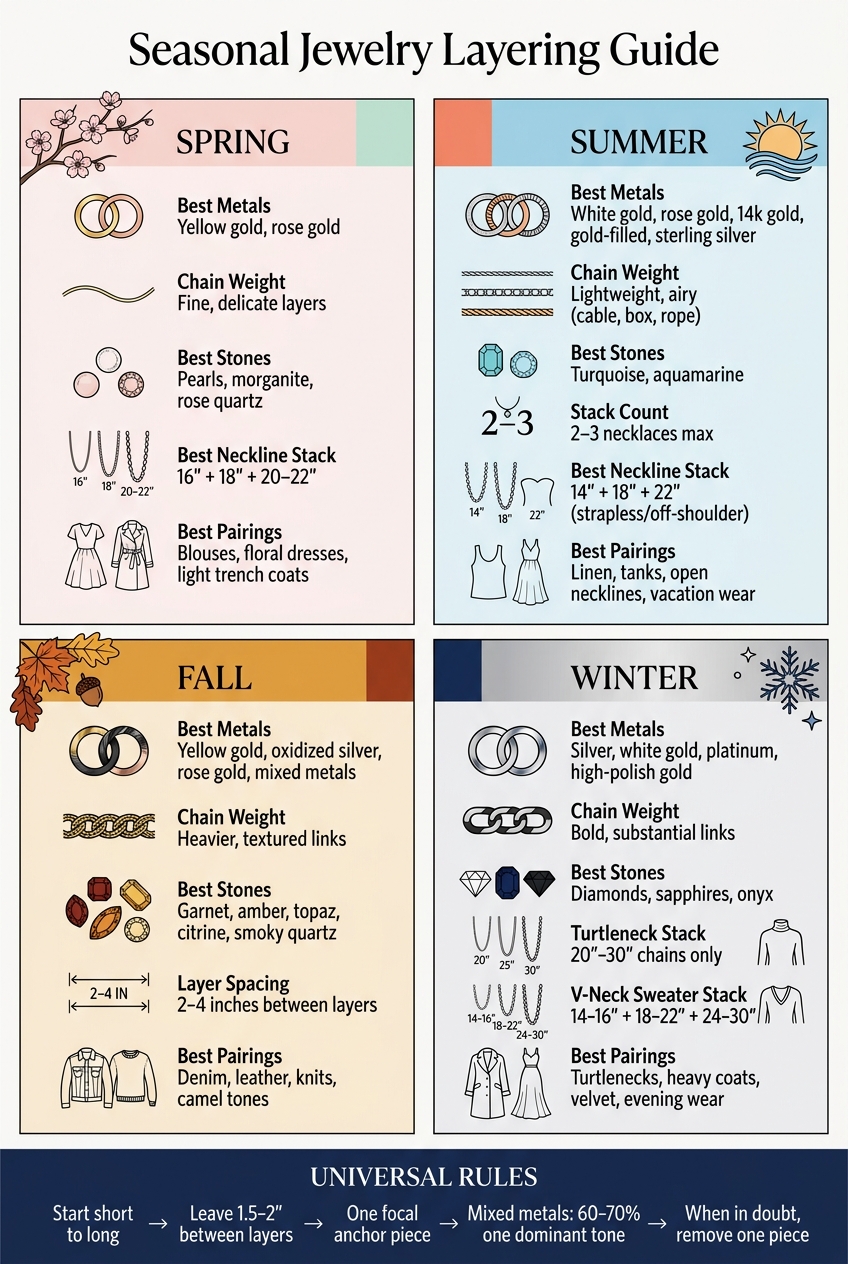
Seasonal Jewelry Layering Guide: Metals, Lengths & Stones by Season
How to Choose Metals, Stones, and Finishes by Season
Use this table as a fast seasonal guide when you're building a new stack or swapping pieces as the weather changes.
| Season | Best Metals | Best Chain Weight | Best Stone Colors | Best Pairings |
|---|---|---|---|---|
| Spring | Yellow gold, rose gold | Fine, delicate layers | Pearls, morganite, rose quartz | Blouses, floral dresses, light trench coats |
| Summer | White gold, rose gold | Lightweight, airy | Turquoise, aquamarine | Linen, tanks, open necklines, vacation wear |
| Fall | Yellow gold, mixed metals | Heavier, textured links | Garnet, amber, topaz | Denim, leather, knits, camel tones |
| Winter | Silver, white gold, platinum | Bold, substantial links | Diamonds, sapphires, onyx | Turtlenecks, heavy coats, velvet, evening wear |
From there, line up those seasonal picks with your neckline, fabric, and how much layering you want.
If you're mixing metals, let one tone make up about 60–70% of the stack. Also keep finishes in sync, whether polished or matte, so the mix looks planned instead of random. Rose gold and two-tone pieces can help connect warm and cool palettes.
For stones, go with harder options like sapphire, ruby, and spinel for daily wear in any season. Softer stones like opal or moonstone make more sense in pendants and earrings, where they take fewer hits. Diamonds and two-tone pieces also work well as season-neutral accents. LaCkore Couture offers handcrafted gold, silver, and natural-stone pieces for mix-and-match seasonal styling.
Conclusion: The Simplest Rules for Wearable Seasonal Stacks
Once you've picked the season, the same spacing and focal-point rules make the stack much easier to build.
Start with one base piece. Leave 2–4 inches between each layer, mix up texture, and ground the stack with one focal piece. Scale matters too. Light summer fabrics give delicate chains room to show, while thick winter knits can make them disappear.
When you're done, take one piece off. If the stack still looks finished, the edit did its job.
"The most expensive looks are always the most edited." - Nayla Jewelry
That's the line between styled and crowded.
FAQs
How do I layer jewelry without tangling it?
Mix up the lengths of your necklaces so each one sits in its own spot. A good rule of thumb is to leave at least a 2-inch gap between each piece. That extra space helps each necklace stand out and cuts down on tangling.
If you need a better fit, adjustable extender chains make spacing much easier to tweak. You can also mix chain styles and weights. For example, pair a chunky link chain with a few finer ones. That adds depth and helps keep the necklaces from bunching up together.
How do I choose necklace lengths for different necklines?
Choose lengths that create a balanced cascade and don’t fight with the fabric. For turtlenecks, go with mid-length pendants or long chains in the 20- to 30-inch range to make the neck look longer.
V-necks pair nicely with three-tiered stacks that mirror the shape of the neckline. Crew-necks and chunky knits tend to look best with delicate chains or bold, longer pieces worn over the fabric. Leave at least 2 inches between layers to help cut down on tangling.
Can I mix metals in one seasonal stack?
Yes - mixing metals in a seasonal stack can look polished. The easiest way to make it work is to pick one main metal for about 60% to 70% of your pieces, then bring in other tones for contrast.
To keep everything pulled together, stick with simple, dainty pieces and match the finish as much as you can. For example, pair high-polish pieces with other high-polish pieces, or group matte and brushed surfaces together. It also helps to cap your stack at two or three metals so the mix feels balanced, not busy.