Skip to content




Ultimate Guide to Mixed Material Engagement Rings
Mixed material engagement rings combine different metals like gold, platinum, and silver to create striking, multi-tonal designs. These rings offer a fresh take on classic styles and allow for personalized touches that reflect your taste. Popular combinations include yellow gold with platinum for bold contrast, or rose gold with white gold for a softer, romantic look. They’re versatile, pair well with other jewelry, and can be customized further with gemstones or engravings.
Key Points:
- Metal Pairings: Yellow gold + platinum, rose gold + white gold, or tri-tone combinations.
- Design Options: Modern minimalist styles, vintage-inspired designs, and bold statement rings.
- Care Tips: Clean with mild soap, avoid harsh chemicals, and schedule professional inspections.
- Trends for 2026: Eco-friendly materials, geometric shapes, and two-tone or three-tone designs.
Mixed material rings not only stand out visually but are also practical, blending durability with style. With customization options, you can craft a ring that’s as unique as your story.
Common Metal Combinations
Pairing different metals in jewelry creates striking contrasts and blends both aesthetic and practical benefits. A classic example is combining yellow gold with platinum or white gold, a style rooted in Edwardian-era craftsmanship. Jewelers of that time often used yellow gold for the band’s structural strength while relying on platinum for its delicate settings, ensuring diamonds were securely held in place.
Gold and Platinum Pairings
Yellow gold and platinum are a dynamic duo, offering a bold visual contrast. The warm, rich hue of yellow gold contrasts beautifully with platinum’s cool, silvery tone, creating a striking, graphic look that draws attention to the center stone. Beyond aesthetics, platinum plays a functional role: its reflective white surface enhances a diamond’s brilliance by bouncing light back into the stone.
Platinum’s durability is another advantage. It wears down more slowly than gold, and when paired with 14k gold (which is stronger than 18k gold), the combination develops a unique patina over time. This pairing not only looks elegant but also ensures longevity.
Rose Gold and White Gold
For a softer, more romantic contrast, many turn to rose gold and white gold. Rose gold’s warm, blush tone pairs beautifully with the sleek, cool finish of white gold, creating an appealing balance that flatters every skin tone. This combination has surged in popularity, especially in 2025 and 2026, as two-tone and tri-tone designs have become all the rage.
Often, rose gold is used for the band, while white gold highlights the setting or prongs, offering a glowing effect against the skin and amplifying the center stone’s sparkle. However, it’s worth noting that white gold requires rhodium plating every one to three years to maintain its bright, silvery appearance.
Silver and Natural Stones
Silver provides a bright and elegant option, especially when paired with natural stones. Its white shine works beautifully with both clear diamonds and vibrant gemstones, making it a popular choice for bold, statement designs. Plus, silver is a more budget-friendly alternative to gold or platinum.
That said, silver is softer and less durable, so it requires extra care during daily wear. It’s also prone to tarnishing, which means regular cleaning and proper storage are key to keeping it looking its best. Despite these considerations, silver remains a timeless option for those seeking a luminous and affordable setting.
Design Styles and Options
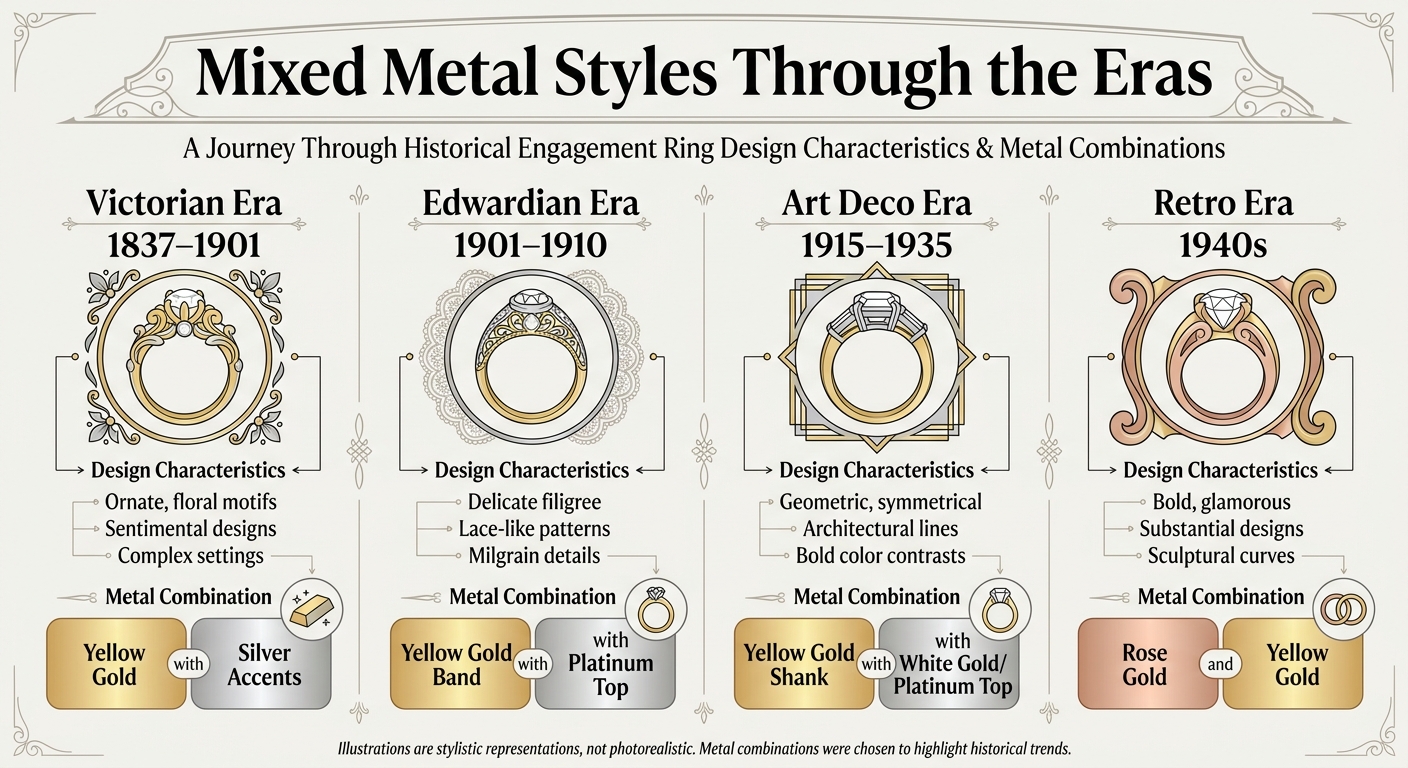
Vintage Era Mixed Metal Engagement Ring Styles Comparison
Mixed material rings offer a wide range of styles, making it easy to find something that matches any personality.
Modern and Minimalist Designs
If you love clean lines and simple elegance, modern minimalist designs bring a fresh perspective to the classic engagement ring. These styles often feature subtle contrasts between metals, like pairing yellow gold with rose gold. This combination creates a soft, sophisticated look that enhances the center stone without overpowering it. The secret lies in thoughtful placement - one metal might be used for the band, while the other highlights the prongs or halo, drawing attention to the diamond while keeping the overall design sleek.
"Mixed metal engagement rings are the perfect blend of tradition and modern flair, offering a unique way to make your ring truly stand out." - Gary A., Author
Minimalist mixed metal rings are incredibly versatile, seamlessly complementing other jewelry, which makes them perfect for everyday wear. For instance, a reimagined solitaire design with mixed metals offers a modern twist on a classic shape, keeping the spotlight on the diamond while adding a contemporary touch.
Beyond minimalism, there are also options inspired by vintage aesthetics and bold statement pieces.
Vintage-Inspired Styles
For those drawn to timeless charm, vintage-inspired designs combine historical elegance with intricate details. These rings often feature elements like milgrain (tiny metal beads along the edges), filigree (delicate metal patterns), hand engraving, and openwork designs. Each historical era brings its own distinct flair to mixed metal styles, as shown below:
| Era | Design Characteristics | Typical Metal Mix |
|---|---|---|
| Victorian (1837–1901) | Ornate, floral motifs, sentimental | Yellow gold with silver accents |
| Edwardian (1901–1910) | Delicate filigree, lace-like patterns | Yellow gold band with platinum top |
| Art Deco (1915–1935) | Geometric, symmetrical, architectural | Yellow gold shank with white gold/platinum top |
| Retro (1940s) | Bold, glamorous, substantial | Rose gold and yellow gold |
Edwardian-era rings are known for their delicate, lace-like designs, often combining 18k yellow gold for durability with platinum tops to highlight diamonds and enhance their brilliance. Meanwhile, Art Deco rings focus on bold geometric shapes and symmetry, pairing yellow gold shanks with white gold or platinum tops for a striking two-tone look.
When opting for a vintage-inspired design, aim for a balanced mix of metals - around 70% primary metal and 30% accent metal. This creates a cohesive look that feels intentional rather than overly busy.
Bold Statement Rings
For those who want their ring to stand out, bold statement designs use sharp contrasts and unique textures to make an impact. Think twisted rope bands, cathedral settings featuring multiple metal colors, or geometric shapes that add dimension and drama. In these designs, the contrast itself becomes a defining feature, making the ring impossible to overlook - perfect for trendsetters who value originality over tradition.
Each of these styles offers a chance to tell a personal story through design. Whether you prefer understated elegance, vintage charm, or bold flair, these options allow you to create a ring that feels uniquely yours. Plus, they provide a great starting point for further customization with LaCkore Couture.
Customization Options with LaCkore Couture

LaCkore Couture takes customization to the next level, letting you create a mixed material ring that’s as unique as your story. Whether it’s an engagement ring or a personal piece, you’ll work directly with a jeweler to bring your vision to life. Their handcrafted, made-in-the-USA designs ensure every detail - from the choice of metals to the finishing touches - reflects your style and needs. Unlike mass-produced options, LaCkore Couture focuses on crafting jewelry that’s truly yours.
Custom Metal Combinations
Selecting the perfect metal combination is all about finding harmony between aesthetics and functionality. During your consultation, LaCkore Couture’s team will help you explore options like pairing 14K white gold with platinum for added durability, or blending rose gold with yellow gold for a warm, two-tone look.
Their handcrafted process also considers practical details such as metal hardness and weight distribution. You’ll even get to see samples of different finishes - polished, matte, or textured - so you can visualize how your ring will look and feel. This thoughtful approach ensures your ring isn’t just beautiful but also comfortable for everyday wear.
"Mix & match to create your own style." - LaCkore Couture
Once your metals are chosen, you can take your design even further by adding gemstones or engravings.
Adding Gemstones or Engravings
Gemstones are a stunning way to enhance your design, and LaCkore Couture offers a range of natural options, including diamonds, sapphires, and emeralds. Their team will guide you in pairing stones with your chosen metals. For instance, a vibrant blue sapphire stands out beautifully against white gold and platinum, while champagne diamonds bring warmth to rose and yellow gold combinations. They’ll also discuss practical factors like stone hardness and color saturation to ensure your ring retains its beauty over time.
Engravings add a deeply personal touch, whether it’s a name, a date, or a meaningful phrase. You can choose to engrave inside the band for subtlety or opt for an exterior engraving to make a bolder statement. With mixed material rings, you can even engrave specific sections - like marking a special date on the rose gold portion while keeping the white gold unadorned. The team carefully positions engravings to enhance the design without affecting the ring’s durability.
Care and Maintenance
Mixed material rings need special attention because different metals have distinct properties. For example, platinum is much harder than gold, so when these two metals are paired, the harder platinum can gradually wear down the softer gold over time. Knowing these details can help you take better care of your ring and preserve its beauty for years to come.
Cleaning Mixed Material Rings
When cleaning mixed material rings, always prioritize the most delicate material in the design. Use warm water, mild dish soap, and a soft brush to gently clean the ring, especially around the stones and where the metals meet. Harsh chemicals like chlorine or household cleaners should be avoided, as they can damage plating or react with certain alloys. After cleaning, make sure to dry the ring completely with a lint-free cloth to prevent water spots, particularly on white gold sections.
If your ring has white gold, keep in mind that it is often rhodium-plated for a bright finish. This plating wears off with regular use and typically needs professional replating every one to three years to maintain its shine. Sterling silver, on the other hand, is more prone to tarnishing and may require more frequent polishing.
Good cleaning habits are essential, but they work best when paired with proper storage and regular professional maintenance.
Storage and Handling
The wear rates of different metals should guide how you store your ring. Use a fabric-lined box with separate compartments to prevent scratches. Follow the "last on, first off" rule - put your ring on after applying products like perfume or sunscreen and take it off first to avoid exposure to these substances.
After wearing your ring, wipe it with a soft cloth to remove oils and residues. This simple step prevents buildup that can act like a "grinding paste" between the metals, speeding up wear. Additionally, take off your ring during activities like gardening, exercising, or housework to avoid contact with abrasive materials.
Professional Inspections
Schedule a professional inspection every six to twelve months to check the junctions where different metals meet and ensure the stones are secure. Friction between the metals can loosen prongs or settings over time. A jeweler can also assess if the ring's shank has become too thin and suggest fixes like re-shanking or laser welding.
"The true value of a wedding ring isn't just in its material cost, but in its ability to tell a story for decades. Understanding its vulnerabilities is the first step to preserving that narrative, especially when embarking on the mixed-metal journey." - Gabriel Alves, Jewelry Industry Expert
It's a good idea to coordinate these inspections with your rhodium replating schedule. If resizing is needed, consult a specialist, as the different melting points of mixed metals can make the process tricky.
2026 Trends in Mixed Material Rings
In 2026, mixed material engagement rings are all about blending personal significance with timeless design. These trends take established customization options to a new level, reshaping the look of modern engagement rings.
Eco-Friendly and Recycled Materials
Sustainability has become a core consideration in material selection. As Elora Jewelry explains:
Sustainability now feels like a standard, not a special request.
Lab-grown diamonds are leading the way, offering ethical alternatives that make intricate two-tone or three-tone designs more accessible. These diamonds come in a variety of striking colors, including blue, pink, yellow, and green, which can be used as eye-catching accents. Champagne or soft brown diamonds paired with yellow gold create a subtle, natural elegance. Additionally, lab-grown stones can replicate vintage cuts, combining a classic aesthetic with ethical sourcing.
Geometric and Non-Traditional Shapes
Designers are moving past symmetrical styles toward intentional asymmetry and mismatched elements, creating a bold, modern look. Non-traditional shapes are becoming a focal point, with mixed metals enhancing geometric details and adding visual separation within the ring.
Two-Tone and Three-Tone Designs
Color contrasts are evolving alongside innovative shapes, with mixed-metal designs becoming increasingly popular. Two-tone engagement rings are now one of the fastest-growing trends in bridal jewelry. The old "no mixing metals" rule has been replaced by refined combinations that add depth and versatility. Designers are experimenting with dominant-accent pairings, like an 18K yellow gold band paired with white gold prongs, as well as seamless transitions between metals, such as yellow gold blending into rose gold.
| Combination | Mood | Best Application |
|---|---|---|
| Yellow + White Gold | Classic contrast | Engagement rings, formal pieces |
| Yellow + Rose Gold | Warm harmony | Everyday jewelry, bracelets |
| White + Rose Gold | Modern romance | Contemporary bridal, pendants |
| All three golds | Versatile, dynamic | Statement pieces, collections |
| Gold + Silver | Bold contrast | Fashion-forward designs |
Tri-color combinations - featuring yellow, white, and rose gold - are especially popular because they pair effortlessly with any jewelry collection. Some designers are taking it a step further with selective plating techniques, applying rhodium or rose gold plating to specific areas. This creates striking contrasts without complicating the manufacturing process.
Conclusion
Mixed material rings bring together striking contrasts, rich textures, and a touch of personal expression. Pairing metals like yellow gold with platinum or rose gold with white gold creates a stunning balance of warm and cool tones that stand out beautifully.
By following the 70/30 rule - where 70% of the design features a dominant metal and 30% serves as an accent - you can achieve a timeless look that feels modern and fresh. Whether it’s the bold contrast of yellow and white gold, the subtle warmth of yellow and rose gold, or the sleek elegance of rose gold paired with platinum, each combination tells a story as unique as the wearer.
These rings are more than just visually appealing - they’re also incredibly practical. They effortlessly merge contemporary styles with vintage pieces, making it easy to pair them with heirlooms or stack multiple bands for a dynamic "ring wardrobe". This flexibility makes them an ideal choice for anyone looking to create something truly personal.
With LaCkore Couture, you can design a handcrafted engagement ring that perfectly reflects your relationship. From mixing metals to adding gemstones or custom engravings, you have the freedom to create a piece that breaks away from tradition while celebrating your one-of-a-kind bond.
FAQs
Will mixed metals wear unevenly over time?
Mixed metals can sometimes wear unevenly when there’s a big difference in their hardness and durability. This mismatch might lead to scratches or uneven wear over time, especially if the metals aren’t carefully matched or maintained. To help prevent this, choose metals that are more compatible and take care of them regularly to keep them looking their best.
Can a mixed metal ring be resized later?
Yes, most mixed-metal rings can be resized, but the process can be tricky. The difficulty largely depends on the ring's design and the types of metals involved. To avoid potential damage, it’s a good idea to take your ring to a professional jeweler who can assess it and determine the safest way to resize it.
How do I match a mixed metal ring with a wedding band?
To match a mixed metal ring with a wedding band, aim for balance and visual consistency. Pair metals that work well together, such as rose gold with white gold for a soft contrast or yellow gold with platinum for a striking combination. Make sure the metals are compatible in terms of durability and maintenance. For a polished look, keep the proportions in check by letting one metal take the lead while the other serves as a subtle accent.