Skip to content




Ultimate Guide to Gemstone Shape Personalization
Choosing the right gemstone shape is about more than aesthetics - it reflects your personality and influences the sparkle, color, and perceived size of the gem. From the timeless round brilliant to the elegant oval or the bold princess cut, each shape offers distinct qualities. Here's what you need to know:
- Shape vs. Cut: Shape refers to the stone's outline (e.g., round, oval), while cut determines how light reflects off its facets.
- Light Reflection: Brilliant cuts maximize sparkle, while step cuts emphasize clarity and color.
- Popular Shapes: Round brilliants dominate the market (75%), but ovals, princess, emerald, and cushion cuts offer unique appeal.
- Daily Wear: Rounded shapes like cushion or round cuts are durable, while pointed shapes (e.g., marquise) need protective settings.
- Customization: Combine shapes, settings, and metals to create personalized designs.
For custom jewelry, consider how shapes interact with settings and metals to protect and enhance your gemstone. LaCkore Couture offers handcrafted options to make your jewelry truly personal.
Popular Gemstone Shapes and What Makes Them Different
Every gemstone shape brings a unique flair to jewelry. The way a gem is cut not only enhances its natural beauty but also affects how it reflects light, its apparent size, and its overall vibe. Whether you're after something classic, modern, or practical, understanding these shapes can help you pick the perfect stone. Here's a closer look at some of the most popular cuts and their standout qualities.
Round Brilliant Cut
The round brilliant cut, with its 57 or 58 facets, is designed to deliver maximum sparkle and light reflection. Known as the gold standard for brilliance, this cut is versatile enough to shine in nearly any setting. Its timeless charm makes it a favorite for both classic designs and everyday wear. However, its popularity and the material loss during cutting often make it pricier per carat.
Oval Cut
Think of the oval cut as an elongated version of the round brilliant, typically featuring 56 to 58 facets. This shape creates a "spread effect", making the gem appear larger than a round stone of the same carat weight. It’s a go-to choice for those who love the sparkle of a round cut but want a more modern, finger-flattering silhouette. The oval cut strikes a perfect balance between traditional elegance and a contemporary edge.
Princess Cut
The princess cut stands out with its square or rectangular shape and sharp, pointed corners, boasting 58 to 76 facets. As the second most popular cut after the round brilliant, it offers a sleek, geometric look paired with impressive brilliance and scintillation. Plus, its square shape allows more of the original crystal to be preserved, often making it more budget-friendly than round cuts. However, those sharp corners can be prone to chipping, so protective settings like V-prongs are a must.
Emerald Cut
The emerald cut is all about understated elegance. With its rectangular step-cut design, cropped corners, and 50 to 57 facets, it creates a "hall of mirrors" effect that emphasizes clarity and color over sparkle. While often more affordable per carat due to lower demand, this cut requires higher clarity grades (usually VS1 or better) to avoid visible inclusions. Its vintage feel makes it a favorite for sophisticated and timeless designs.
Cushion Cut
Also called the "pillow cut", the cushion cut combines a square or rectangular outline with rounded corners and typically features 58 to 64 facets. With a history spanning nearly 200 years, it was the top choice before the round brilliant gained popularity. This cut exudes a soft, romantic vibe and can feature either a "chunky" or "crushed ice" look, depending on the facet pattern. Today, it’s a popular pick for vintage-inspired and Art Deco-style jewelry, especially for colored gemstones and antique settings.
How Gemstone Shapes Affect Light, Color, and Perceived Size
The way a gemstone is cut plays a major role in how it interacts with light, shows off its color, and even how big it looks. Understanding these factors can help you find the perfect balance of sparkle, color, and visual appeal. Let's break down how these elements come together to shape a gemstone's overall performance.
Light Reflection
Certain cuts are designed to maximize how a gemstone reflects light. For example, brilliant cuts - like round, princess, and radiant - are crafted with facets that radiate from the center, creating dazzling "fire" (rainbow-like flashes) and "brilliance" (bright white light return). The round brilliant cut is especially famous for its superior light performance, which explains why about 75% of gemstones on the market are round brilliants. They’re engineered for optimal sparkle, making them a popular choice.
Color Intensity
The arrangement of a gemstone's facets directly affects how its color appears. Step cuts, for instance, are known for enhancing deep, clear colors because they allow light to travel deeper into the stone rather than just bouncing off the surface. As Benjamin Zucker explains in A Connoisseur's Guide to Gems and Jewels, "The cutter must orient the stone so that the most desirable color is reflected through the table of the stone". On the other hand, brilliant cuts, with their many small facets, excel at reflecting light but can sometimes mask a gem's natural color. This makes them great for hiding yellowish tones in diamonds but less ideal for showcasing bold, vibrant colors in other gemstones.
Perceived Size
A gemstone's shape can also influence how large it appears. Elongated cuts like marquise, oval, and pear shapes create the illusion of a larger size by covering more surface area on the finger compared to round stones of the same carat weight. Among these, the marquise cut stands out for having one of the largest face-up areas. Similarly, rose cuts, with their flat bottoms, sit closer to the skin and appear larger face-up than other cuts of the same weight.
Common Light Performance Issues
While a well-cut gemstone can enhance its beauty, certain cutting flaws can diminish its light performance. For example:
- Windows occur when a gem is cut too shallow, allowing light to pass straight through rather than reflecting back.
- Extinction happens when overly steep pavilion facets create areas with little to no light return.
- The bowtie effect is a dark, bowtie-shaped shadow that can appear in elongated brilliant cuts like ovals and pears if the proportions aren’t just right.
To avoid these issues, it’s essential to examine gemstones under different lighting conditions. A well-cut stone will minimize these imperfections and maximize its brilliance.
What to Consider When Choosing Gemstone Shapes for Custom Jewelry
When selecting a gemstone shape, it’s crucial to think about how it fits with your lifestyle, personal style, and budget. The shape you choose affects not only the durability and sparkle of the stone but also its overall visual impact. Let’s dive into some key factors to help you make the best choice.
Selecting Shapes That Match Your Style
A gemstone's shape can say a lot about your personality. For a timeless and classic look, round brilliant cuts are a go-to choice. If you’re drawn to modern designs, princess and hexagon shapes offer a sleek, geometric vibe. On the other hand, if vintage aesthetics are more your thing, shapes like cushion, Asscher, and rose cuts bring an antique charm with their softer, romantic appeal.
The shape of the gemstone also interacts with the shape of your hand. If you’re looking to create the illusion of longer, more slender fingers, elongated shapes like oval, pear, and marquise are great options. These shapes also tend to appear larger than round stones of the same carat weight, giving you a bold, eye-catching look. For those keeping up with trends, pear shapes are currently in high demand for their blend of classic elegance and modern flair. Additionally, rough or raw gemstones, such as uncut rose quartz, are gaining popularity for their natural, earthy aesthetic.
But style isn’t everything - durability matters too, especially for everyday wear.
Choosing Shapes for Daily Wear
If your jewelry will be part of your daily routine, durability should be a top priority. Shapes with sharp points, like marquise, pear, and princess cuts, are more prone to chipping or snagging. In contrast, cuts like emerald and radiant, with their cropped corners, are designed to minimize the risk of fractures. Similarly, round and cushion cuts with their rounded edges offer added strength, making them ideal for daily wear.
For pointed designs, consider using V-prongs to protect the edges from damage. The stone’s profile also plays a role - flatter cuts like radiant and rose cuts sit closer to the hand, reducing the chance of catching on clothing or surfaces. If you’re working with softer gemstones like opal or turquoise, non-faceted shapes such as cabochon are a smart choice since they lack sharp edges that could easily break. This way, your jewelry can balance both beauty and practicality.
Balancing Cost with Material Choices
Budget is another important factor when picking a gemstone shape. Some cuts, like princess and radiant, are more cost-effective because they retain more of the original rough stone during the cutting process. Despite their affordability, these shapes still deliver plenty of sparkle.
Elongated shapes such as oval, marquise, and pear not only provide a larger visual appearance but can also help stretch your budget by maximizing the stone’s perceived size. However, keep in mind that step cuts like emerald and Asscher have large, open facets that tend to highlight inclusions, meaning you may need a higher clarity grade for these stones to look flawless. On the flip side, brilliant cuts with their intricate faceting can hide minor imperfections, allowing you to opt for a lower clarity grade without sacrificing beauty.
"Round and brilliant-cut gemstones are generally more expensive due to their popularity and the amount of rough material that is lost during the cutting process".
The shape of the gemstone can also influence metal costs. For instance, a radiant cut with its 70 facets creates a dazzling "crushed ice" effect that masks imperfections, giving you more flexibility to work within your budget while achieving a stunning look. By choosing the right shape, you can strike the perfect balance between aesthetics and cost efficiency.
Matching Gemstone Shapes with Settings and Metals
Pairing gemstone shapes with the right settings and metals isn’t just about aesthetics - it’s also about protecting your stone and achieving a balanced design.
Setting Styles for Different Gemstone Shapes
The setting you choose should complement your gemstone’s natural structure while offering the necessary support. For shapes with pointed edges, like marquise, pear, or princess cuts, extra care is essential. V-prongs are a great choice here, as they protect the sharp tips from chipping or snagging. As the GIA explains:
"The pointed tip calls for extra care during setting and wear".
For heart-shaped stones, prongs should secure the rounded lobes, leaving the cleft open to maintain the heart’s iconic shape while safeguarding the bottom point.
Step-cut gemstones, such as emerald and Asscher cuts, feature large, open facets that highlight the stone’s clarity. These cuts pair beautifully with minimalist solitaire settings or Art Deco-inspired designs that emphasize their clean, geometric lines. If you’re working with an Asscher cut over 3 carats, consider double prongs for added corner protection. Meanwhile, brilliant cuts like round and cushion are incredibly versatile and forgiving. They shine in halo settings (which amplify the stone’s size) or pavé designs that enhance sparkle.
For softer stones like opal or turquoise, a bezel or cabochon setting is ideal. These styles provide a protective frame that helps prevent chips and cracks.
Once you’ve secured the perfect setting, the choice of metal adds another layer of personality to your jewelry.
Choosing Metals to Complement Gemstone Shapes
The metal you select can dramatically influence how your gemstone looks. Warm metals, such as yellow gold and rose gold, are a natural fit for vintage-inspired cuts like cushion, old European, and rose cuts. These metals enhance the softer, warmer tones often found in antique stones. The GIA notes:
"Yellow and rose gold settings perfectly complement the antique aesthetic, harmonizing with the tones of warmer diamonds".
On the other hand, cool metals like white gold and platinum lend a sleek, modern feel, especially when paired with high-clarity, colorless gems. However, keep in mind that these metals can highlight any yellow or brown undertones in a stone. As the GIA points out:
"Cool metals such as white gold and platinum can contrast with the yellow or brown hues in diamonds, making them appear more pronounced against the metal".
For elongated shapes, such as oval and marquise, a solitaire setting in white gold or platinum creates a contemporary and elegant look, emphasizing the stone’s length and dramatic silhouette.
At LaCkore Couture, you can customize every detail to suit your style. Whether you’re drawn to the romantic charm of a rose gold cushion cut or the modern sophistication of a platinum emerald cut, the handcrafted designs ensure your jewelry is both uniquely you and built to protect your gemstone for years to come.
How to Create Custom Gemstone Designs at LaCkore Couture

Designing custom gemstone jewelry isn’t just about choosing a cut or setting - it’s about creating a piece that truly represents your style. At LaCkore Couture, you can make your jewelry one-of-a-kind by blending shapes, experimenting with materials, or crafting entirely original pieces. Thanks to their handcrafted techniques, every design transforms into a personal expression.
Mixing Shapes and Materials for Unique Jewelry
One way to personalize your jewelry is by combining different gemstone shapes. Whether you prefer a classic, balanced arrangement or a bold, modern asymmetry, mixing cuts adds depth and character to your design. For example, a round brilliant center stone paired with marquise accents offers timeless elegance, while alternating cushion and oval cuts creates a more dynamic and eye-catching look.
But it’s not just about the gemstones. Incorporating diverse materials like leather, wood (think ash, bamboo, or walnut), beads, or charms can elevate your piece even further. LaCkore Couture embraces this trend, weaving natural elements into their designs to appeal to those seeking something distinctive. For instance, imagine a gold necklace adorned with a pear-shaped gemstone and wooden beads for a boho vibe, or a bracelet stack combining power pearls with playful, tropical-themed charms like seashells.
Technical details also play a role in creating standout designs. LaCkore Couture uses curved facets to enhance light reflection, making gemstones appear larger and more brilliant. These thoughtful touches ensure your jewelry doesn’t just look good - it shines in every sense.
Customization Services at LaCkore Couture
At LaCkore Couture, every piece is handmade, blending contemporary trends with timeless natural elements. This artisanal approach offers a level of flexibility that mass-produced jewelry just can’t match. Whether it’s a zodiac-inspired pendant with a custom-cut gemstone or a charm bracelet that tells your story, their designs are crafted to be as unique as you are.
The customization process is simple and collaborative. You can choose from their existing collections or work directly with the team to select your preferred gemstone shapes, settings, and metals. Plus, with perks like free shipping on orders over $100 and a Lifetime Guarantee on all handcrafted pieces, you’ll not only get jewelry that reflects your vision but also enjoy peace of mind knowing it’s built to last.
Gemstone Shape Comparison Table
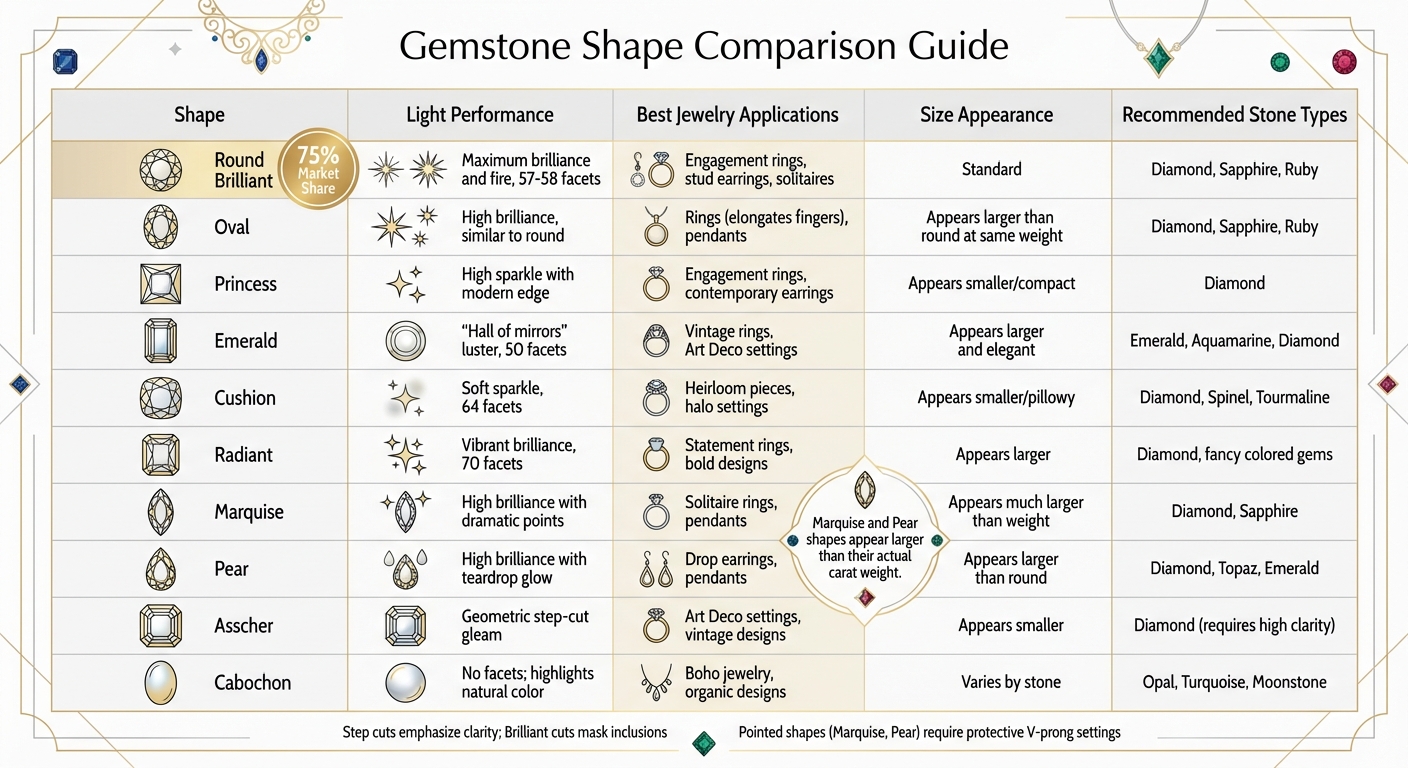
Gemstone Shape Comparison Guide: Light Performance, Applications, and Size Appearance
The table below provides a quick overview of the key features of various gemstone shapes. Round brilliant cuts are the most popular, making up about 75% of the gemstone market. Shapes like marquise and pear stand out for their ability to look larger than their actual carat weight, offering impressive visual appeal for the same investment. These details can help you make more informed design decisions.
| Shape | Light Performance | Best Jewelry Applications | Size Appearance | Recommended Stone Types |
|---|---|---|---|---|
| Round Brilliant | Maximum brilliance and fire with 57-58 facets | Engagement rings, stud earrings, solitaires | Standard | Diamond, Sapphire, Ruby |
| Oval | High brilliance, similar to round | Rings (elongates fingers), pendants | Appears larger than round at same weight | Diamond, Sapphire, Ruby |
| Princess | High sparkle with a modern edge | Engagement rings, contemporary earrings | Appears smaller/compact | Diamond |
| Emerald | "Hall of mirrors" luster with 50 facets | Vintage rings, Art Deco settings | Appears larger and elegant | Emerald, Aquamarine, Diamond |
| Cushion | Soft sparkle with 64 facets | Heirloom pieces, halo settings | Appears smaller/pillowy | Diamond, Spinel, Tourmaline |
| Radiant | Vibrant brilliance with 70 facets | Statement rings, bold designs | Appears larger | Diamond, fancy colored gems |
| Marquise | High brilliance with dramatic points | Solitaire rings, pendants | Appears much larger than weight | Diamond, Sapphire |
| Pear | High brilliance with teardrop glow | Drop earrings, pendants | Appears larger than round | Diamond, Topaz, Emerald |
| Asscher | Geometric step-cut gleam | Art Deco settings, vintage designs | Appears smaller | Diamond (requires high clarity) |
| Cabochon | No facets; highlights natural color | Boho jewelry, organic designs | Varies by stone | Opal, Turquoise, Moonstone |
The table summarizes the standout qualities of each shape, but there are additional technical details worth considering.
Step cuts like emerald and asscher emphasize clarity over brilliance, creating a "hall of mirrors" effect that’s best suited for high-quality stones with minimal inclusions. In contrast, brilliant cuts (round, princess, radiant) use intricate faceting to mask inclusions, making them ideal for stones with lower clarity.
For pointed shapes like marquise and pear, protective settings such as V-prongs or bezels are essential to improve durability. These considerations ensure your gemstone not only looks stunning but also remains secure over time.
Conclusion
Choosing a gemstone shape is more than just a design decision - it’s a way to express your personality and tell your story. Whether you’re drawn to the classic brilliance of a round cut or the vintage appeal of a cushion cut, the shape you select becomes a reflection of your unique style. And when paired with the craftsmanship of a handcrafted piece, it creates a connection that lasts a lifetime.
"The best gemstone to buy is the stone you will enjoy the most... It's entirely about what best fits your personality and what you find most beautiful." – Lisa Bridge, Vice President of Education and Certified Gemologist, Ben Bridge
Different cuts bring out different qualities in gemstones. Step cuts highlight clarity, brilliant cuts enhance sparkle, and elongated shapes like oval or pear offer a flattering, elegant look. These techniques open up endless possibilities for personalizing your jewelry.
LaCkore Couture takes this personalization to the next level with their customization services. Their Charm Bar and handcrafted approach let you mix and match shapes, metals, and gemstones to create a design that’s truly yours. And with their Lifetime Guarantee, you can feel confident that your one-of-a-kind piece is made to last.
FAQs
How does the shape of a gemstone influence its appearance and size in jewelry?
The shape of a gemstone is a defining factor in how a piece of jewelry looks and even how large the stone appears. While the shape refers to the stone's outline, the cut - how the facets are arranged - determines its sparkle and brilliance. For instance, shapes like oval or pear can make a gemstone appear larger than a round brilliant of the same carat weight. This is because they spread the weight across a longer surface area, creating an illusion of size.
Each shape brings its own charm and aesthetic. Round brilliant cuts are classic and designed to maximize sparkle, making them a timeless favorite. Oval and pear shapes not only make the stone look larger but also create an elongating effect that flatters the wearer. For a contemporary, angular style, princess and emerald cuts are ideal, while heart and cushion shapes add a softer, romantic vibe. Selecting the right shape enhances the overall appearance of the piece and ensures it aligns with your style and feels balanced.
At LaCkore Couture, every piece is meticulously handcrafted in the USA, offering customization options to suit your preferences. Whether you’re drawn to the timeless sparkle of a round cut or the bold sophistication of an emerald cut, you can create a design that’s perfectly tailored to your taste and the impression you want to make.
What should I keep in mind when selecting a gemstone shape for everyday jewelry?
When selecting a gemstone shape for everyday wear, focus on durability, comfort, and how the shape highlights the stone's natural charm. Round and oval cuts are classic choices that work well in nearly any setting, while shapes like princess or emerald bring a modern edge to your jewelry. It's also important to consider how the gemstone sits in the setting - sleek, low-profile designs are often more practical for daily use.
Think about how the cut interacts with the stone’s color and brilliance. The right shape can enhance its unique characteristics, making your piece stand out. If you're looking for something truly personal, opting for handcrafted designs with customizable options allows you to create jewelry that reflects your individual style.
How can I customize gemstone jewelry to match my personal style?
Customizing gemstone jewelry is all about creating a piece that feels uniquely yours, starting with the gemstone shape. Whether you’re drawn to the timeless appeal of a round cut, the elegance of an oval, the playful charm of a pear shape, or the sharp sophistication of a princess cut, each option brings out the gemstone’s color and brilliance in its own way.
Next, think about the setting. A prong setting offers a classic and traditional vibe, while a bezel setting gives a sleek, modern edge. For something bolder and more contemporary, a tension setting might be the perfect choice.
To add even more personality, try mixing metals like gold, silver, or rose gold for a distinctive look. Thoughtful details, such as engraved initials, birthstones, or tiny charms, can make the piece even more meaningful. You can also tailor the size of the gemstone to match the type of jewelry - a delicate 6 mm stone works beautifully for a pendant, while a larger 10 mm gem makes a striking statement in a ring. For a truly unique touch, consider incorporating motifs inspired by nature or vintage art-deco patterns.
With these customizable elements, you can craft a piece of jewelry that’s not just beautiful but also a true reflection of your individuality.