Skip to content




Symbolism in Victorian Mourning Jewelry
Victorian mourning jewelry was a visual code for grief. If I want to read a piece fast, I look at 4 things first: motif, material, inscription, and jewelry type.
Here’s the short version:
- Black materials like Whitby jet pointed to deep mourning
- White enamel often marked mourning for a child or unmarried young woman
- Half-mourning could include gray, lavender, amethyst, or blue enamel
- Weeping willow, urn, and seed pearls spoke of sorrow, memory, and tears
- Cross, angel, clasped hands, and Mizpah pointed to faith, parting, and hoped-for reunion
- Ouroboros, anchor, and broken column dealt with eternity, hope, and a life cut short
- Hairwork, names, dates, portraits, and memorial phrases turned a piece from public mourning into a personal relic
A few details matter more than most. Hair was used because it lasts for decades, which made it a direct link to the dead. Brooches were public, lockets were private, rings often named the dead inside the band, and bracelets were usually limited to one under mourning dress rules.
If I had to reduce the whole topic to one line, it would be this: Victorian mourning jewelry was not just black jewelry - it was a personal message made from symbols people of the time could read at a glance.
| What to check | What it can tell you |
|---|---|
| Motif | Grief, innocence, faith, hope, eternity, or reunion |
| Material / color | Deep mourning, child mourning, or half-mourning |
| Inscription | The name, death date, age, or memorial phrase |
| Jewelry type | Whether the message was public, private, or shared with family |
Below, I break down how these signs worked together and how to spot them on Victorian pieces today.
Key Symbols and Their Meanings
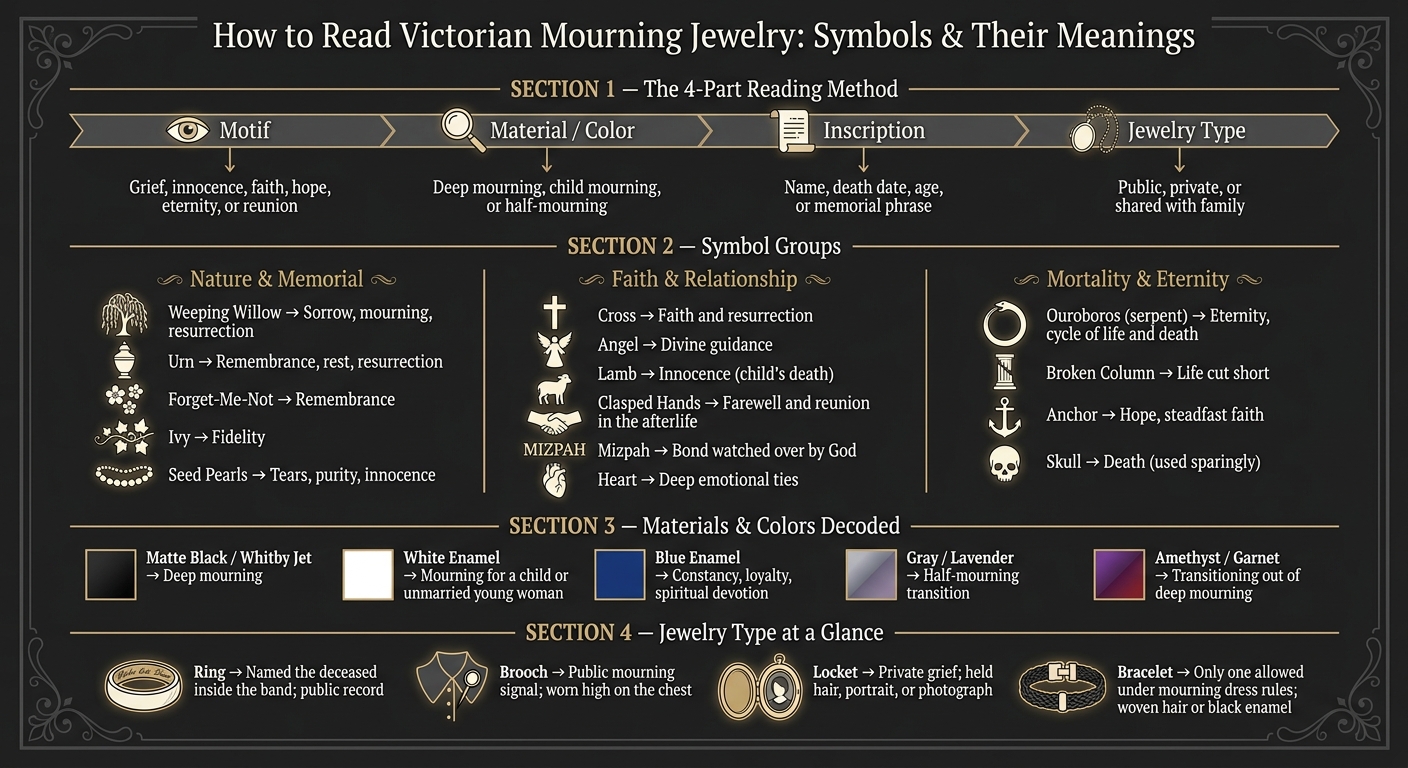
Victorian Mourning Jewelry Symbols: A Visual Reading Guide
Each motif worked like part of a shared visual code. It told the viewer whether a piece spoke of grief, faith, innocence, or reunion. These motifs usually fell into three broad groups: nature, faith and relationship, and mortality and eternity. The same symbol could appear on a ring, brooch, locket, or bracelet, and its meaning usually stayed the same.
Nature and Memorial Motifs: Weeping Willow, Urn, Flowers, and Ivy
The weeping willow was one of the best-known mourning symbols in Victorian jewelry. Its drooping branches stood for sorrow and natural tears. But there was another layer to it. Because the willow could keep growing even after being cut back, it also pointed to resurrection and eternal life. You’ll see it carved into jet brooches and painted on ivory miniatures.
The urn came from classical imagery and stood for remembrance, rest, and resurrection. It often appeared with a willow in memorial scenes. Flower symbols also carried very specific meanings. Forget-me-nots meant remembrance, while ivy stood for fidelity.
Put together, these symbols gave grief a gentler shape. They linked loss with renewal, memory, and lasting connection.
Faith and Relationship Motifs: Cross, Angel, Lamb, Heart, Clasped Hands, and Mizpah
Other motifs moved away from nature and leaned into belief. These symbols spoke more directly about hope, comfort, and reunion.
Crosses signaled faith and resurrection. Angels suggested divine guidance. A raised hand pointed to the soul’s ascent, while folded hands suggested resignation to God’s will.
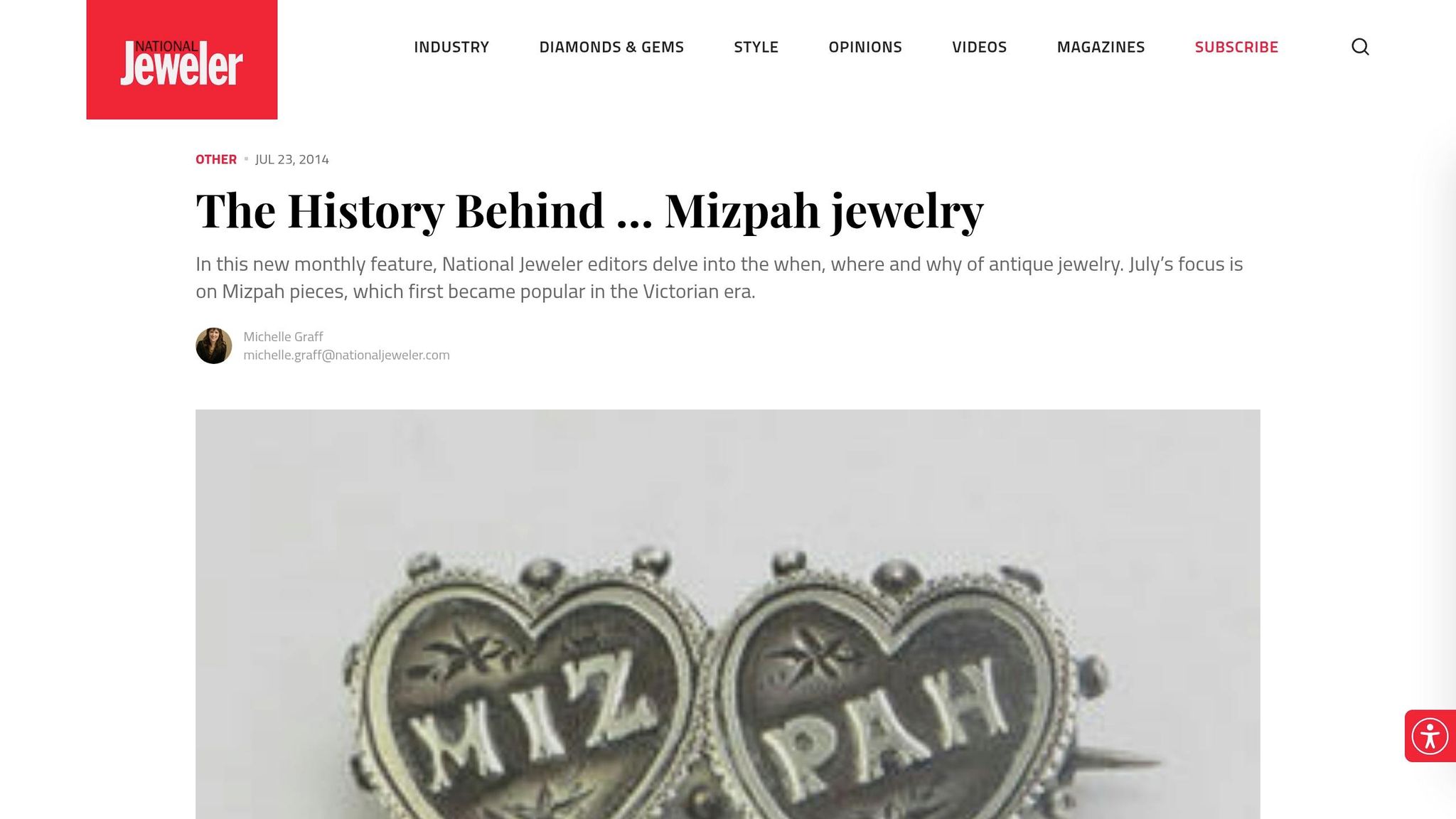
Lambs stood for innocence. Hearts expressed affection and often appeared in memorial lockets and pendants, which made grief feel personal instead of only ceremonial. Clasped hands meant both farewell and reunion in the afterlife. Mizpah referred to a bond watched over by God, and it appeared on twin-heart brooches, rings, and lockets.
Mortality and Eternity Motifs: Skull, Serpent, Broken Column, Anchor, and Seed Pearls
Some symbols kept death plainly in view, but framed it through eternity instead of fear.
Victorian mourning jewelry kept older death symbols, though in a quieter way. The ouroboros - the serpent eating its own tail - stood for eternity and the cycle of life and death. It appeared on rings and bracelets. A broken column signaled a life cut short, often the death of a family head. The anchor meant hope and steadfast faith. Seed pearls - tiny white pearls used as mourning accents - suggested tears, purity, or innocence, and they often bordered hairwork panels on rings and lockets.
| Symbol | Meaning | Common Use |
|---|---|---|
| Weeping Willow | Sorrow, mourning, resurrection | Brooches, pendants, rings |
| Urn | Remembrance, rest, resurrection | Rings, pendants, brooches |
| Clasped Hands | Farewell and reunion in the afterlife | Brooches, pendants, rings |
| Broken Column | A life cut short, often the loss of a family head | Engraved rings, brooches |
| Ouroboros | Eternity; cycle of life and death | Rings, bracelets |
| Seed Pearls | Tiny white pearls used as mourning accents; suggested tears, purity, or innocence | Borders on rings and lockets |
| Anchor | Hope; steadfast faith | Pendants, charms, jet carvings |
| Mizpah | A bond watched over by God | Rings, brooches, lockets |
Hairwork, Inscriptions, and Personal Relics
The symbols on the front of a mourning piece told the public part of the story. The details tucked inside, or engraved on the back, told the private part. Hair, names, dates, and portraits turned jewelry into something tied to one person and one loss.
Why Hairwork Held Special Meaning
If the front of mourning jewelry spoke through shared symbols, hairwork made grief intimate. Hair was treated as a physical relic of the deceased. Unlike most organic materials, it resists decay, so it could be braided into a bracelet chain or placed under glass in a locket and stay intact for generations.
That lasting quality mattered. It meant the wearer carried part of the person with them. Many women also made hairwork at home, which kept the memorial close to family hands and family feeling.
Common Hairwork Designs and What They Symbolized
Hairwork was not just decoration. The form itself carried meaning.
Woven plaits and braided chains stood for friendship, fidelity, and bonds that would not break. Circular wreaths made from hair pointed to eternity. When a wreath included strands from several family members, it could serve almost like a sentimental family tree. Floral forms drew on the Victorian language of flowers to express remembrance.
Another method was sepia painting. In this process, powdered hair mixed with ink was used to paint miniature mourning scenes, such as willows, urns, and graves, on ivory or glass.
| Hairwork Technique | What It Looked Like | Symbolic Meaning |
|---|---|---|
| Palette-work | Strands stiffened with egg white and glued into patterns | Intricate remembrance; often used for initials or floral motifs |
| Sepia Painting | Pulverized hair mixed with ink to create miniature scenes | Direct memorialization; depicted graves, willows, or urns |
| Table Braiding | Hair worked on special tables with bobbins and weights | Strength and fidelity; used for durable chains and bracelets |
Victorians read these forms as meaning, not mere ornament.
Names, Dates, Portraits, and Memorial Phrases
The back of a brooch or the inside of a locket often held the most exact details. Reverse engravings often included the deceased's full name, date of death, and sometimes age. Phrases like "In Memory Of", "Not Lost but Gone Before", and "Forever Loved" appeared often.
Before the 1880s, miniature painted portraits sometimes served as intimate memorials. In some cases, the portrait was reduced to a single-eye miniature, private and deeply personal, yet anonymous to anyone outside the close circle of those who knew the person. By the late 19th century, photographs began to replace painted portraits in lockets.
The outer motifs spoke in a shared visual language. The hidden details named the person being mourned. Together, they finished the story that the front of the piece only began.
How to Read Symbolism by Jewelry Type
Once you know the motifs, the type of jewelry helps you see who the message was meant for. Rings, brooches, lockets, and bracelets each handled mourning a bit differently.
Rings, Brooches, Lockets, and Bracelets
Rings were often made in sets for family and friends. That turned the band into a visible record of the people tied to the deceased. The front might show a weeping willow or an urn. Inside the band, you’d often find the key facts: the deceased’s name, date of death, and age, sometimes written with short forms for death and age. In plain terms, rings usually recorded identity. Brooches, by contrast, made mourning easier to see.
Brooches sent a clear public signal, especially when worn high on the chest. Many included a glass compartment on the back. But the front did the public work, using symbols like an anchor, cross, or seed pearls around the main image to stand for tears.
Lockets were more private. They could hold hair, a tooth, or, later on, a photograph. Because they were worn close to the chest, they kept grief close too. Hearts appeared often on lockets because they pointed to deep emotional ties.
Bracelets followed a firm rule. Mourning etiquette allowed only one, usually made of woven hair or black enamel, as a direct sign of grief.
Clues About Age, Relationship, and Life Stage
The same symbol could shift in meaning based on the age of the deceased or the wearer’s bond with them. A lamb pointed to the death of a child. A broken column showed a life cut short, often tied to the death of a young person or the head of a household. White enamel was used for children or unmarried women, standing for purity and innocence, while black enamel was the norm for adults.
Love and separation left their own signs. Hearts, clasped hands, and Mizpah inscriptions appeared on rings or brooches exchanged between people parted by death or distance, meaning "The Lord watch between me and thee, when we are absent one from another".
Materials and Colors as Interpretive Clues
Matte black materials matched the look of deep mourning. Authentic Whitby jet was lightweight and warm to the touch. French jet, on the other hand, was black glass that felt heavier and colder.
| Material / Color | Symbolic Meaning | Use |
|---|---|---|
| White Enamel | Purity and innocence | Mourning for children or unmarried women |
| Seed Pearls | Tears of the bereaved | Accents on brooches, rings, or lockets |
| Blue Enamel | Constancy, loyalty, and spiritual devotion | Often worn after formal mourning |
| Amethyst / Garnet | Transitioning grief | Acceptable during half-mourning |
Later mourning stages allowed colors like grey and lavender, along with quiet gems such as amethyst. So if a piece includes amethyst or garnet in an otherwise dark setting, it likely belongs to the shift out of deep mourning, not the start of it. Those details can help date the piece and show what stage of mourning it reflects.
Once the type and color are clear, the next clues come from the names, dates, portraits, and hair inside the piece. The most personal meaning often appears in what the piece holds, hides, or engraves.
Modern Understanding and Conclusion
Recognizing Victorian Mourning Symbolism Today
Once you know the symbols, the next step is to study the piece itself. Look at the finish, the construction, and any small details tucked away inside.
A matte black surface usually points to deep mourning. A shinier finish often suggests a later mourning stage. A closed back is another strong clue, since it often held hair, a portrait, or another insert. Rings and lockets may also have engraved names, death dates, or phrases like "In Memory Of". Those details show that the jewelry was made for one person, not just sold as a black antique item.
That distinction matters. Memento mori jewelry served as a general reminder of death. Victorian mourning jewelry was usually tied to the memory of one specific person.
How Victorian Symbols Influence Modern Handcrafted Jewelry
Victorian motifs still speak clearly today. The serpent, heart, cross, forget-me-not, and anchor all carry meaning that people still understand and use.
The big idea hasn't changed: meaning mattered more than material. That same mindset still shapes handcrafted jewelry now, both in how pieces are made and in why people choose to wear them.
Conclusion: The Core Symbols to Remember
Taken together, these symbols create a clear visual code. Victorian mourning jewelry worked as a visual language. Every part of a piece - the motif, material, color, and inscription - added meaning.
To read a piece well, use the same four-part method each time:
- Motif
- Material
- Inscription
- Jewelry type
Some signals are especially important. Matte black points to deep mourning. White enamel often marks the loss of a child or an unmarried young woman. Amethyst or blue enamel appears in half-mourning. The main motifs to remember are the weeping willow, urn, clasped hands, serpent, cross, and seed pearls. Each one carried a precise message in a system shaped by grief.
Once you understand that language, Victorian mourning jewelry stops looking like just another antique. It reads like a personal message shaped by one life and one loss.
FAQs
How can I tell mourning jewelry from memento mori?
The main difference comes down to purpose.
Memento mori jewelry serves as a reminder that life is short and death comes for everyone. That’s why it often features symbols like skulls, skeletons, coffins, and hourglasses.
Mourning jewelry, by contrast, is made to remember a specific person who has died. It tends to use black or subdued colors along with grief-related motifs such as weeping willows, urns, and forget-me-nots. It may also include hairwork, initials, or memorial inscriptions.
What symbols most strongly suggest a child memorial?
In Victorian mourning jewelry, a child memorial often used white materials such as ivory or white enamel. Those colors pointed to innocence.
You also see a few other recurring signs. Broken columns marked a life ended too soon. Children’s hands releasing birds or butterflies suggested an innocent soul set free. Cherubs, meanwhile, signaled a memorial centered on a child.
How do I identify real hairwork in antique jewelry?
Look for signs that point to mourning or memorial use. That can include inscriptions with names or death dates, along with motifs like weeping willows, urns, or cherubs. In many cases, actual hairwork appears behind glass in lockets or shows up in forms like palette-work.
It also helps to study the craftsmanship. Skilled braided or woven patterns and a steady hair color and texture are good signs. Provenance matters too, because sellers and makers sometimes used substitute materials in place of human hair.