Skip to content




How Often Should Stone Jewelry Get Checked?
I recommend a jeweler’s inspection every 6 months for daily-wear stone jewelry and at least once a year for occasional-wear pieces. Worn settings or fragile stones may need checks sooner - sometimes every 3–4 months, based on your jeweler’s advice.
Here’s the routine I suggest between visits:
- Look before wearing. Check frequently worn pieces more closely every 1–2 weeks, including stones, settings, clasps, links, and earring backs.
- Don’t wait after damage. After a hard knock, snag, or signs of loose parts, <u>stop wearing the piece</u> and ask a jeweler to assess it.
- Leave repairs to a jeweler. Don’t push stones, bend prongs, or clean damaged jewelry before it’s assessed.
- Keep a simple record. Save inspection dates, photos, repairs, and care instructions.
My rule of thumb: Use the calendar for routine checks - not as a reason to wait when something looks wrong.
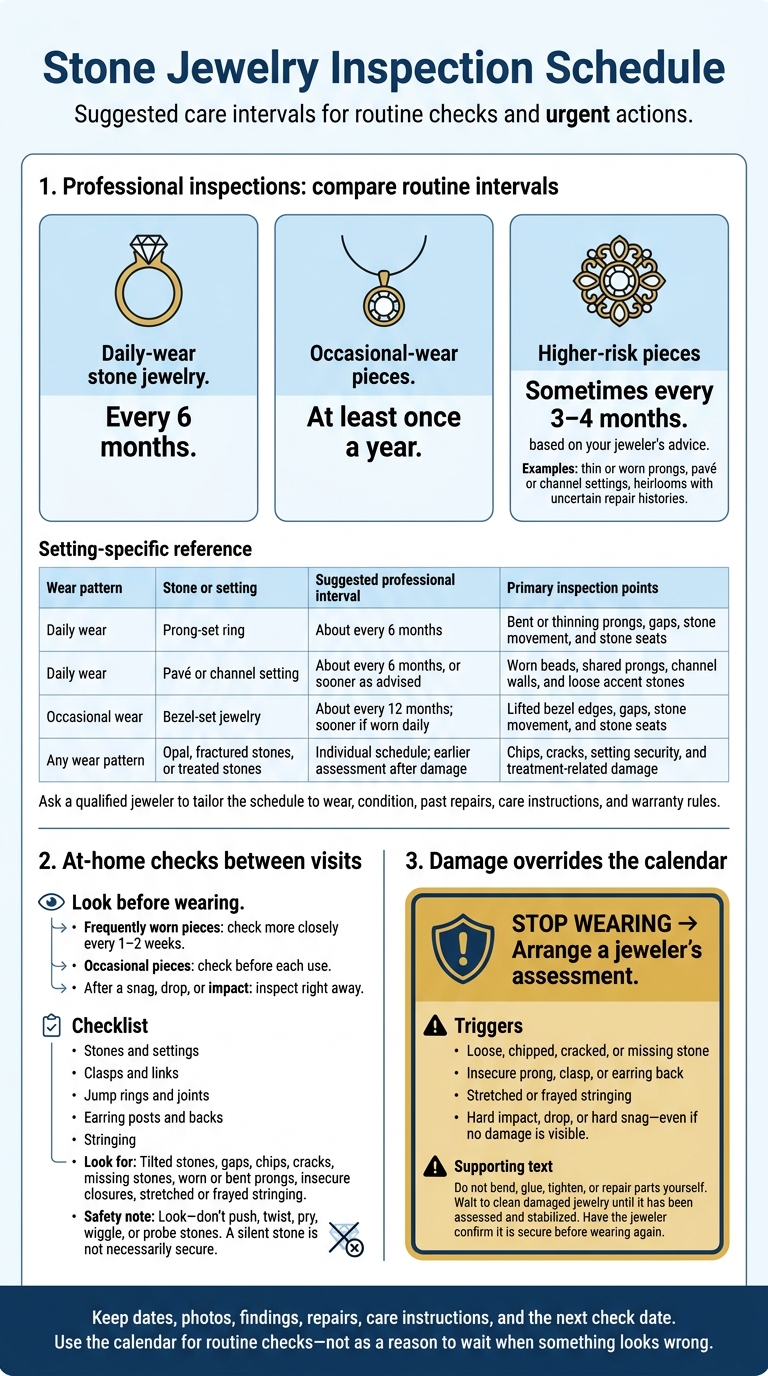
Stone Jewelry Inspection Schedule
1. Plan Professional Inspections
Choose an Interval Based on Wear
Ask a qualified jeweler to set an inspection schedule based on your routine, the piece’s condition, and past repairs. Higher-risk pieces may need checks every three to four months. These include rings with thin or worn prongs, pavé or channel settings, and heirlooms with uncertain repair histories. The table below offers starting points by setting and stone type.
Before booking, check the care instructions and warranty rules. Keep dated records of inspections and repairs.
Account for Stone Type and Setting
| Wear pattern | Stone or setting | Suggested professional interval | Primary inspection points |
|---|---|---|---|
| Daily wear | Prong-set ring | About every 6 months | Bent or thinning prongs, gaps, stone movement, and stone seats |
| Daily wear | Pavé or channel setting | About every 6 months, or sooner as advised | Worn beads, shared prongs, channel walls, and loose accent stones |
| Occasional wear | Bezel-set jewelry | About every 12 months; sooner if worn daily | Lifted bezel edges, gaps, stone movement, and stone seats |
| Any wear pattern | Opal, fractured stones, or treated stones | Individual schedule; earlier assessment after damage | Chips, cracks, setting security, and treatment-related damage |
Scratch resistance does not mean impact resistance. Even diamond can chip. Opal, fractured gems, and some treated stones need extra care after impacts or visible changes. Tell the jeweler about any known treatments before cleaning or repair. If you’re unsure what the stone is, ask for identification first.
Include Closures and Connections
Ask for a full inspection - not just a stone check - to cover the parts most likely to fail first. This includes clasps, links, jump rings, soldered joints, earring posts, backs, and other connecting parts.
For necklaces and bracelets, don’t wait until the next scheduled visit if the stringing looks stretched, thinned, or frayed. Stop wearing the piece until a jeweler assesses it.
2. Check Jewelry at Home
Quick at-home checks between professional inspections can help you spot changes early. Focus on stones, prongs, clasps, links, and earring backs. Check pieces you wear often every 1–2 weeks and occasional pieces before each use. Inspect any piece right after a snag, drop, or impact.
Look for Stone and Setting Damage
Set the piece on a clean surface under bright, neutral light. Turn it to check the front, sides, and underside. Look for tilted stones, gaps, chips, cracks, missing accent stones, and prongs that are bent, flattened, sharp, or thinning. Photos taken while the piece is in good condition can help you spot gradual changes.
Pay attention to new snagging on clothing or any movement, rattling, or clicking during normal handling. Don't test stones by pushing, twisting, prying, wiggling, probing, or rubbing fabric over them. A loose stone may make no noise, so silence doesn't mean it's secure.
Check Clasps, Links, and Earring Backs
Open and close clasps as you normally would. They should close fully without force. Check for thin links, open jump rings, distorted clasp parts, and separated joints. On strung pieces, look for stretching or fraying. For earrings, check for backs that slip easily, bent or damaged posts, and looseness where the post meets the setting.
Don't tighten, bend, glue, or repair parts at home. If anything looks insecure or damaged, stop wearing the piece and have a jeweler inspect it rather than waiting for your next scheduled visit.
3. Know When to Get an Earlier Inspection
Routine inspections cover most pieces, but damage means you shouldn’t wait for the next scheduled check.
Stop Wearing Damaged Jewelry
Any visible damage calls for an earlier inspection. Stop wearing the piece if a stone is loose, chipped, cracked, or missing - or if a prong, clasp, or earring back no longer holds securely.
After a hard impact, drop, or hard snag, arrange a professional assessment as soon as possible. Hidden damage can occur even when nothing looks wrong.
Store detached stones and parts in separate, labeled, sealable containers to prevent scratches. Bring every recovered part to the appointment.
Have a Jeweler Assess Repairs and Cleaning
Once you’ve stopped wearing the piece, a jeweler can determine what needs repair and what can wait. Ask them to check nearby stones and surrounding metal, not just the visible damage.
Repairs may include resetting stones, fixing prongs or clasps, restringing, or replacing parts. Ask for an estimate if repairs are needed, and have the jeweler confirm the piece is secure before you wear it again.
Wait to clean the piece until it’s been assessed and stabilized. Tell the jeweler about any known treatments, and ask for a cleaning method that suits the entire piece. Pearls, opals, turquoise, and fracture-filled stones need extra caution.
Conclusion: Keep a Jewelry Inspection Routine
Protect your stone jewelry with regular checks at home and by a professional.
Keep a record of each check, including dates, photos, findings, repairs, and the next check date. This helps you spot changes over time. If you notice damage, stop wearing the piece right away - don’t wait for the next scheduled check.
Use the same routine for handcrafted natural-stone pieces, adjusting it to your jeweler’s advice and care instructions.
FAQs
How much does a jewelry inspection cost?
Professional jewelry inspections typically cost $25 to $75, while more complex repairs range from $50 to $200. Many jewelers offer free inspections, so ask your local jeweler about complimentary maintenance.
Regular professional checkups can catch small problems early - before they lead to more serious damage and higher repair bills.
Should I schedule more inspections if I wear jewelry during workouts?
Yes. Working out can loosen stones or bend prongs when jewelry takes a hit or catches on equipment or fabric. Professional inspections are generally recommended every 3 to 6 months, but jewelry worn during exercise needs closer checks.
It’s best to remove gemstone jewelry before exercising. If you keep it on, check it weekly at home and schedule professional inspections more often to make sure the settings stay secure.
Can missing an inspection affect my jewelry warranty?
The provided sources don’t say whether missing an inspection voids your warranty. LaCkore Couture offers a lifetime guarantee, but the sources don’t explain whether inspections are required to keep that coverage.
Follow the suggested inspection schedule to help keep your jewelry in good condition and prevent damage that could affect how well it holds up over time.