Skip to content




Sterling Silver Jewelry: Hypoallergenic or Not?
Sterling silver is often recommended for those with sensitive skin, but is it truly hypoallergenic? Here's what you need to know:
- Sterling silver contains 92.5% pure silver and 7.5% other metals, usually copper. Copper is generally well-tolerated, but some manufacturers may use nickel, which can trigger allergies.
- The term "hypoallergenic" isn't regulated in the U.S., so it doesn't guarantee safety for sensitive skin.
- Nickel allergies affect 10-15% of people in the U.S., while true silver allergies are extremely rare (less than 0.1%).
- Look for "925" stamps and "nickel-free" labels to ensure quality and safety.
- Avoid silver-plated jewelry, as the base metals (often nickel or brass) can cause irritation when the coating wears off.
Key takeaway: High-quality, nickel-free sterling silver is generally safe for sensitive skin. Always check for proper markings and avoid plated or unlabeled alloys.
What Is Sterling Silver?
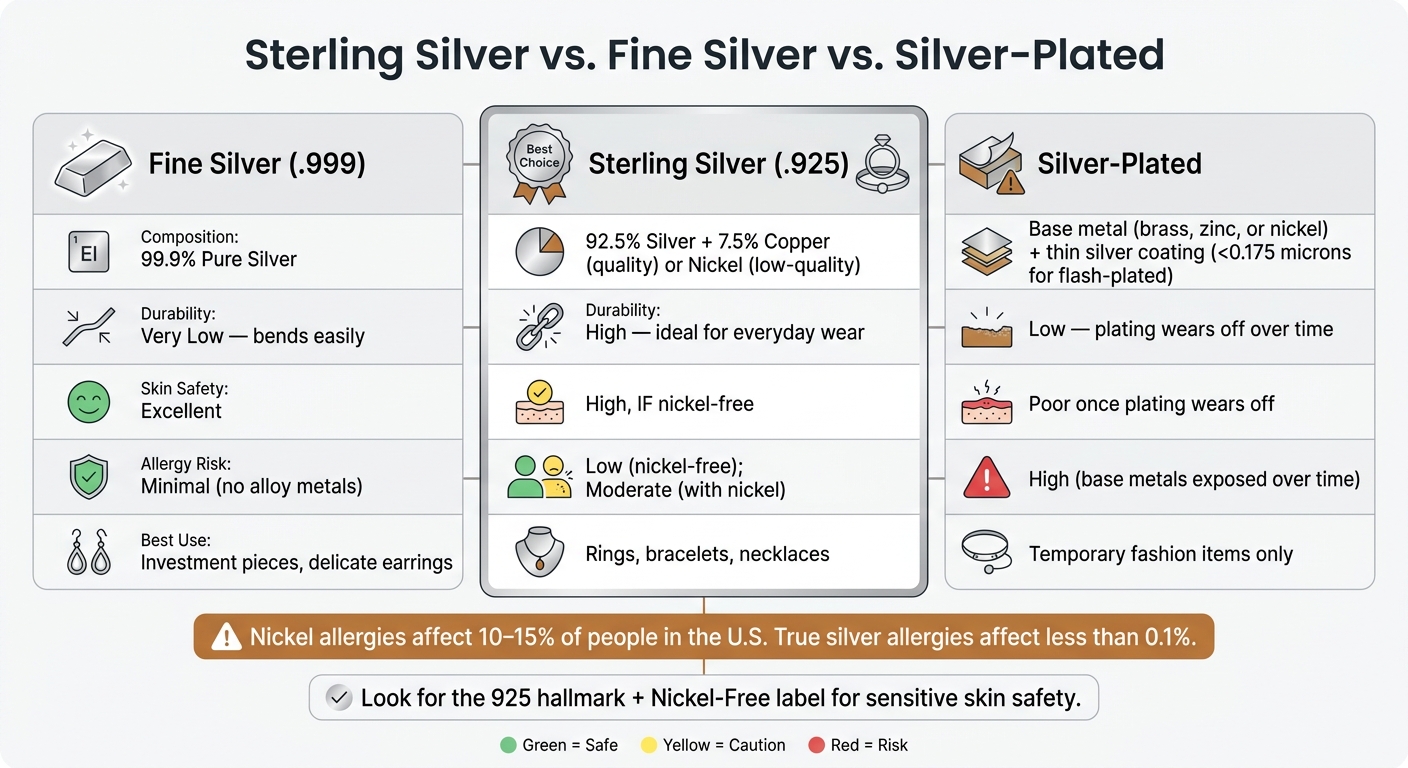
Sterling Silver vs. Fine Silver vs. Silver-Plated: Which Is Safe for Sensitive Skin?
Sterling silver is an alloy made up of 92.5% pure silver and 7.5% other metals, usually copper. If you've ever noticed a "925" stamp on silver jewelry, that's what it signifies - 92.5% silver content. Pure silver (.999) is too soft to handle the demands of everyday wear, so it's mixed with other metals to make it more durable. As silversmith Trisha Flanagan puts it:
"Sterling silver is intentionally alloyed for strength. Pure silver (99.9%) is soft, but sterling silver is strengthened with 7.5% copper alloy."
This blend is what gives sterling silver its durability and makes it a popular choice for jewelry and other items.
Sterling Silver vs. Other Silver Types
Not all silver jewelry is created equal. The main categories include sterling silver, fine silver (.999), and silver-plated items. Here's how they stack up:
| Feature | Fine Silver (.999) | Sterling Silver (.925) | Silver-Plated |
|---|---|---|---|
| Composition | 99.9% Silver | 92.5% Silver, 7.5% Copper | Base metal (brass, zinc, or nickel) with a thin silver coating |
| Durability | Very low - bends easily | High - ideal for everyday wear | Low - plating wears off over time |
| Skin Safety | Excellent | High, if nickel-free | Poor once plating wears off |
| Best Use | Investment pieces, delicate earrings | Rings, bracelets, necklaces | Temporary fashion items |
Silver-plated jewelry often uses a base metal like nickel, which can cause skin irritation once the thin silver layer wears away. In some cases, this coating is so thin (less than 0.175 microns in "flash-plated" items) that it can fade within weeks or months of regular use.
This is why choosing high-quality materials, particularly copper instead of nickel, is essential for those with sensitive skin.
Why Copper Is Used in Sterling Silver
Copper is the go-to metal for the 7.5% alloy in sterling silver. Why? It adds strength without altering silver's appearance. By incorporating copper, silver's hardness increases significantly - from about 25 HV (Vickers hardness) to as much as 100 HV. This makes sterling silver tough enough for everyday items like rings and bracelets that face frequent wear.
Another key reason copper is preferred: it's generally well-tolerated. Only about 4–5% of people experience sensitivity to copper. More importantly, copper is used instead of nickel in quality sterling silver. Unfortunately, some manufacturers cut corners by using nickel in the alloy to save costs or enhance brightness. This is where skin irritation problems often arise. While the "925" stamp guarantees the silver content, it doesn’t specify what other metals are used, so confirming a piece is nickel-free is crucial for those with allergies.
Is Sterling Silver Hypoallergenic?
For most people, high-quality 925 sterling silver is generally considered hypoallergenic. This is because its main alloy is copper, which is well-tolerated by the majority of skin types. However, the term "hypoallergenic" should be approached with caution. In the United States, there’s no federal standard regulating how brands use the term. As Jewelry Town points out:
"Hypoallergenic is not a regulated term... Every brand decides for itself what it means - and none of them are required to tell you what's actually in the metal."
So, while the label can be a helpful indicator, it’s not a foolproof guarantee. This brings us to the role of specific metals, like nickel, in triggering skin reactions.
How Nickel and Other Metals Can Cause Skin Reactions
When people experience a reaction to "silver" jewelry, the real culprit is often nickel, not silver itself. Nickel sensitivity impacts about 17% of women and 3% of men globally, with general population estimates ranging from 5% to 15%. Manufacturers sometimes use nickel instead of copper in the 7.5% alloy portion of sterling silver to cut costs or enhance shine. Unfortunately, this substitution can lead to itching, redness, or rashes, especially with prolonged skin contact.
As Sophia Lin, Jewelry Editor at 25hours, explains:
"If a pair of 'sterling silver' earrings causes itching or redness within the first 24 hours, the issue is usually not that your skin is 'too sensitive.' It's more often the material quality - typically nickel presence."
Nickel allergies can develop over time. Repeated exposure sensitizes the immune system, and once this happens, the reaction often becomes permanent. That’s why avoiding nickel-containing jewelry from the beginning is crucial, rather than waiting for a reaction to occur.
While nickel is the most common irritant, true silver allergies are extremely uncommon.
Why True Silver Allergies Are Rare
True silver allergies are exceedingly rare, affecting less than 0.1% of people. A 2023 contact dermatology study involving 1,200 participants with self-reported sensitive skin found that only 4.2% experienced any mild reaction to genuine nickel-free 925 sterling silver. Notably, every single case was traced back to either trace nickel contamination in the tested pieces or an existing sensitivity to copper.
In short, if sterling silver is causing skin irritation, the issue is almost never the silver itself. Instead, it’s likely due to the metals mixed into the alloy.
How to Pick Sterling Silver Jewelry for Sensitive Skin
Understanding that nickel - not silver - is the main culprit behind skin allergies makes it crucial to choose nickel-free, properly marked sterling silver. These tips will help you navigate the options and pick jewelry that's safer for sensitive skin.
Check for Quality Markings
Always look for a 925 hallmark, which is typically stamped as "925", ".925", "S925," or "Sterling". This stamp indicates that the piece contains 92.5% pure silver, and if marked as "nickel-free," it’s a safer choice for sensitive skin. Jewelry without this hallmark might be mislabeled and could contain irritants.
As Lolabean explains:
"The stamp matters - it signals the actual silver content and a higher likelihood of nickel‐free alloy."
Remember, terms like "hypoallergenic" are not regulated in the U.S., so "nickel-free" is the more dependable label. Reputable brands often include a maker's mark alongside the 925 stamp, adding credibility and ensuring material transparency.
Once you've confirmed the quality markings, avoid jewelry made from alloys or materials that might hide potential irritants.
Avoid Silver-Plated or Unlabeled Alloys
Silver-plated jewelry is a common source of irritation. These pieces feature a thin silver coating over base metals like brass, zinc, or nickel. When the coating wears away, the underlying metal - often allergenic - comes into contact with your skin.
Steer clear of vague labels like "silver-tone" or "German silver." Despite its name, German silver contains no actual silver and is instead made from a mix of copper, nickel, and zinc. To test at home, try a magnet: real sterling silver is non-magnetic. If the jewelry sticks to the magnet, it likely contains nickel or iron.
Why Handcrafted Jewelry Is a Good Option
Handcrafted jewelry is often a safer choice for those with sensitive skin. Unlike mass-produced pieces, which may use silver plating over allergenic base metals, handcrafted items often feature solid .925 sterling silver and come with clear material details. This transparency reduces the risk of nickel exposure.
For instance, LaCkore Couture creates its silver pieces in the USA and provides detailed product information. This level of clarity is invaluable for anyone prone to skin reactions. Solid construction and honest sourcing go a long way in ensuring safety.
As silversmith Trisha Flanagan emphasizes:
"Every piece I make... is handcrafted from solid sterling silver, never plated, never mystery metal."
Choosing solid over plated and clear labeling over ambiguity is key when shopping for jewelry that’s safe for sensitive skin.
Tips for Wearing Sterling Silver Without Irritation
Even high-quality, nickel-free sterling silver can sometimes cause discomfort if not worn or cared for correctly. Often, irritation stems from factors like moisture, product buildup, or improper storage rather than the metal itself.
Keep Jewelry Dry and Clean
Follow the "last on, first off" rule: put on your jewelry after applying perfume, lotion, or hairspray - once these products have fully dried - and remove it first thing in the morning. Jewelry expert Vanessa from Tianyu Gems emphasizes:
"Jewelry should be the very last thing you put on after perfumes, lotions, and cosmetics have fully dried, and the first thing removed at night."
Avoid wearing jewelry while showering, swimming, or exercising. Sweat, chlorine, and soap residue can speed up tarnishing and trap irritants against your skin. After wearing, gently wipe each piece with a soft, dry microfiber cloth. For a deeper clean, use warm water mixed with mild, fragrance-free dish soap, then dry the jewelry thoroughly. Stay away from abrasive cleaners, especially for plated pieces.
Proper cleaning is the first step toward reducing irritation and preserving your jewelry's quality.
Store Jewelry the Right Way
Good storage practices not only keep sterling silver looking great but also help prevent skin irritation. Store each piece separately in airtight bags with silica gel packets to reduce oxidation by up to 90%. Avoid storing jewelry in rubber-lined drawers or on wool fabrics, as these can release tarnish-causing compounds. Steer clear of humid areas like bathrooms and instead choose a dry, dark spot like a dresser drawer or a sealed jewelry box.
Watch for Signs of Skin Irritation
Pay attention to how your skin reacts, especially when wearing a new piece. A simple 24-hour patch test - wearing the jewelry on a small area of skin - can help identify delayed reactions. Allergic reactions to metals typically appear 12–48 hours after contact and often match the shape of the jewelry. On the other hand, irritation from friction or trapped moisture may show up faster and can extend beyond the contact area.
If irritation occurs, remove the jewelry right away and wash the area gently with mild soap and water. A cold compress can help reduce inflammation. If symptoms persist, consult a dermatologist. To prevent future issues, consider applying a thin layer of clear nail polish or a medical-grade barrier cream to the parts of the jewelry that touch your skin. These small adjustments can make sterling silver more comfortable to wear, even for those with sensitive skin.
Conclusion: What to Know About Sterling Silver and Sensitive Skin
Genuine 925 sterling silver, made with 92.5% pure silver, is generally safe for sensitive skin and rarely causes irritation. Research shows that when nickel is absent, the risk of skin reactions is minimal. The real concern often lies in nickel contamination found in lower-quality alloys.
This highlights the importance of knowing exactly what materials you're wearing. Marketing claims can be misleading, so it's better to rely on clear material details. As Sophia Lin, Jewelry Editor at 25hours, explains:
"Properly made sterling silver is generally hypoallergenic and is one of the safest metals for sensitive skin and ears."
To ensure you're getting safe, high-quality sterling silver, look for the "925" hallmark and a clear nickel-free guarantee. Brands like LaCkore Couture, which emphasize handcrafted pieces and material quality, make it easier to know what you're putting on your skin.
Finally, don't overlook proper care. Keeping your sterling silver jewelry dry, cleaning it regularly, and storing it correctly can go a long way in preventing irritation and maintaining its quality.
FAQs
How can I tell if my '925' jewelry has nickel in it?
The '925' stamp on jewelry indicates that the piece is made of 92.5% pure silver. However, it doesn't guarantee that the remaining 7.5% of the metal is nickel-free. To find out if nickel is present, you can use a commercial nickel test kit. These kits are simple to use and will turn pink if nickel is detected.
It's also important to note that the term "hypoallergenic" isn’t legally defined in the U.S., so it’s always a good idea to confirm the metal composition directly with the manufacturer. For those with sensitive skin, LaCkore Couture advises selecting jewelry explicitly labeled as nickel-free to avoid potential irritation.
What should I do if sterling silver still makes my skin itch?
If sterling silver causes itching, it’s best to stop wearing it right away. Wash the affected area with mild soap and water to remove any irritants. If the itching persists, try using a cold compress to soothe the skin or consider consulting a dermatologist for further advice.
At LaCkore Couture, all our sterling silver is certified and nickel-free to help reduce the risk of irritation. Most reactions are typically caused by nickel or lower-quality alloys, rather than the silver itself.
Is fine silver (.999) safer than sterling silver for sensitive ears?
Fine silver (.999) isn’t automatically better for sensitive ears compared to well-crafted sterling silver. While fine silver is purer, it’s also softer and more likely to get damaged, which makes it less ideal for jewelry. On the other hand, high-quality sterling silver (925) offers durability and is safe when it’s nickel-free. For those with sensitive ears, look for sterling silver pieces that are explicitly nickel-free and alloyed with copper. This combination ensures both comfort and long-lasting strength.