Skip to content




Sterling Silver Care: Seasonal Tips for Tarnish Prevention
Sterling silver tarnishes over time because it reacts with sulfur in the air, forming silver sulfide. This process is influenced by humidity, temperature changes, and exposure to substances like sweat, sunscreen, and chlorine. Seasonal changes bring unique challenges for maintaining your jewelry's shine. Here's how to care for your sterling silver year-round:
- Spring: Clean off winter residue and protect against rising humidity with airtight storage and silica gel packets.
- Summer: Minimize tarnish from sweat, sunscreen, and chlorine by rinsing jewelry after use and avoiding exposure during swimming.
- Fall: Address summer residue with gentle cleaning and store pieces in temperature-stable areas to prevent tarnish from fluctuating conditions.
- Winter: Prevent damage from dry air and temperature extremes by using a humidifier and avoiding exposure to road salt or de-icing chemicals.
Consistent cleaning, proper storage, and seasonal adjustments will keep your sterling silver looking polished and radiant, no matter the time of year.
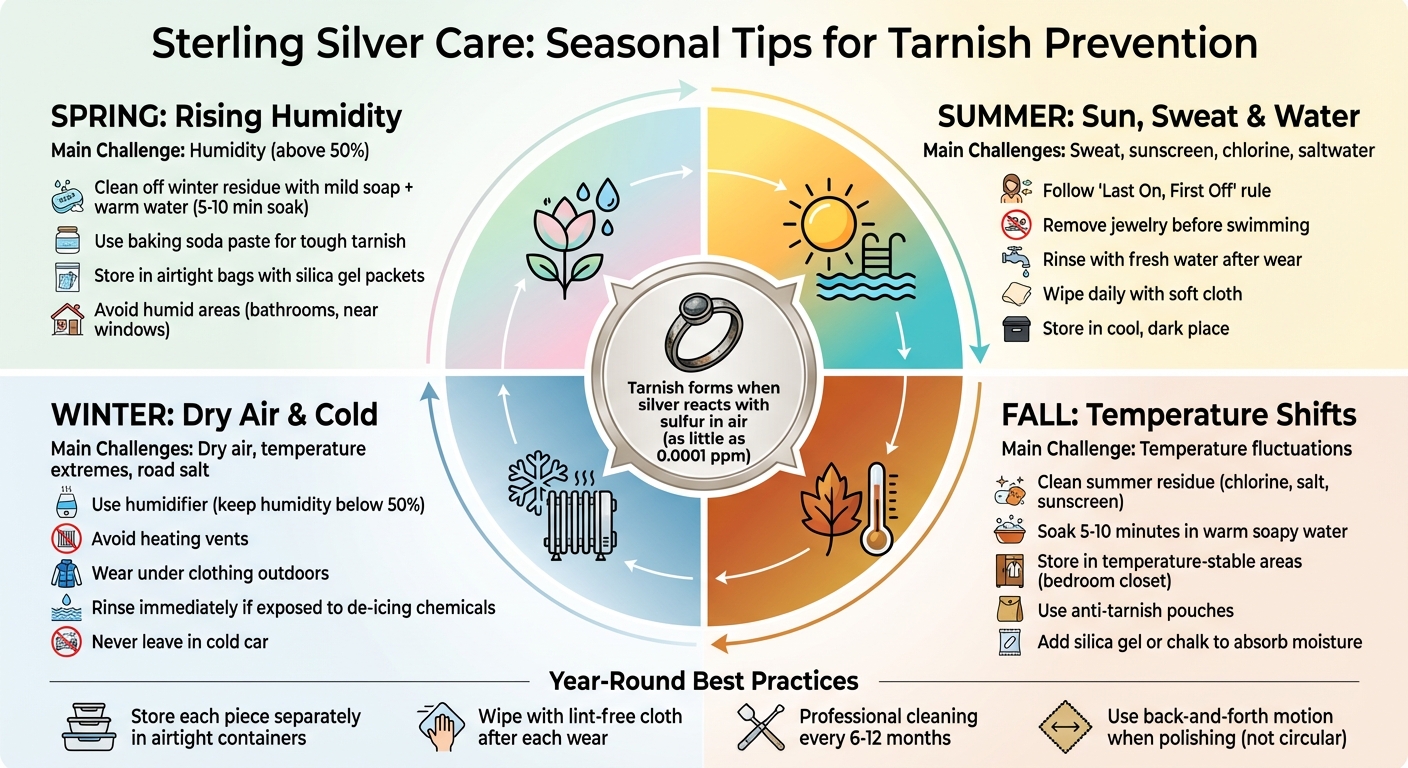
Seasonal Sterling Silver Care Guide: Year-Round Tarnish Prevention Tips
How and Why Sterling Silver Tarnishes
What Causes Tarnish?
That dark, dull layer on your sterling silver? It’s not dirt - it’s silver sulfide. This compound forms when silver reacts with sulfur in the air, a process known as sulfidation. Surprisingly, even trace amounts of hydrogen sulfide - just 0.0001 parts per million - can trigger this reaction. While pure silver doesn’t tarnish, it’s too soft for everyday use. That’s why sterling silver, which is 92.5% silver and 7.5% copper, is more common. But here’s the catch: copper reacts quickly with oxygen and moisture, leading to tarnish from copper oxide and copper sulfide. Everyday items like wool can release sulfur compounds, speeding up the process. Even your skin plays a role - salts and acids from sweat can intensify tarnishing, especially if your skin pH is below 7.
Understanding this chemical process is key to managing tarnish effectively.
Why Seasonal Care Matters
Once you grasp the science, it’s clear that seasonal care for sterling silver is more than just a good idea - it’s essential. Each season brings its own set of challenges. In spring and summer, warmer weather increases the reactivity of sulfur compounds. Add sweat, sunscreen, and even chlorine from pool water into the mix, and you might notice a black layer of silver chloride forming.
Winter comes with its own set of problems. Moving between chilly outdoor air and heated indoor spaces can cause condensation on your silver, leading to moisture buildup. If you live near the coast, salt-laden air creates a year-round challenge with its mix of moisture and corrosive elements. Urban areas, too, face higher hydrogen sulfide levels due to pollution.
Knowing how these environmental factors affect your silver makes it easier to implement smart, seasonal care strategies. The next sections will provide practical tips to keep your sterling silver looking its best year-round.
Spring: Managing Humidity and Moisture
Cleaning Winter Residue
As spring approaches, it’s time to refresh your sterling silver before humidity speeds up tarnishing. Winter storage can leave behind oils, lotions, or a thin layer of tarnish that needs to be removed. A simple cleaning solution works wonders: mix a few drops of mild dish soap with warm water, soak your jewelry for 5 to 10 minutes, and gently scrub using a soft-bristled toothbrush. Rinse it thoroughly with warm water and pat dry with a microfiber cloth to avoid scratches.
For tougher grime, try a baking soda paste. Combine two parts baking soda with one part water to form a thick paste. Apply it to the tarnished areas and gently rub using a lint-free cloth, moving in a single back-and-forth motion to minimize scratches. Jewelry designer Marie‑Claude Decarie of MCDécarie Joaillerie highlights the benefits of baking soda: "I strongly recommend baking soda first and foremost because it is economical, environmentally friendly, effective, non‑abrasive, non‑corrosive, non‑toxic and safe for stones or pearls".
Once your silver is sparkling clean, it’s time to protect it from spring’s rising humidity.
Protecting Against Spring Humidity
Higher temperatures and humidity levels above 50% can speed up oxidation. The 7.5% copper in sterling silver reacts quickly to moisture, so creating a protective barrier is key.
Store each piece in its own airtight bag along with a silica gel packet, anti-tarnish strip, or even a piece of white chalk to absorb moisture.
Be mindful of where you store your jewelry, too. Avoid humid spots like bathrooms or areas near windows where temperature and moisture levels fluctuate. Instead, choose an interior closet or dresser drawer in a climate-controlled room. These small changes can help prevent tarnish from forming, which can happen in as little as two months under high-humidity conditions.
Summer: Dealing with Sweat, Sunscreen, and Outdoor Exposure
Preventing Tarnish from Sweat and Sunscreen
As spring's humidity fades, summer brings its own set of challenges for jewelry care. The heat intensifies tarnishing risks because sweat contains salts, acids, and oils that speed up the process. As Quirksmith points out, "Sweat contains salt, acids, and oils, which accelerate tarnishing". Sunscreen, while essential for skin protection, can leave a greasy residue that traps dirt and dulls your jewelry. According to jewellerybox, "Although sunscreen won't cause any long-lasting damage to your silver jewelry, it can build up on your jewelry and leave it looking dull and dirty".
To minimize these effects, practice the "Last On, First Off" rule: apply sunscreen, perfume, or lotion first, giving them time to absorb before putting on your jewelry. After wearing your pieces, rinse them with fresh water and dry them thoroughly with a soft cloth. A quick wipe with a non-abrasive cloth after each use can also help remove oils and moisture. For extra protection, try a jewelry protectant spray or apply a thin coat of clear nail polish to the inner surfaces of rings to shield them from skin acidity. These steps will also prepare your jewelry for outdoor activities, like swimming, which require additional care.
Protecting Jewelry at the Pool or Beach
Summer outings to the pool or beach can be harsh on sterling silver. Chlorine and saltwater are particularly damaging. Robinson's Jewelers cautions that "Sterling silver... can tarnish almost immediately when exposed to chlorine". Similarly, Vic Lau of Grace Studio Fine notes, "Salt water is jewelry's worst enemy. It accelerates oxidation and corrosion, especially in silver and base metals".
The best approach? Avoid wearing jewelry while swimming. If it does get exposed, rinse it immediately with fresh water and pat it dry with a microfiber cloth. Beach sand, made up of abrasive silica, can scratch polished surfaces, so handle your pieces carefully. To prevent UV-triggered tarnish, store your jewelry in a cool, dark place when not in use. If you're traveling, secure your pieces in a hotel safe or a jewelry travel box instead of tossing them into a beach bag. These precautions, combined with regular cleaning and proper storage, will help keep your sterling silver in great shape all summer long.
Fall: Preparing for Temperature Changes
Cleaning Summer Residue
As autumn rolls in, it's time to prepare your sterling silver for the cooler months ahead. Summer activities like swimming in chlorinated pools, relaxing by the salty ocean, or simply wearing sunscreen can leave behind residues that speed up tarnishing. To refresh your silver, soak it for 5–10 minutes in a bowl of warm water mixed with a few drops of mild, phosphate-free dish soap. This simple step helps loosen surface grime without harming the metal.
For those tricky spots where residue tends to hide, grab a soft-bristled toothbrush or a clean makeup brush and gently clean the area. If tarnish has already set in, try this method: line a bowl with aluminum foil, add boiling water, 1/4 cup baking soda, and 2 teaspoons of salt. Let your silver soak for up to five minutes. Once clean, dry your pieces thoroughly with a microfiber cloth - skip paper towels, as they can scratch the surface. This routine ensures your silver is ready to shine, even as the weather cools and becomes more unpredictable.
Maintaining Proper Storage Conditions
Once your silver is spotless, storing it correctly is key to keeping tarnish at bay, especially during fall's shifting temperatures. The combination of fluctuating temperatures and increased humidity can create the perfect storm for tarnish. Kenneth from Kelnia highlights:
"Humidity above 50% speeds up the chemical reaction that causes tarnish".
Temperature changes, like warm days followed by chilly nights, can make matters worse - especially if your jewelry is stored in places like bathrooms or near windows, where conditions tend to vary the most.
To protect your silver, choose a temperature-stable spot like a bedroom closet. Adding silica gel packets or pieces of chalk can help absorb excess moisture. For even more protection, store individual items in small zip-lock bags or anti-tarnish pouches to reduce exposure to atmospheric sulfur. Felt-lined jewelry boxes are another great option, as the felt naturally absorbs moisture. By taking these precautions, your sterling silver will stay radiant and ready to wear throughout the fall season.
Winter: Managing Dry Air and Temperature Extremes
Protecting Against Dry Air
Winter brings unique challenges for sterling silver care. Unlike other seasons where humidity might be a concern, indoor heating during winter creates a dry environment that can affect your jewelry in unexpected ways. The heat increases the reactivity of sulfur compounds in the air, which can speed up tarnishing - even when moisture levels are low. At the same time, the lack of humidity can weaken jewelry settings, potentially loosening prongs or stones over time.
To counteract these effects, consider using a humidifier to maintain indoor humidity levels below 50%. Store your silver pieces in a stable area, like a bedroom closet, and avoid placing them near heating vents. These small adjustments can go a long way in preserving your jewelry during the colder months.
Reducing Outdoor Exposure
Winter's outdoor conditions present additional risks to sterling silver. J&M Jewelry notes that "Moving between freezing outdoor air and heated indoor spaces can stress fine metals and settings". The cold causes metals to contract, which may loosen prongs over time. On top of that, exposure to de-icing chemicals and road salt can be especially corrosive to silver alloys.
To protect your jewelry outdoors, wear it under scarves and coats to shield it from the cold air and prevent it from snagging on winter clothing. Always put your jewelry on after dressing in layers and take it off first when undressing to avoid unnecessary stress. If your silver comes into contact with road salt or de-icing chemicals, rinse it immediately with warm water and mild soap, then dry it thoroughly with a lint-free cloth. Lastly, avoid leaving your jewelry in a cold car - let it warm up naturally indoors to prevent damage.
Year-Round Storage and Cleaning Best Practices
Keeping your silver looking radiant all year long requires consistent care and attention. By combining proper storage techniques with regular cleaning, you can preserve its brilliance and ensure it remains a treasured part of your collection.
Best Storage Solutions
How you store your silver plays a huge role in preventing tarnish. Sterling silver tarnishes when the copper in the alloy reacts with sulfur compounds in the air. To slow this process, use airtight containers - like resealable plastic bags with anti-tarnish strips - to limit exposure to oxygen and sulfur.
For added protection, store each piece separately to avoid scratches. You can also include silica gel packets or activated charcoal strips to absorb moisture. If you want to stay ahead of the game, opt for color-indicating silica gel, which lets you know when it’s time for a replacement. Finally, choose a stable, cool location, like a bedroom closet, to maintain ideal storage conditions.
While good storage practices help reduce tarnish, regular cleaning is just as important to maintain your silver’s shine.
Regular Cleaning and Professional Maintenance
Year-round cleaning routines go hand-in-hand with seasonal care to keep your silver in top shape. After wearing your jewelry, wipe it down with a lint-free cloth to remove oils, sweat, or any cosmetic residue. For routine cleaning, soak your silver in warm, soapy water for 5–10 minutes. Then, use a soft-bristle toothbrush to gently clean any crevices. Rinse thoroughly with cool water and dry with a microfiber cloth. When polishing, use a back-and-forth motion instead of circular strokes to avoid emphasizing scratches.
"You only have to clean these frequently worn pieces occasionally. Other pieces of fine silver will need more frequent cleaning and more vigorous scrubbing to keep clean." - LaCkore Couture
For more delicate or intricate pieces, consider scheduling professional cleanings every 6–12 months. Jewelers use specialized tools and solutions to safely remove tarnish without harming the metal. If you’re dealing with loose stones or unsure about cleaning methods, it’s best to skip DIY attempts and consult a professional to avoid damage.
Conclusion
Taking care of your sterling silver doesn’t have to be complicated. By adjusting your care routine to suit each season, you can keep your pieces looking radiant all year long. Whether it’s managing spring’s humidity, summer’s heat, fall’s cooler air, or winter’s dryness, these small adjustments can make a big difference in preserving that brilliant shine.
The secret lies in consistency and prevention. Instead of relying on frequent, harsh polishing - which can gradually wear down the silver’s surface - focus on gentle, regular care. Simple habits like following the "last on, first off" rule for jewelry can minimize exposure to harmful chemicals. Storing your pieces in airtight containers with anti-tarnish strips can also help guard against tarnish.
FAQs
Can I wear sterling silver in the shower?
It's a good idea to skip wearing sterling silver in the shower. Water, soap, and shampoo can accelerate tarnishing and make your jewelry lose its shine. To maintain its sparkle, take off your sterling silver pieces before bathing or swimming.
How can I remove tarnish from silver without scratching it?
To clean tarnished sterling silver safely, start with a non-abrasive, lint-free cloth or a silver polishing cloth. For more stubborn tarnish, mix a paste using baking soda and water and gently apply it to the tarnished spots. Be sure to use light pressure to prevent scratching. Stick to soft materials and avoid harsh cleaners or abrasive tools that could harm the silver's surface.
What’s the best way to store silver jewelry long-term?
To keep your silver jewelry looking its best for the long haul, store it in airtight containers or anti-tarnish bags with anti-tarnish strips. Choose a cool, dry spot for storage, and always clean and dry each piece thoroughly before putting it away. These steps go a long way in preserving your jewelry’s shine and durability.