Skip to content




Sterling Silver Care Checklist
Sterling silver jewelry is stunning but prone to tarnishing due to its copper content. Tarnish occurs when silver reacts with sulfur and oxygen in the air, creating a dull layer. Factors like humidity, pollution, and everyday products (perfume, lotions, etc.) can speed up this process. The good news? Tarnish is reversible with proper care. Here's how to keep your sterling silver shiny and beautiful:
- Daily Care: Avoid exposure to chemicals and water, wipe jewelry after each wear, and always put it on last after applying products.
- Regular Cleaning: Weekly polishing and monthly deep cleaning with gentle solutions (e.g., mild dish soap) help maintain shine.
- Storage Tips: Use airtight containers, anti-tarnish strips, and store pieces separately to prevent scratches.
- Special Pieces: Handle gemstone, oxidized, or layered designs carefully to avoid damage.
With these simple steps, your sterling silver can stay radiant for years. Regular maintenance not only restores its sparkle but also protects it from wear and tear.
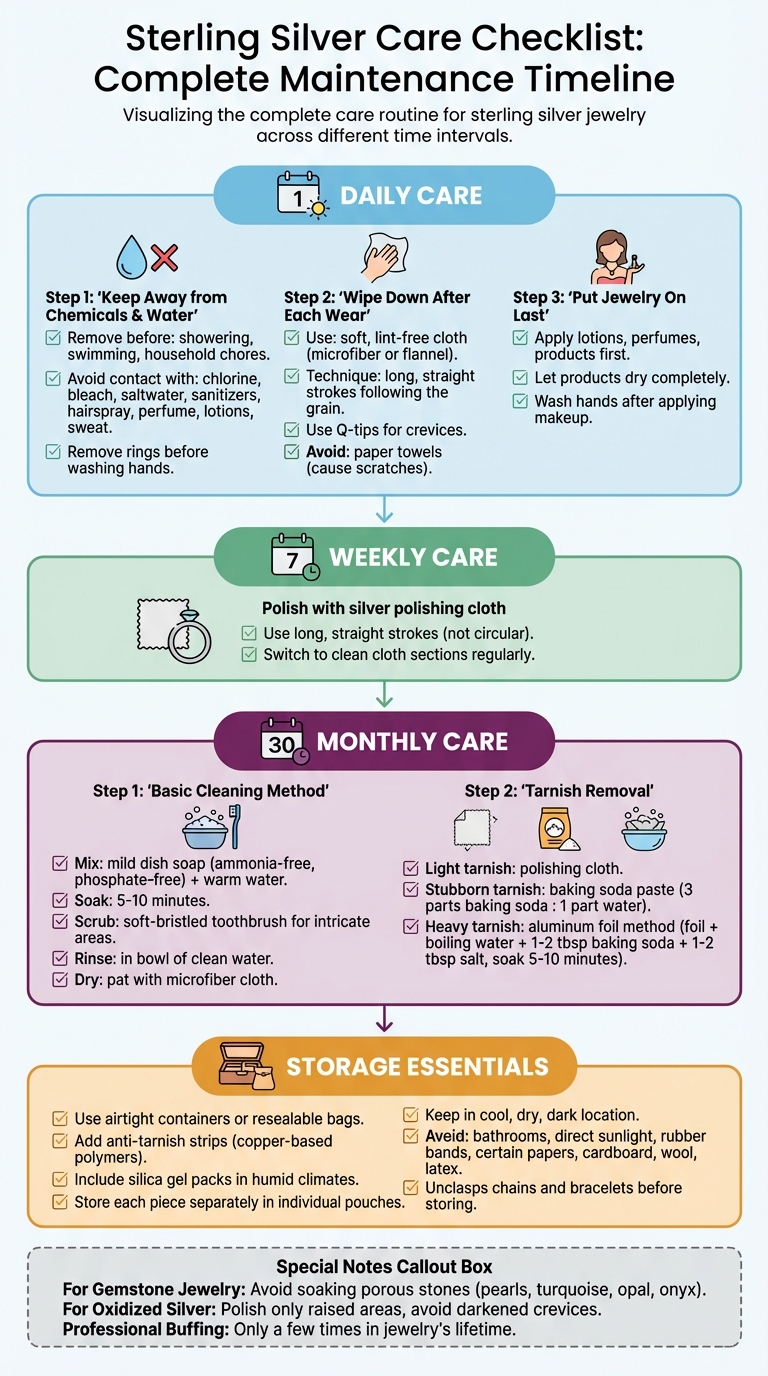
Sterling Silver Care Routine: Daily, Weekly, and Monthly Maintenance Steps
Daily Care Practices
Here’s how to keep your sterling silver looking its best with a few simple daily habits.
Keep Away from Chemicals and Water
Sterling silver doesn’t get along well with chemicals. To protect your jewelry, take it off before activities like showering, swimming, or tackling household chores. Avoid exposing it to chlorine, bleach, saltwater, or chemicals in products like sanitizers, hairsprays, perfumes, lotions, and even cleaning supplies. Believe it or not, sweat can also cause tarnish. Jewelry experts at Norse Garde recommend removing silver rings before washing your hands or applying skincare products. Make sure your hands are completely dry before slipping them back on. A quick wipe-down after removal can also help maintain its shine.
Wipe Down After Each Wear
Once you’ve taken off your jewelry, give it a gentle wipe with a soft, lint-free cloth - microfiber or flannel works great. Use long, straight strokes that follow the grain of the silver, and for those tricky crevices, a Q-tip can do wonders. Steer clear of paper towels, as they can leave scratches. This quick step prevents residue buildup and keeps tarnish at bay.
Put On Jewelry Last
Timing matters when it comes to preserving your silver. Apply lotions, perfumes, and any other products first, giving them time to dry before putting on your jewelry. This helps keep sulfates and other chemicals from dulling its shine. Jewelry expert Allison Dial reminds us that many have followed this “silver goes on last” rule for generations to keep their pieces looking brilliant. Washing your hands after applying makeup adds a little extra protection, too.
Weekly and Monthly Cleaning
Sterling silver requires more than just daily upkeep to maintain its brilliance. Weekly polishing with a silver cloth and a monthly deep clean can help remove oils, grime, and tarnish, restoring its natural shine. Let’s dive into some effective cleaning techniques.
Basic Cleaning Method
For monthly upkeep, prepare a gentle cleaning solution by mixing a few drops of mild dish soap (free of ammonia and phosphates) with warm water. Soak your silver jewelry in this mixture for 5–10 minutes. Then, use a soft-bristled toothbrush - like a baby toothbrush - to gently clean intricate areas and crevices. Once done, rinse the jewelry thoroughly in a bowl of clean water to remove any soap residue. Finally, pat it dry with a microfiber cloth. This process helps eliminate oils, sweat, and grime that a simple polishing cloth might not address.
Removing Tarnish and Polishing
When tarnish begins to show, a silver polishing cloth is your best friend. These cloths are specially designed for silver and are far gentler than tissues or paper towels. Use long, straight strokes that follow the natural grain of the metal, avoiding circular motions. Be sure to switch to a clean section of the cloth regularly to avoid spreading tarnish back onto the piece.
For more stubborn tarnish, mix three parts baking soda with one part water to create a paste. Apply a small amount to the silver using a soft cloth, rubbing in straight motions. Rinse thoroughly and dry completely.
Important: Avoid using this method on jewelry that includes pearls, opals, turquoise, or onyx. These stones are porous and can be easily damaged by cleaning solutions.
For heavily tarnished silver without gemstones, the aluminum foil method works wonders. Line a bowl with aluminum foil (shiny side up), then add boiling water, 1–2 tablespoons of baking soda, and the same amount of salt. Submerge the jewelry, ensuring it touches the foil, and let it sit for 5–10 minutes. This method is especially effective for intricate designs and chains where tarnish tends to build up in hard-to-reach areas.
Incorporating these deeper cleaning steps complements the daily care routine, ensuring your sterling silver stays radiant and well-maintained.
Storage and Protection
How you store your sterling silver plays a major role in keeping it shiny and free from scratches. Taking the right steps can help your silver maintain its luster for years to come.
Use Anti-Tarnish Storage
To slow down tarnishing, it's essential to minimize your silver's exposure to air and moisture. Airtight containers or resealable bags with as little air as possible are excellent choices. For added protection, place anti-tarnish strips inside your storage containers. These strips use copper-based polymers to neutralize sulfur gases before they can tarnish your jewelry.
"The more airtight the area is, the longer the [anti-tarnish] strips will last, protecting your jewelry." - Jesús Zabala, Founder and Designer, JewelryLab
Humidity can also harm sterling silver. If you live in a humid area, consider adding silica gel packs to your jewelry box to absorb excess moisture. Other options include desiccant crystals, activated charcoal, or even a piece of chalk to keep the environment dry. Avoid storing silver in bathrooms, as the steam from showers creates constant humidity.
Stay away from rubber bands, which contain sulfur and can accelerate tarnishing. Likewise, materials like certain papers, cardboard, wool, and latex can speed up discoloration.
Once you've addressed tarnish prevention, it's time to focus on protecting individual pieces from scratches and other damage.
Store Each Piece Separately
Preventing physical contact between pieces is just as important as protecting them from tarnish. Sterling silver is a soft metal that scratches easily, and storing items together increases the chances of both scratches and chemical reactions between different metals. Keep each piece in its own pouch or compartment to avoid tangling and damage.
"Good storage boxes are lined with tarnish-proof fabric and have a separate space for each individual piece." - Tiffany & Co.
A jewelry box with tarnish-resistant lining and individual compartments is ideal. Alternatively, use flannel pouches for each item. For chains and bracelets, store them unclasped to prevent tangling and scratching.
Choose Cool, Dry Locations
The location where you store your jewelry matters just as much as the method. Direct sunlight and heat can damage silver, so aim for a cool, dark, and dry spot away from windows and moisture.
If you live near the coast, be extra cautious - salt air can accelerate tarnishing.
Care for Special Sterling Silver Pieces
Beyond everyday cleaning and occasional deep cleans, some sterling silver pieces need extra attention to maintain their distinct characteristics.
Jewelry with Gemstones
Sterling silver jewelry featuring gemstones, intricate finishes, or layered designs calls for a gentler approach. The safest cleaning method? Use mild, phosphate-free dish soap mixed with warm water. Gently scrub the silver and gemstones with a soft brush or a lint-free cloth, rinse in a bowl of clean water (not under running water), and dry thoroughly with a soft cloth.
The type of gemstone matters. Softer stones like pearls and fluorite need much gentler care compared to harder stones such as diamonds or sapphires. For porous stones like turquoise, opal, or pearls, avoid soaking them entirely. Instead, wipe them carefully with a damp cloth.
"You should not, for instance, ever immerse jewelry adorned with pearls or opaque gemstones (e.g. turquoise, opal, carnelian, onyx), as this could seriously damage these softer stones." - Allison Dial, Author, Novica
Skip abrasive cleaners like toothpaste or baking soda, as they can leave permanent scratches. Harsh substances like vinegar, bleach, or strong detergents can harm porous stones or dissolve adhesives used in jewelry settings. Always inspect your jewelry before cleaning to ensure prongs are secure and the metal is in good condition, as cleaning could worsen existing issues.
Oxidized or Textured Designs
Oxidized silver is designed with darkened crevices to accentuate its decorative details. Over-cleaning can strip away this intentional finish, so it’s important to approach these pieces with care. Avoid ultrasonic cleaners, chemical dips, or abrasive homemade solutions.
Instead, focus on polishing only the raised areas using a soft polishing cloth, leaving the recessed, darkened sections untouched. For small, intricate details, a Q-tip can help clean without disturbing the oxidized finish. When working on textured surfaces, use long, straight strokes that follow the silver’s grain to avoid highlighting minor scratches.
"An oxidized finish is the deliberate blackening of crevices in the ornamentation of a silver object to make its decorative details stand out more clearly. Take care as this finish can be removed by overzealous cleaning and polishing." - Tiffany & Co.
If the oxidation fades due to wear or excessive polishing, professional jewelers can often reapply the finish to restore its original look.
Layered and Stacked Pieces
Sterling silver’s softness makes it prone to scratches, so layered necklaces or stacked bracelets should never be stored together. To prevent damage, wrap each piece individually in soft cloths like microfiber or anti-tarnish felt, and store them in separate airtight bags.
"Link or chain bracelets should be kept unclasped or unhooked to prevent scratching as well." - Novica
Unclasp link and chain bracelets before storage to avoid tangling and scratching. For added protection, use a jewelry box with fabric lining and individual compartments. When traveling, wrap each piece in tissue or a soft cloth to shield it from movement and minimize potential damage.
Fixing Common Problems
If regular maintenance isn’t enough, try these targeted techniques to bring back the shine to your silver pieces.
Light Tarnish Removal
For mild tarnish, a jewelry polishing cloth is your best friend. These cloths are pre-treated with cleaning agents that restore shine without the need for aggressive scrubbing. One popular option is the JTV Cleaning Essentials Polishing Cloth, priced at $16.99, which boasts a 4.2/5 star rating from users for its effectiveness on lightly tarnished items.
If you don’t have a polishing cloth handy, there’s another option. Soak the silver in a solution of phosphate-free dish soap for 5–10 minutes. Gently agitate the water, rinse the piece in a bowl of clean water, and dry it immediately using a microfiber cloth. For tougher spots in intricate designs, a baking soda paste applied with a soft-bristled toothbrush works wonders.
Heavy Tarnish or Scratches
When dealing with severe tarnish or noticeable scratches, professional assistance is often the safest bet. Jewelers use specialized buffing tools to remove heavy discoloration and smooth out surface damage. However, keep in mind that this process removes a thin layer of silver each time, so it’s not something to do frequently.
"Polishing silver is done to remove tarnish and shine silver pieces and should only be done a few times in the lifetime of a piece. This is because every time silver is polished, metal is removed from the piece." - Tiffany & Co.
If you prefer tackling heavy tarnish at home, you can try the aluminum foil method mentioned in the "Weekly and Monthly Cleaning" section. Another option is soaking the piece in a mixture of 1/2 cup white vinegar and 2 tablespoons of baking soda for two to three hours. Afterward, rinse thoroughly and dry immediately to avoid water spots.
Beyond tarnish and scratches, sterling silver can sometimes cause minor skin discoloration, but this issue is easy to address.
Skin Discoloration Issues
If your sterling silver leaves green marks on your skin, don’t worry - it’s not harmful, nor does it mean your jewelry is fake. The discoloration occurs because the copper in the silver alloy reacts with oils or acids on your skin. This reaction is often triggered by products like hand sanitizers, lotions, or even sweat.
"Typically, a green finger is caused by applying an acidic product such as skin cream or hand sanitizer prior to wearing the ring." - Norse Garde
To minimize this reaction, apply lotions, perfumes, or hand sanitizers before putting on your silver and let them dry completely. Make sure both your skin and the jewelry are fully dry before wearing it, as trapped moisture speeds up the reaction. After wearing, wipe the piece with a microfiber cloth to remove any oils or sweat that could cause discoloration the next time you wear it.
These techniques, combined with regular upkeep, will help your sterling silver maintain its brilliance and beauty over time.
Conclusion
Keeping your sterling silver radiant doesn’t have to be complicated. By following a few simple steps - like wiping your pieces after wearing them, storing them in airtight bags, and cleaning them regularly - you can ensure they stay stunning for years to come.
"With proper care, your silver will retain its beauty and character for many generations to come."
– Tiffany & Co.
In fact, regular use paired with consistent care enhances the natural shine of the metal. This makes it easy to incorporate your favorite LaCkore Couture pieces into your everyday life without hesitation.
FAQs
What’s the best way to keep my sterling silver jewelry from tarnishing?
To keep your sterling silver jewelry looking its best, store it in a cool, dry, and dark spot - think airtight bags or containers with anti-tarnish strips. Steer clear of exposing your silver to moisture, perfumes, lotions, sulfur-rich foods, or household chemicals, as these can speed up tarnishing. Before putting your pieces away, give them a gentle wipe with a soft, dry cloth to remove any oils or residue. With the right care, your silver will stay shiny and beautiful for years.
How should I clean sterling silver jewelry with gemstones?
When cleaning sterling silver jewelry with gemstones, start with a solution of mild soap and warm water. Use a soft-bristled toothbrush to gently clean the silver, taking extra care around the gemstones to avoid damage. Rinse the jewelry thoroughly with clean water, then dry it by patting with a soft, lint-free cloth. Steer clear of abrasive polishing cloths or harsh cleaners, as these can scratch the silver or harm the gemstones.
What’s the best way to store sterling silver jewelry to prevent scratches and tarnish?
To ensure your sterling silver jewelry stays in great condition, store each piece individually in a cool, dry, and dark spot. Use small airtight bags, such as zip-lock bags, and try to squeeze out as much air as you can before sealing them. For added protection, you can place anti-tarnish strips inside the bag. Steer clear of humid areas like bathrooms, and keep your jewelry away from direct sunlight to avoid tarnishing and scratches. Thoughtful storage can preserve its shine and elegance for years.