Skip to content




5 Sacred Jewelry Metals: Meaning and Use
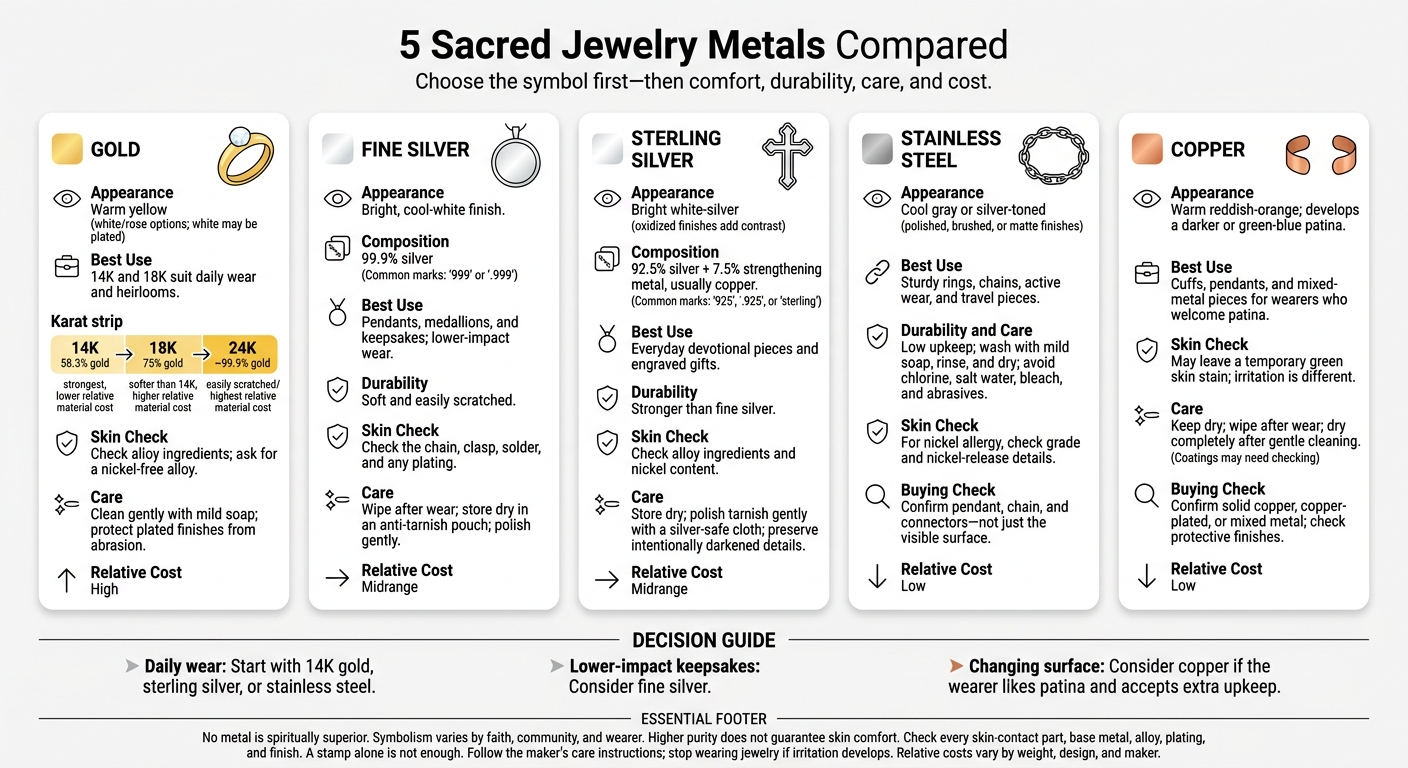
I’d choose sacred jewelry by the symbol first, then by comfort, durability, care, and cost - not metal purity. For daily wear, I’d start with 14K gold, sterling silver, or stainless steel. Fine silver suits lower-impact pieces, while copper suits someone who likes a surface that changes over time.
Quick Comparison
| Metal | Appearance and best use | Skin and care checks | Relative cost |
|---|---|---|---|
| Gold | Warm yellow; 14K and 18K suit daily wear and heirlooms | Check alloy ingredients; clean gently | High |
| Fine silver | Bright white; 99.9% silver, best for pendants and keepsakes | Soft and easily scratched; check clasps and chains | Midrange |
| Sterling silver | Bright silver; 92.5% silver with added strength for daily wear | Check for nickel; polish tarnish gently | Midrange |
| Stainless steel | Cool gray; sturdy rings, chains, and travel pieces | Low upkeep; check nickel release if allergic | Low |
| Copper | Warm reddish-orange; develops a darker or green patina | May stain skin; keep dry and check coatings | Low |
Prices vary by weight, design, and maker.
For a gift, I’d confirm the recipient’s beliefs, preferred color, size, and care habits. Before buying, I’d also check <u>every part that touches the skin</u> and whether the piece is solid metal or plated. A higher purity does not mean greater sacred worth - or guarantee skin comfort.
5 Sacred Jewelry Metals Compared
Sacred Meaning, Metal Purity, and Finishes
Religious practice varies by faith, denomination, and community. A symbol may express prayer, remembrance, or ties to a shared heritage, depending on the wearer’s intent. The same sacred symbol can be worn in different metals for different reasons.
Purity describes metal content, not sacred value. Fine silver is typically 99.9% pure silver, commonly marked “999” or “.999.” Sterling’s “925” mark means 925 parts silver per 1,000, with added metals for strength. Check the product description, too - a stamp alone isn’t enough.
Solid jewelry can still be an alloy. Solid-metal jewelry uses the stated metal or alloy throughout. Plated jewelry, by contrast, has a thin metal coating over a different base. Friction, sweat, water, and chemicals can affect how long gold-plated jewelry lasts. Read descriptions carefully: “gold-plated brass” identifies both layers, while “gold-tone” describes color without confirming any gold content.
Polished, satin, and oxidized describe the finish, not purity. Finish matters just as much as metal type when judging appearance and durability.
For plated pieces, check the base metal and any plating layers, not just the visible finish. Take them off before swimming, showering, or exercising, and avoid abrasive polishing. Stop wearing a piece if itching or redness develops.
1. Gold
Gold brings warmth, visibility, and a sense of ceremony to sacred jewelry.
Faith Symbolism and Appearance
Gold often represents divinity, glory, or purity. Its warm tone works well for crosses, pendants, and ceremonial rings.
The alloy and karat should also suit the person wearing it.
Daily Wear and Skin Comfort
Karat measures gold content on a 24-part scale. For yellow gold, here’s how the common options compare:
| Karat | Gold content | Color and strength | Relative material cost |
|---|---|---|---|
| 14K | 58.3% | Lighter yellow; generally strongest | Lower |
| 18K | 75% | Richer yellow; softer than 14K | Higher |
| 24K | About 99.9% | Deepest yellow; easily scratched or bent | Highest |
The alloy affects both color and skin comfort. For heirloom pieces, confirm if the piece is solid gold or gold filled and ask for a nickel-free alloy.
Care
Wipe gold jewelry after wearing it. Wash solid gold with lukewarm water and mild soap, then rinse and dry. Store pieces separately, and check clasps, chain links, and settings regularly.
Sacred Designs and Gifts
14K works well for everyday crosses and devotional rings. Choose 18K for milestone gifts and heirlooms, or 24K for occasions when customary practices or purity matter most.
2. Fine Silver
Faith Symbolism and Appearance
Gold feels warm and ceremonial. Fine silver has a cooler, quieter feel, with a bright, cool-white finish that suits sacred symbols. Depending on the wearer’s faith, its shine may suggest purity, divine light, redemption, or spiritual reflection.
Daily Wear and Skin Comfort
Fine silver is softer than sterling silver, making it a better fit for pendants and medallions than thin rings. Its high silver content may suit sensitive skin, but check the chain, clasp, and solder too.
Care
Learn how to clean silver jewelry by wiping it after each wear, store it in a dry anti-tarnish pouch, and take it off before exposure to water or chlorine.
Sacred Designs and Gifts
Match the symbol to the occasion: a cross or saint medal for baptism, a verse or date for confirmation, a brief inscription for graduation, or initials and a ceremony date for a wedding.
Confirm the symbol and engraving before you order.
Sterling silver offers a similar look with more strength for everyday wear.
3. Sterling Silver
Faith Symbolism and Appearance
Sterling silver offers silver’s look with added strength for daily wear. It contains 92.5% silver and 7.5% strengthening metal, usually copper. It has no fixed religious meaning - the symbol and wearer give it meaning. A bright finish helps engraving stand out, while oxidized finishes add contrast to lettering and symbols.
Daily Wear and Skin Comfort
The alloy helps clasps, settings, and detailed designs hold up to regular handling. Look for “925,” “.925,” or “sterling” marks, then check the product description for the full alloy. If you have sensitive skin, ask whether the piece is nickel-free. Stop wearing it if irritation starts. Along with that added strength, sterling needs proper cleaning.
Care
Tarnish is normal. Use a soft polishing cloth, taking care not to remove intentionally darkened details.
Sacred Designs and Gifts
Sterling’s added strength makes it a good fit for devotional pieces handled often and engraved gifts that mark milestones.
Consider crosses, rosary components, or prayer charms; personalize gifts with a name, date, or short prayer reference.
Confirm the available engraving space and font before ordering.
4. Stainless Steel
Faith Symbolism and Appearance
Stainless steel has a cool-toned, understated look that keeps the focus on the symbol. Polished finishes add shine, while brushed or matte surfaces feel more subdued. Its clean, modern style pairs easily with simple devotional pieces or everyday symbols.
Daily Wear and Skin Comfort
A protective surface layer helps stainless steel resist corrosion. That makes it a durable, low-maintenance option for active days and travel. 316L is often the safer choice for sensitive skin, but anyone with a known nickel allergy should check nickel-release details.
Care
Wash with mild soap, rinse, and dry. Avoid chlorine, salt water, bleach, and abrasives, which can damage the finish or plating. Store it dry to limit surface wear.
Sacred Designs and Gifts
Stainless steel works well for rings, bracelets, chains, and pendants. Its durability, understated look, and easy care make it a good fit for someone’s first religious jewelry gift.
Choose a symbol from the recipient’s tradition, and opt for an adjustable chain if you’re unsure about choosing the right necklace length. Check that the pendant, chain, and connectors are stainless steel, not plated.
For a warmer, more reactive metal with a living finish, copper offers a different sacred look.
5. Copper
Faith Symbolism and Appearance
Unlike stainless steel’s stable finish, copper has a warm tone that changes with wear. Its reddish color may symbolize grounding, resilience, strength, or connection to the Earth, depending on the wearer’s beliefs and practices. New copper is reddish-orange. Moisture, sweat, oils, and salts darken it and can create a green-blue patina.
Daily Wear and Skin Comfort
Copper can leave a temporary green mark on skin. This is usually a surface stain that washes off with soap and water. Itching, burning, redness, swelling, blistering, or lasting discomfort can signal irritation. Remove the piece and seek medical advice if symptoms persist.
A jewelry-safe sealant, microcrystalline wax, or clear coating can reduce skin contact and staining, but check it regularly and renew it as needed.
Care
Remove copper before showering, swimming, exercising, or applying lotions, perfume, or cosmetics. This helps limit staining, patina changes, and coating wear.
After wearing it, wipe it with a soft, dry cloth. For gentle cleaning, use mild soap, lukewarm water, and a soft cloth or brush, then dry it completely.
Sacred Designs and Gifts
Copper works well in hammered cuffs, pendants, and mixed-metal pieces with crosses, stars, prayer symbols, or nature motifs. Its handmade look suits baptism, confirmation, graduation, weddings, birthdays, or personal vows.
Choose a symbol that matches the recipient’s beliefs, confirm sizing, and check whether they like patina before buying an unfinished piece. Ask whether the jewelry is solid copper, copper-plated, or mixed metal, and whether it has a protective finish or intentional patina - a changing surface is part of copper’s handmade character and appeal in sacred pieces.
Compare Sacred Jewelry Metals
Compare each metal’s meaning, appearance, comfort, and care needs to find the right fit. The metal should support the sacred symbol, not overpower it.
| Metal | Common symbolic associations | Appearance | Best use | Skin comfort / sensitivity | Care | Gift occasions |
|---|---|---|---|---|---|---|
| Gold | Sacred light, divinity, or honor in some traditions. | Yellow, white, or rose; white gold may have a plated finish. | 14K and 18K are better suited to daily wear than softer 24K, which works best for special pieces. | Comfort depends on the alloy, including nickel in some white or lower-karat gold. Higher purity doesn't guarantee comfort. | Clean gently; avoid abrasion on plated finishes. | Baptisms, bar or bat mitzvahs, weddings, and heirloom gifts. |
| Fine silver | Purity, reflection, or devotion, depending on beliefs. | Bright, pale, and softly reflective. | Best for low-impact pendants, charms, and occasional wear. | Generally comfortable for many people; check plating and other parts that touch the skin. | Store separately; polish gently. | Ceremonial keepsakes and commemorative pendants. |
| Sterling silver | Purity or sacred light, depending on beliefs. | Bright white-silver; oxidized finishes bring out details. | Stronger than fine silver and good for everyday wear. | Often well tolerated; check alloy ingredients if allergies are a concern. | Store dry in an anti-tarnish pouch; use a silver-safe cloth. | Confirmations and everyday devotional gifts. |
| Stainless steel | Resilience or enduring commitment as personal interpretations. | Cool gray or silver-toned; polished, brushed, matte, or coated. | Well suited to active wear and frequent use. | Check the grade and nickel-release details if you have a nickel allergy. | Clean gently and dry; avoid abrasives on coatings. | First religious jewelry gifts and devotional pieces for travel. |
| Copper | Warmth, grounding, or connection to the earth in some practices. | Warm orange-red; develops a darker or green patina. | Best for regular wear when the wearer accepts patina and extra upkeep. | Temporary skin staining or irritation can occur. | Keep dry; polish for brightness or leave the patina. | Personalized sacred pendants and nature-inspired symbolic gifts. |
Symbolism varies by faith, community, and wearer. Match the symbol to the recipient’s beliefs rather than assigning meaning to the metal. Metal shapes the piece’s look, comfort, and upkeep; the symbol carries its meaning.
Before choosing a piece for daily wear or a gift, check the maker’s specifications for base metal, purity, grade, and finish. Follow the maker’s care instructions.
How to Choose a Metal for Daily Wear or Gifts
Use the comparisons above to narrow your choice by symbol, wear frequency, care needs, and skin sensitivity.
Confirm the symbol. Check which symbols the wearer welcomes and which they avoid. If you’re buying a gift, discreetly ask the recipient or someone close to them.
Consider how often they’ll wear it. For daily wear, look for a sturdy metal, a secure fastening, and a comfortable weight. For ceremonial wear, focus on details that honor the recipient’s tradition.
For gifts, confirm the metal color, chain length, bracelet size, ring size, pendant size, clasp type, and weight. Unsure about sizing? Choose an adjustable piece, a charm, or a gift that’s easy to exchange. The piece should fit both the wearer and the amount of upkeep they’re willing to do.
Check the care routine. Read the maker’s care instructions before buying. Choose a metal that fits the wearer’s care habits. Then check what will touch their skin.
Check skin sensitivities. Review every skin-contact part, including posts, clasps, chains, and backs. Don’t rely on a “hypoallergenic” label alone. For a known nickel allergy, request documented nickel-free composition.
Conclusion: Balance Meaning, Comfort, and Care
Gold works well for heirlooms, fine silver for bright symbolic pieces, and sterling silver for everyday wear. Stainless steel offers low-maintenance wear, while copper brings warmth and a patina that develops over time.
No metal is spiritually superior. Sacred meaning comes from faith, intention, and symbol - not the metal itself. Your choice of metal affects appearance, durability, comfort, and care.
Keep the symbol at the center while caring for the piece. Wipe it after wearing it, store it separately in a dry place, and follow the maker’s cleaning instructions. Avoid aggressive polishing, especially when you clean gold plated jewelry.
FAQs
Can I have sacred jewelry replated without harming its engraving?
Yes. Replating adds a very thin layer of metal over the base to renew your jewelry’s appearance. This layer typically doesn’t damage or fill in existing engravings, keeping the personal details of your sacred pieces intact.
How can I verify a jewelry maker’s nickel-free claim?
Ask the seller where the materials come from and what they contain. A reputable jeweler should be willing to discuss both. Check for metal-content stamps, such as .925 for sterling silver.
The term “hypoallergenic” isn’t strictly regulated, so choose brands you trust. For everyday wear, keep in mind that nickel-free plating can wear away, exposing a base metal that may contain nickel.
Can I combine metals in one sacred jewelry piece?
You can combine different metals in a single sacred jewelry piece to add depth, visual interest, and symbolic meaning. Cool-toned silver paired with warm gold accents, for example, can draw attention to geometric patterns or the points where lines meet.
Mixed metals also have historical roots. Ancient Inca practices paired gold and silver to represent cosmic harmony and the balance between sun and moon energies.