Skip to content




10 Popular Materials In 1950s Rockabilly Jewelry
The 1950s Rockabilly jewelry scene was all about bold designs, vibrant colors, and accessible glamour. Post-war creativity led to the use of unconventional materials that balanced style with affordability. From shimmering rhinestones to playful plastics, these pieces captured the spirit of Hollywood glitz and rebellious rock 'n' roll. Here's a quick look at the top materials used:
- Faux Pearls: Affordable elegance, often paired with Swarovski crystals for a polished look.
- Rhinestones: Sparkling glass stones with innovations like Swarovski’s Aurora Borealis finish.
- Lucite: Lightweight acrylic crafted into bold and colorful shapes.
- Bakelite: Durable, vibrant thermoplastic featuring carved patterns and layered designs.
- Textured Gold: Intricate finishes like Florentine, reeding, and snake chains for daytime jewelry.
- Enamel: Durable, colorful designs inspired by nature and atomic motifs.
- Glass Crystals: Affordable diamond-like sparkle for evening wear.
- Imitation Turquoise: Dyed minerals and plastics mimicking natural turquoise.
- Imitation Coral: Warm red and pink tones crafted from Lucite and thermoplastics.
- Copper: Affordable metal used in handcrafted, modernist designs.
These materials reflected the optimism and bold self-expression of the era, blending affordability with style. Modern designers still draw inspiration from these mid-century classics, reinterpreting them for today’s trends.
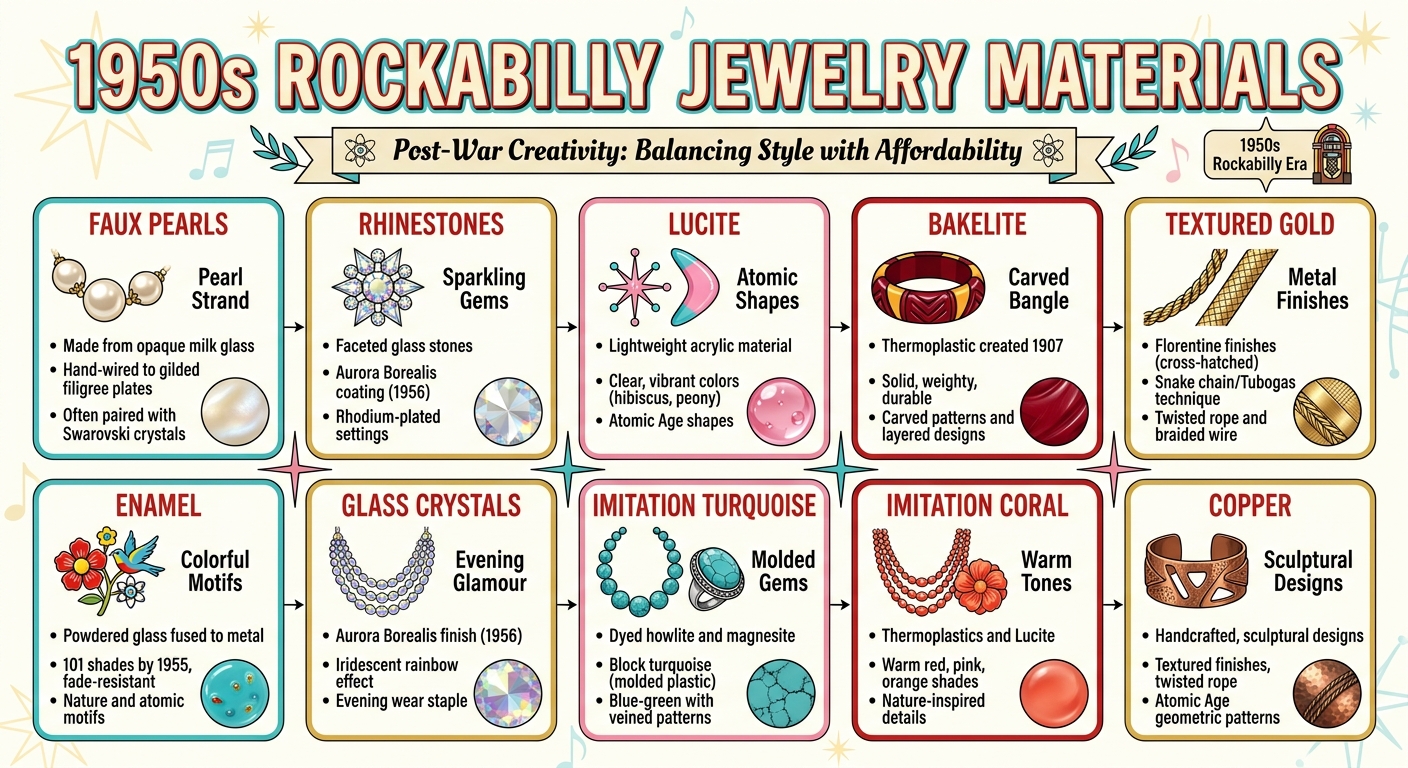
10 Popular Materials in 1950s Rockabilly Jewelry: Visual Guide
1. Faux Pearls
Faux pearls brought sophistication to fashion without breaking the bank. While genuine pearls were a luxury many Americans couldn't afford, imitation pearls offered the same refined, elegant vibe at a much lower cost. In 1926, designer Miriam Haskell introduced hand-wired faux baroque pearls, which mimicked the irregular charm of natural pearls.
Crafted with care, artisans used fine wire to attach each pearl to gilded filigree plates in a process often called "embroidery". These pearls were made from opaque milk glass, giving them a realistic weight and density. This mix of creativity and resourcefulness reflected the era's knack for transforming unconventional materials into something beautiful.
Hollywood stars like Joan Crawford and Lucille Ball helped make faux pearls a must-have accessory, showcasing their accessible glamour. By the mid-1950s, faux pearl jewelry - including single or double strands, oversized earrings, and multi-strand "torsades" - became synonymous with a polished, feminine look.
Matching sets, known as "parures", were especially popular, combining faux pearl necklaces, bracelets, and clip-on earrings to complete the 1950s aesthetic. To add extra flair, manufacturers often paired faux pearls with Swarovski crystals or art glass, creating textured designs in "white-on-white" themes.
Next, let’s dive into how rhinestones added even more sparkle to the Rockabilly era.
2. Rhinestones
Rhinestones brought a touch of Hollywood glamour to everyday women, offering a way to achieve elegance without the hefty price of genuine gemstones. These sparkling, faceted glass stones transformed costume jewelry collections, making luxury accessible to the growing middle class. As GMT Staff put it:
"Costume jewelry offered what women craved: style, sophistication, and a touch of glamour, without the price tag of precious stones."
The appeal of rhinestones went beyond their sparkle - they were crafted with incredible attention to detail. Artisans often hand-wired each stone onto delicate metal filigree plates using embroidery techniques. High-end pieces stood out with rhodium-plated settings, riveted backs, and open designs that enhanced their brilliance. One popular style featured tiny faceted rhinestones called "rose montées," which were used to decorate gilded metal leaves or to create lifelike eyes in animal-themed jewelry.
A major leap in rhinestone design came in 1956, when Swarovski introduced the Aurora Borealis coating. This shimmering, iridescent finish made rhinestones even more dazzling, perfectly aligning with the post-war era's embrace of opulence and femininity. Department stores eagerly jumped on the trend, offering rhinestone versions of the glamorous designs seen in movies.
Designers like Weiss became famous for their icy, brilliant rhinestones, while Trifari, under the leadership of former Cartier designer Alfred Philippe, produced pieces so refined they blurred the line between costume and fine jewelry. The period also saw playful fashion trends, such as the "brooch wars," where women would adorn a single coat lapel with five or six rhinestone brooches. Rhinestone matching sets became especially popular for weddings, providing a diamond-like sparkle at a much lower cost.
3. Lucite
After the sparkling appeal of rhinestones, Lucite brought a modern, futuristic twist to Rockabilly jewelry.
This acrylic material allowed designers in the 1950s to create bold, lightweight jewelry pieces, including bangles, earrings, and pendants. It offered the clarity of glass but without the weight or chilly feel. As Elara Vance, GIA Graduate Gemologist and Stylist, put it:
"Clear lucite and high‑quality acrylic enabled large, light, and optically crisp forms that glass could not match for comfort."
Reflecting the Atomic Age's fascination with space and innovation, Lucite was crafted into distinctive shapes like starbursts, ellipses, asymmetrical boomerangs, and flowing amoeba-like designs. Designers often carved Lucite into chunky bangles, adding glitter or casting them in vibrant colors like hibiscus or peony to match the bold color trends of the time.
Clear Lucite bangles became a go-to accessory, seamlessly transitioning from casual outfits to evening ensembles. Lucite's versatility extended to scatter pins, cascade earrings, and striking pendants. If you're identifying vintage Lucite, look for its lighter, warmer feel compared to glass. To keep it in great condition, clean gently with soap, water, and a microfiber cloth.
4. Bakelite
Bakelite is known for its solid, weighty feel and impressive durability, making it a standout material. Created in 1907 by chemist Leo Hendrik Baekeland, it gained immense popularity in jewelry design from the 1930s through the 1950s. Its toughness, proven through use in both automotive and household items, ensures that Bakelite jewelry can handle everyday wear without compromising its charm.
What truly sets Bakelite apart is its vibrant colors and diverse finishes - ranging from opaque to translucent or even transparent - making it an ideal match for bold styles like the Rockabilly aesthetic. Unlike cheaper plastics, Bakelite was cast into its final shape, resulting in smooth, seamless designs. Designers often took it a step further by adding carved patterns, layered colors, and intricate inlays to elevate its visual appeal. This craftsmanship is mirrored in many bespoke jewelry collections that prioritize unique, high-quality materials.
As Vintage Anelia aptly described:
"Bakelite is a wondrous, sturdy and versatile thermoplastic first manufactured in the early 1900s. Very popular in the 1930s-50s, it was used to make everything from radios to kitchen utensils to jewelry!"
Even high-fashion legends such as Coco Chanel and Elsa Schiaparelli embraced Bakelite in their designs, further cementing its status as a material of elegance and innovation.
Authenticating Bakelite is relatively straightforward. One method is the Simichrome polish test: apply a small amount of the polish to the piece, and if it's genuine, the polish will turn from pink to a golden yellow. Another method is the hot water test - real Bakelite emits a distinct formaldehyde odor when exposed to heat. Additionally, check for heavier weight and hardware that is riveted or screwed rather than glued, as these are telltale signs of authentic Bakelite.
This durable and versatile material laid the groundwork for the unique finishes and designs that followed in later years.
5. Textured Gold
The 1950s saw textured gold take center stage as a standout material in daytime jewelry. Known for its intricate surface designs that played beautifully with light, textured gold became a defining feature of the era. While platinum and diamonds remained staples for evening wear, daytime "cocktail" jewelry leaned heavily on bold, yellow gold designs with unique finishes that added depth and character.
Jewelers of the time used a variety of techniques to craft these textures. Florentine finishes created a soft, matte look with cross-hatched engraved lines. Reeding and fluting introduced parallel grooves, while twisted rope and braided wire added cord-like patterns. One of the most iconic techniques was the "gas pipe" or snake chain (also called Tubogas), which produced flexible, sculptural forms perfect for statement necklaces and bracelets. These methods showcased gold's versatility and aligned with the decade's bold design trends.
As Berganza observed:
"Textured gold dominated this decade with florentine finishes, foxtail chain, twisted rope, braided wire, mesh, reeding, fluting and piercing all seen in abundance."
The post-war era's economic optimism fueled a demand for jewelry that looked luxurious but was cost-effective to produce. With platinum still limited due to wartime restrictions, yellow gold became the go-to precious metal. Jewelers cleverly used thinner sheets of gold and added textures to create large, impactful designs without excessive weight or expense. To enhance visual appeal, they sometimes mixed gold with copper, resulting in multi-colored pieces that blended yellow, rose, and green tones in a single design.
Textured gold also paired beautifully with other materials popular in Rockabilly fashion. Rhinestones were often set into gold scrolls and ribbons to suggest movement and elegance, while enamel brought vibrant colors to designs inspired by nature, such as birds and flowers. These elements combined to produce bold, eye-catching pieces that were both glamorous and approachable - perfectly capturing the playful, daring spirit of the Rockabilly era. The innovations in textured gold reflected the broader aesthetic of creating jewelry that was stylish yet accessible.
6. Enamel
Enamel, crafted by fusing powdered glass to metal under high heat, became a hallmark of 1950s Rockabilly jewelry. Known for its bold, fade-resistant colors, enamel symbolized the era's post-war optimism, offering vibrant bursts of color in everyday fashion. This technique not only produced striking hues but also created a durable material perfect for regular wear.
By 1955, the British Standard color palette had grown to include 101 shades. Rockabilly enamel pieces embraced everything from soft pastel mint greens to deep, saturated cherry reds, often featuring designs inspired by nature or atomic starburst patterns. These vivid colors matched the daring and unconventional styles the decade celebrated. Maya Thompson of Robinson's Jewelers highlighted enamel's enduring charm:
"Enamel's vibrancy stands the test of time. A well-made piece will keep its pop for decades, essentially serving as a miniature painting on your wrist".
Iconic enamel jewelry, such as brooches and pins, often showcased intricate details like flowing ribbons or tropical floral designs. Its adaptability made enamel suitable for both casual daytime outfits and glamorous evening looks. Typically paired with gold-tone metals, enamel added playful, artistic touches that reflected the rebellious energy of Rockabilly fashion. In 1958, a full set of costume jewelry, including enameled pieces, could be purchased for around $8.00 - roughly $83.55 in today's dollars.
Up next: discover how glass crystals brought complementary sparkle to Rockabilly jewelry.
7. Glass Crystals
Glass crystals brought the sparkle of diamonds within reach, offering an affordable way for women to achieve an elegant evening look. These finely crafted pieces became staples of 1950s nightlife, perfect for cocktail parties and social events. Thanks to advanced manufacturing techniques, costume jewelry made with glass crystals was so well-made that it was hard to tell apart from fine jewelry at a glance. Precision cutting and finishing techniques only added to their allure.
In 1956, Swarovski transformed crystal jewelry with their "Aurora Borealis" (AB) finish. This special coating created an iridescent effect, reflecting a rainbow of colors reminiscent of the Northern Lights. As Vintage Jewelry Girl described:
"The invention of the AB finish revolutionized the jewelry and fashion industry, as it added a new level of brilliance and glamour to crystal jewelry and accessories".
This innovation helped establish glass crystals as a defining feature of evening jewelry.
Glass crystals were most commonly seen in flexible bracelets, multi-strand torsade necklaces, and cascading earrings. These designs were reserved for evening wear, standing apart from the textured gold and colorful stones that dominated daytime looks. Elara Vance, a GIA Graduate Gemologist at Mvraki, explained their appeal: "Crystals supplied a pricier, more brilliant option" compared to standard rhinestones.
Beyond their sparkle, glass crystals were cleverly integrated into Space Age-inspired designs. They adorned atomic and starburst motifs, capturing the era's fascination with futuristic themes. Jewelers often paired these crystals with rhodium or gold plating, creating the appearance of high-end pieces. White glass crystal sets became especially popular in the summer, offering a crisp and polished look for warm-weather events. This strategic use of glass crystals reflected the 1950s' dedication to making luxury accessible, blending innovation with the glamorous style of Rockabilly jewelry.
8. Turquoise Imitation Stones
Imitation turquoise brought a bold Southwestern vibe to the Rockabilly scene, offering an affordable way to achieve the look of natural turquoise. Genuine turquoise, while beautiful, was pricey and delicate. But in the 1950s, manufacturers created cost-effective alternatives that mimicked its striking blue-green tones and veined patterns - at a cost 100 to 300 times lower than the real thing. This breakthrough opened up the door for experimenting with ways to replicate natural stones.
The most popular materials for imitation turquoise included dyed howlite and magnesite - white minerals known for their ability to absorb blue dye. Other methods involved "block turquoise", crafted from molded plastic polymers, and reconstituted turquoise, made by blending turquoise powder with plastic resins. To replicate the look of high-grade turquoise, some manufacturers even incorporated bits of pyrite to imitate the metallic veins often found in natural stones.
A significant innovation came from S. A. "Chuck" Colbaugh, who developed a stabilization technique at Arizona's Kingman Mine. Using optically clear resin (similar to the material used in jet fighter windows), Colbaugh's method hardened and preserved turquoise through a meticulous three-month process. These efforts, like other mid-century experiments, aligned with the Rockabilly spirit of making luxury and style accessible to everyone. As Chris Ralph, a turquoise miner and author, explained:
"Imitation turquoise is really suited only for costume type jewelry".
The bright blues of imitation turquoise provided a vibrant contrast to Rockabilly staples like leather jackets, white tees, and dark denim. This Southwestern touch not only reflected the subculture's country-western influences but also added a rustic charm to its rebellious rock 'n' roll attitude. Chunky necklaces and beaded bracelets featuring these stones became iconic, adding bold pops of color that captured the daring aesthetic of the era. This trend of replicating natural materials didn’t stop with turquoise - it extended to other imitation stones that brought personality and flair to Rockabilly jewelry.
9. Coral Imitation Stones
Imitation coral brought vibrant colors to the forefront, echoing the beauty of natural coral without the hefty price tag. These pieces featured warm shades of red, pink, and orange, perfectly capturing the bold aesthetic of the era. Designers used materials like thermoplastics and Lucite to craft chunky jewelry that mimicked coral's natural texture. You’d often find these striking designs in bangles, multi-strand necklaces, and statement earrings, frequently embellished with nature-inspired details like hibiscus flowers.
Next, let's dive into how metals like copper played a role in shaping the Rockabilly style.
10. Copper
Breaking away from the glittering dominance of rhinestones and crystals, copper became a standout choice for daytime wear, especially appealing to the artistic tastes of the Beatnik generation.
This metal's adaptability made it perfect for handcrafted, sculptural designs during the mid-20th century. Inspired by the Arts and Crafts movement, copper jewelry highlighted visible craftsmanship with textured finishes, woven details, and twisted rope patterns. These designs marked a departure from the bold, masculine styles that defined the 1940s.
Copper also embraced the Atomic Age's bold aesthetic. Designers used it to create striking starburst shapes, boomerangs, and asymmetrical geometric patterns, reflecting the era's fascination with modernist design. Its affordability allowed for chunky, statement-making pieces that brought contemporary style to everyday wardrobes.
In the 1950s, the jewelry brand Renoir became a leader in copper innovation. Renoir's bracelet sets, featuring imaginative "flame" and "rhythm" patterns, showcased the metal's ability to be shaped into intricate, eye-catching forms while maintaining a handcrafted feel. These creative uses of copper underscored the evolving trends in mid-century jewelry design.
Conclusion
The materials that shaped 1950s Rockabilly jewelry captured the essence of a decade defined by glamour, optimism, and bold self-expression. From the shimmering brilliance of Aurora Borealis rhinestones to the playful charm of Lucite and the earthy warmth of copper, each element mirrored the era's break from post-war austerity. As Berganza aptly observed, "Modernist jewellery was born out of a newly-found freedom of expression that thrived during the 1950s". These materials were more than decorative - they reflected the atomic age's fascination, the rise of Hollywood allure, and a growing embrace of individuality.
Today’s jewelry artisans continue to find inspiration in these mid-century classics. Modern designs reinterpret the textured gold finishes, geometric patterns, and bold shapes that made 1950s jewelry unforgettable. Contemporary brands now incorporate high-quality materials like gold, silver, and natural gemstones to create pieces that balance timeless elegance with current trends. As Annie Chen, SVP of Merchandising and Design at Brilliant Earth, puts it: "Personalized jewelry represents the most authentic form of luxury: items valued not just for their material worth but for the stories they tell and the emotions they evoke".
LaCkore Couture embraces this legacy with handcrafted collections that honor the iconic aesthetics of the 1950s while offering modern versatility. Their designs showcase the same dedication to craftsmanship and individuality, using materials like gold, silver, and natural stones to create statement pieces perfect for both daily wear and special occasions. Their focus on customization and mix-and-match styles mirrors the spirit of personal expression from that era.
Whether you’re drawn to the vintage appeal of mid-century design or admire exceptional craftsmanship, the influence of 1950s Rockabilly materials continues to resonate. These enduring elements inspire contemporary jewelry that blends classic sophistication with a modern twist.
FAQs
How can I tell Bakelite from other plastics?
You can recognize Bakelite by its characteristic smell, often compared to formaldehyde or phenol. Another hallmark of Bakelite is its versatility - it can be carved or molded into detailed and intricate shapes, which makes it stand out from other types of plastic.
What’s the difference between rhinestones and glass crystals?
Rhinestones and glass crystals may look similar at first glance, but they differ significantly in composition and quality. Rhinestones are typically made from materials like glass, acrylic, or plastic, making them a budget-friendly way to imitate gemstones. They come in a variety of colors, making them a popular choice for costume jewelry.
On the other hand, glass crystals are crafted from finely cut, high-quality glass. This gives them a level of brilliance and clarity that rhinestones can't quite match. Because of their closer resemblance to real gemstones, glass crystals are often used in authentic 1950s Rockabilly-style jewelry, where a more polished and genuine look is essential.
How do I safely clean and store vintage Lucite jewelry?
To care for vintage Lucite jewelry, start by gently wiping it with a soft, damp cloth. Steer clear of harsh chemicals, abrasive materials, or soaking it in water, as these can damage the surface. When storing, lay the pieces flat in a cool, dry spot, away from direct sunlight, to avoid discoloration or warping. Since Lucite is a type of plastic, keep it away from heat and alcohol-based cleaners. With these steps, you can maintain its charm and extend its lifespan.