Skip to content




Platinum vs. White Gold: Which to Choose?
When deciding between platinum and white gold for jewelry, the choice often comes down to your lifestyle, budget, and preferences. Here's a quick breakdown:
- Platinum: More durable, hypoallergenic, naturally retains its color, and requires less maintenance. Costs 20–30% more than white gold and feels heavier due to its density. Ideal for active lifestyles and heirloom-quality pieces.
- White Gold: More affordable, lighter, and great for intricate designs. Requires rhodium re-plating every 1–2 years to maintain its bright white finish. Contains alloys (like nickel) that may cause allergies for some.
Quick Comparison
| Feature | Platinum | White Gold |
|---|---|---|
| Color | Naturally silvery-white | Requires rhodium plating |
| Durability | Displaces metal when scratched | Loses material when scratched |
| Maintenance | Low (occasional polishing) | High (rhodium re-plating) |
| Weight | Heavier | Lighter |
| Cost | 20–30% more expensive | More budget-friendly |
| Hypoallergenic | Yes | No (unless nickel-free alloy) |
Platinum suits those seeking durability and minimal upkeep, while white gold is better for budget-conscious buyers who don’t mind periodic maintenance.
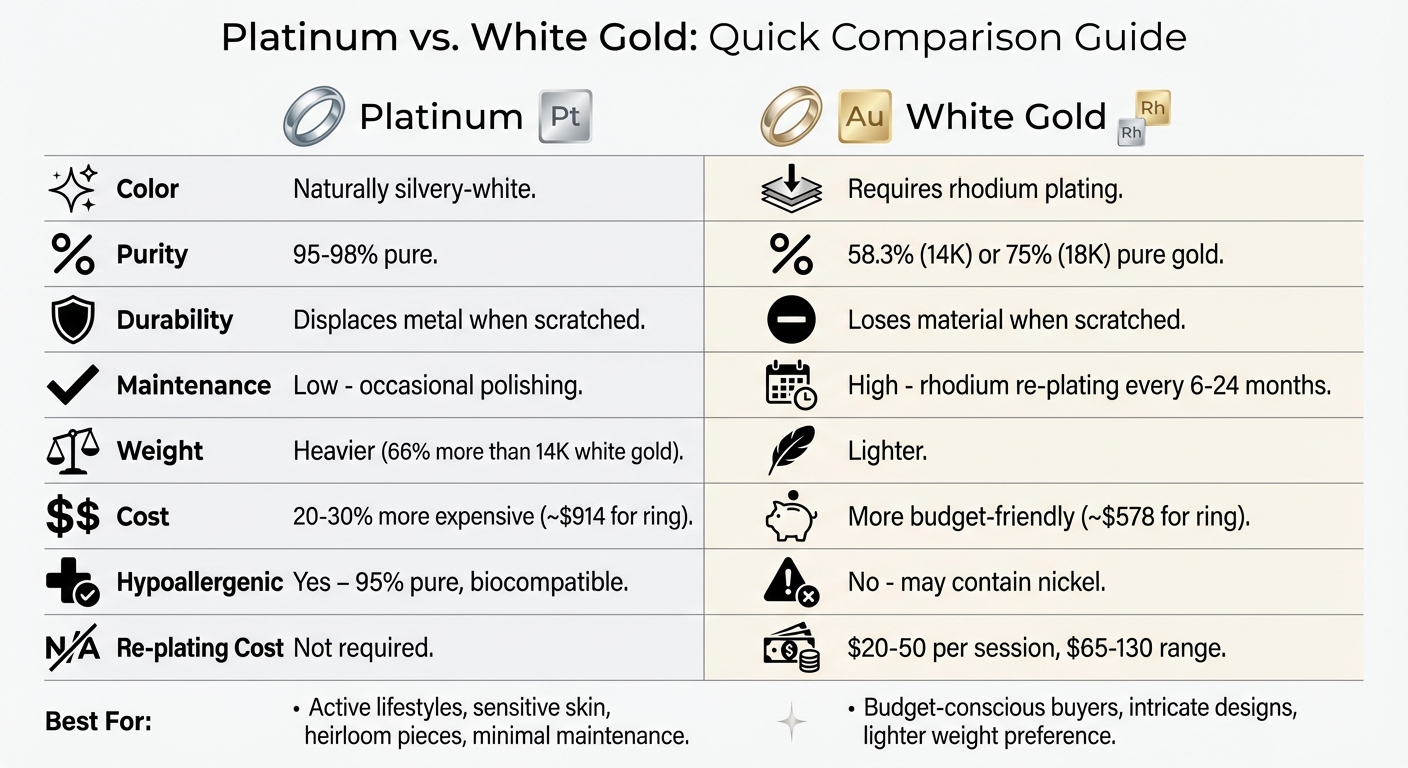
Platinum vs White Gold Jewelry Comparison Chart
What is Platinum?
Platinum is a naturally white-silver metal prized for its rarity and purity. Unlike white gold, which needs rhodium plating to maintain its bright finish, platinum keeps its natural color effortlessly, making it a low-maintenance option that stays brilliant over time.
Platinum jewelry is typically composed of 95–98% pure platinum, with small amounts of alloying elements added for stability. In comparison, white gold contains less pure gold by nature, which highlights one of platinum's key advantages over white gold.
"Platinum is the only true hypoallergenic precious jewelry metal that you can buy, because it is 95% pure." - Lynelle Schmidt, Author, Long's Jewelers
This high purity not only reduces the risk of allergic reactions but also gives platinum a heavier, more luxurious feel - it's about 20% denser than white gold. For individuals with sensitive skin or nickel allergies, platinum is an ideal choice since it’s free of the common allergens found in white gold alloys.
Another standout feature of platinum is how it handles wear. When scratched, the metal doesn’t wear away but rather shifts, keeping the overall mass of the piece intact. Over time, this creates a unique, satiny patina that many collectors admire, as it enhances the brilliance of diamonds and other gemstones.
What is White Gold?
White gold is created by blending yellow gold with white metals like palladium, nickel, silver, zinc, or copper. This combination gives it a sleek, silvery-white appearance that has become a favorite in jewelry design.
"White gold is not a metal that exists in its own right. In other words, you cannot mine white gold, like you would mine yellow gold." – The Diamond Store
This explanation highlights the fact that white gold is not a naturally occurring metal but a carefully crafted alloy. Its composition directly impacts its properties and appearance.
The purity of white gold is measured in karats, which indicate the percentage of pure gold in the mix. For instance, 18K white gold consists of 75% pure gold, while 14K white gold contains 58.3% pure gold. The choice of additional metals in the alloy also plays a key role in its characteristics. Nickel-based alloys are known for their strength and durability, making them a great option for everyday wear. On the other hand, palladium-based alloys are softer and better suited for intricate designs, especially those involving gemstone settings.
Unplated white gold has a natural yellowish or grayish tint. To achieve the bright, reflective finish most people associate with white gold, it is electroplated with rhodium. This rhodium layer not only enhances its shine but also improves scratch resistance and helps prevent allergic reactions to nickel.
Over time, the rhodium coating can wear off, requiring re-plating to maintain its polished look. Typically, re-plating is needed every 12 to 24 months, with costs ranging from $65 to $130.
Key Differences Between Platinum and White Gold
Composition and Color
Platinum is naturally a gray-white metal that doesn’t require any treatment to maintain its color. It typically contains 90–95% pure platinum, marked with ".900" or ".950", and is mixed with small amounts of alloys like iridium or cobalt. Its rarity is striking: only 80 to 160 tons of platinum are mined each year, compared to 1,500 to 2,700 tons of gold.
White gold, on the other hand, is made by blending yellow gold with white metals such as silver, nickel, or palladium. Its purity is measured in karats: 18K white gold contains 75% pure gold, while 14K white gold has about 58.3% pure gold. Without any treatment, white gold has a natural "champagne" or slightly yellowish hue. To give it that bright silvery-white appearance, jewelers coat it with rhodium plating. However, this layer needs regular maintenance to keep the jewelry looking pristine.
"Platinum is a naturally white metal, gold is naturally yellow." - ILA Collection
Platinum’s high density also sets it apart. A platinum ring typically weighs about 66% more than a 14K white gold ring of the same size. This weight difference reflects both its density - around 20% greater than white gold - and its higher purity. These factors influence not just how the metal feels but also its overall cost.
Durability and Wear
When it comes to wear, platinum and white gold behave quite differently. Platinum doesn’t lose material when scratched; instead, the metal shifts, forming a soft matte "patina" that many people appreciate for its vintage charm. In contrast, scratches on white gold remove tiny layers of the metal, which can eventually lead to thinning. Additionally, the rhodium coating on white gold wears away over time - typically within 6 to 24 months - exposing the yellowish undertone beneath.
"Platinum is much stronger than white gold. It will last three times as long as gold... because it never loses its mass, so it will not thin out over time." - Joseph Jewelry
Platinum’s density and strength make it less prone to brittleness, which is especially important for settings like prongs that hold gemstones securely. While 14K white gold alloys may resist surface scratches better initially, platinum’s durability ensures it holds up better over the long term.
Maintenance and Care
Platinum is low-maintenance. Its naturally white color doesn’t fade, though it may develop a matte patina over time. If desired, a jeweler can easily polish it back to its original shine without requiring frequent treatments.
White gold, however, demands more upkeep. To maintain its bright finish, it needs rhodium re-plating every 6 to 24 months, which typically costs between $20 and $50 per session.
"Part of caring for a white gold engagement ring is having it replated, or dipped, every six months to one year." - Stephanie Dore, Gemologist, Frank Darling
Everyday activities, like frequent hand washing or exposure to harsh soaps and sanitizers, can speed up the wear on white gold’s rhodium coating. For those with active lifestyles or hands-on jobs, platinum’s resilience becomes a practical advantage.
Beyond maintenance, these differences in durability and care also play a role in the long-term value of each metal.
Cost and Value
Platinum generally costs 20% to 30% more than white gold upfront. In January 2023, platinum averaged around $1,050 per ounce, while gold was priced at approximately $1,928 per ounce. However, platinum’s higher density means more material is required to create the same design, further increasing its cost.
Over time, the recurring expense of rhodium plating for white gold can add up. While a platinum setting might initially cost $500 to $800 more than a similar white gold setting, its ability to resist thinning and maintain its mass over decades makes it a worthwhile investment - especially for heirloom pieces. To put things in perspective, all the platinum ever mined would barely cover someone’s ankles in an Olympic-sized swimming pool, whereas all the gold ever mined could fill three such pools.
These distinctions in cost, durability, and maintenance also tie into other factors, such as how the metals interact with sensitive skin.
Hypoallergenic Properties
If you have sensitive skin or metal allergies, platinum is hands down one of the safest options out there. With a purity level of 95–98%, platinum is considered the only true hypoallergenic precious metal used in jewelry. The small amount of alloy metals - like iridium, cobalt, or palladium - added to strengthen it doesn’t typically cause skin reactions. Plus, its biocompatible and inert nature means it won’t react with sweat, oils, or cosmetics.
"Platinum is 95% pure, making it the only true hypoallergenic precious metal used in jewelry. Comparatively, white gold is a mixture of different metals, some of which can be irritating." - Jeweler's Touch
White gold, on the other hand, requires more thought if allergies are a concern. Unlike platinum, white gold is an alloy that often includes nickel - a metal known to cause allergic reactions in roughly 15% of people. For example, 14K white gold is only 58.3% pure gold, while 18K white gold is about 75% pure. The remaining portion is made up of other metals, and nickel is a common culprit. When nickel comes into contact with sweat, it can break down into salts that irritate the skin, potentially leading to rashes, itching, or even contact dermatitis.
"When nickel comes in contact with sweat, it can erode, creating a salt that irritates your skin." - Stephanie Dore, Gemologist, Frank Darling
Although white gold is usually coated with rhodium to enhance its shine and provide a protective layer, this plating wears off over time, exposing the underlying alloy. If you love the look of white gold but are concerned about sensitivities, consider a palladium-based white gold alloy. Since it’s nickel-free, it significantly reduces the risk of allergic reactions. Another option is opting for 18K white gold, which contains less nickel compared to 14K, making it a better choice for those with mild sensitivities.
"Platinum is the best choice for those with the most extreme skin sensitivities, but white gold is fine for most." - Kimberly Zerkel, VRAI
Which Metal Should You Choose?
Lifestyle and Durability
If you lead an active lifestyle, platinum might be your best bet. Its density and unique scratch-displacement property make it incredibly durable over time. Instead of wearing away when scratched, platinum simply shifts the metal around.
"When platinum is scratched, the platinum only gets moved from one place on the ring to another... When gold is scratched, the gold is lost." - Do Amore
This durability also means platinum is excellent for securing gemstones, particularly for larger center diamonds or sentimental heirloom pieces. Plus, it requires minimal upkeep - just an occasional polish to restore its shine if you prefer a sleek look over its natural patina. On the other hand, white gold, while beautiful, involves ongoing maintenance costs, like rhodium re-plating, to maintain its appearance.
Budget and Customization
If budget and design flexibility are more important to you, white gold is a fantastic option. For example, a 14K white gold ring typically costs about $578, while a similar platinum ring is priced around $914. This makes white gold a more budget-friendly choice, especially for intricate or custom designs. Its lighter weight also makes it ideal for larger pieces, pavé settings, or detailed engravings.
"14K white gold is the best blend of durability, price, and longevity." - Stephanie Dore, Gemologist, Frank Darling
White gold is particularly appealing for those wanting a unique, handcrafted piece. Jewelers like LaCkore Couture offer a variety of personalization options, allowing you to create a design that perfectly fits your style and budget. Just keep in mind that rhodium re-plating will be necessary to maintain its bright, white finish over time.
Conclusion
Deciding between platinum and white gold comes down to your lifestyle, budget, and personal preferences. Platinum stands out for its hypoallergenic qualities and exceptional durability, making it ideal for active lifestyles and sensitive skin. On the other hand, white gold offers a more budget-friendly option while still delivering a brilliant white shine. Generally, platinum costs about 20%–30% more than white gold, while white gold comes in at 20%–30% less, making it a lighter option both in weight and cost.
Each metal has its own quirks. Platinum develops a natural patina over time, which some wearers love for its unique character, though occasional polishing can restore its original shine. White gold, however, requires periodic rhodium re-plating to maintain its bright appearance. Neither metal is inherently better - it’s all about finding the one that fits seamlessly into your daily life and long-term plans.
At LaCkore Couture, we create handcrafted jewelry that celebrates your individuality, whether you choose platinum or white gold. Our skilled artisans can bring your vision to life, crafting everything from intricate pavé designs to bold statement pieces. With our focus on customization and enduring quality, your jewelry will not only reflect your style but also stand the test of time.
Before making your choice, take the opportunity to feel both metals. Some people love the luxurious heft of platinum, while others prefer the lightweight comfort of white gold. Trying them out can help you decide which one complements your lifestyle and personal style best.
FAQs
Is platinum heavier than white gold in jewelry?
Platinum stands out as much heavier than white gold, thanks to its higher density. This gives platinum jewelry a noticeably more solid and substantial feel when worn. In contrast, white gold is lighter because it’s an alloy, created by mixing gold with other metals. If you prefer jewelry with a heavier, more substantial weight, platinum could be the ideal option.
What kind of maintenance do platinum and white gold jewelry require?
Platinum is a metal that practically takes care of itself. It naturally keeps its white color over time and only needs occasional professional polishing if it develops a patina or loses its shine. One unique feature of platinum is that scratches don’t actually remove any material; they simply shift it, which adds to its long-term durability.
White gold, however, is a bit different. It’s an alloy coated with rhodium to achieve that bright white finish. Over time, the rhodium layer wears off, revealing a slight yellowish tint beneath. To keep it looking pristine, white gold typically needs re-plating every 12 to 18 months, along with occasional polishing. This means a bit more upkeep compared to platinum.
When it comes to custom pieces from LaCkore Couture, you can choose either metal for their handcrafted designs. For platinum, a professional polish now and then will do the trick. If you go with white gold, regular rhodium re-plating will help maintain its brilliance for years to come.
Is platinum or white gold better for people with sensitive skin or metal allergies?
Platinum is a great option for anyone with sensitive skin or metal allergies. Unlike white gold, which is often mixed with metals like nickel that can irritate the skin, platinum is naturally hypoallergenic. Its high purity and strong durability make it a safer and more comfortable choice for daily wear, especially for those who are prone to allergic reactions.