Skip to content




Oversized Gemstone Jewelry: Care Checklist
My rule for oversized gemstone jewelry: check it before wearing it, and stop if anything is loose or damaged. Large stones put extra strain on settings and clasps, so I never press or wiggle a stone to test it.
I keep care simple:
- Check materials first. I confirm the stone, metal, and treatments before choosing a cleaning method.
- Store and pack separately. I support heavy pieces in padded spaces and keep travel jewelry in my carry-on.
- Clean only as allowed. I avoid unapproved soaking, ultrasonic cleaning, and steam.
- Limit strain during wear. I remove pieces before sleep, exercise, swimming, and chores.
- Track checks and repairs. For frequently worn pieces, I plan professional inspections every 6–12 months, unless my jeweler advises otherwise.
<u>After a drop, hard impact, or snag, I stop wearing the piece</u> until a jeweler checks it - even if it looks fine.
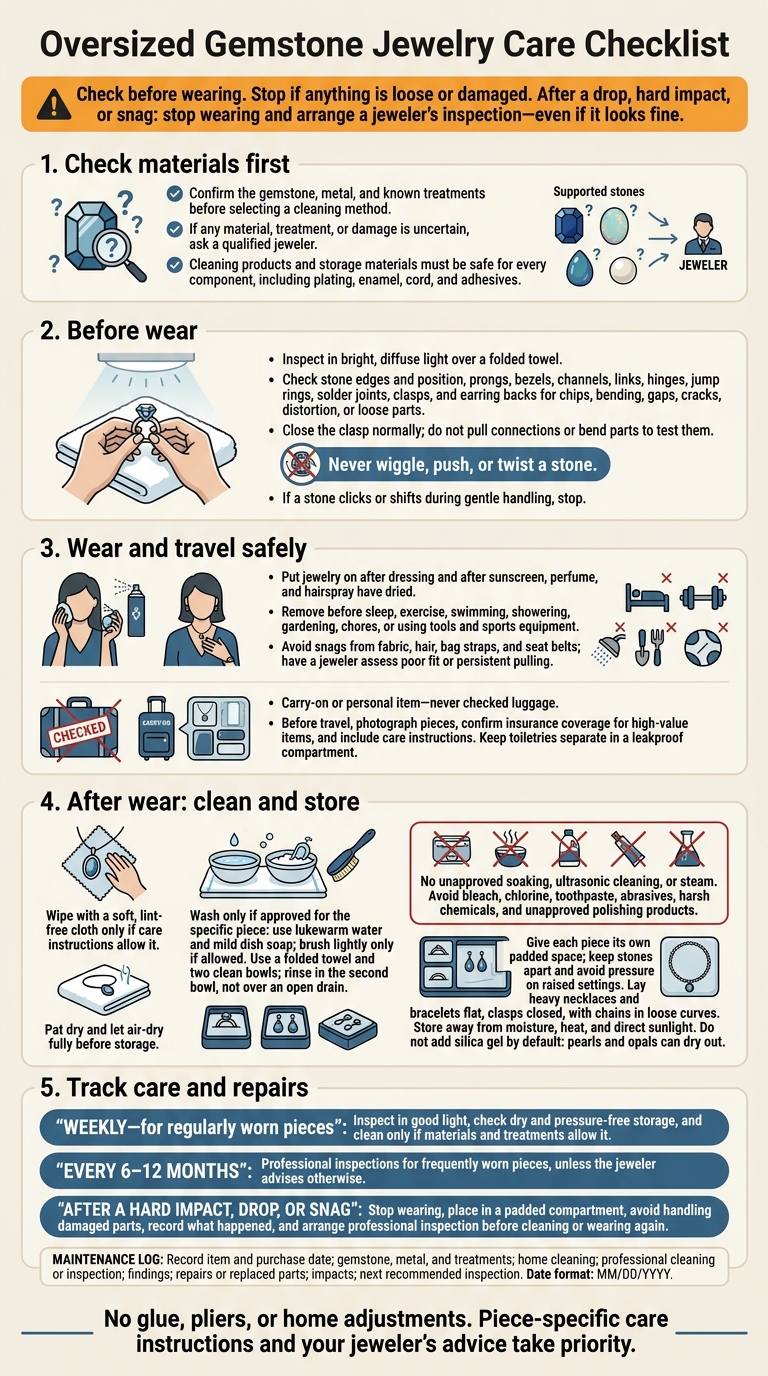
Oversized Gemstone Jewelry Care Checklist
Store Large Jewelry Separately
Oversized stones need storage that protects them from pressure, scratches, and strain.
Separate Stones and Support Their Weight
Give each piece its own padded space. Choose fabric-lined compartments, soft pouches, or padded slots instead of a loose drawer. Keep stones from touching other jewelry: harder gems can scratch softer stones and metal settings. Leave enough space for the lid to close without pressing on settings that sit high.
Lay heavy necklaces and bracelets flat with their clasps closed. Arrange chains in loose curves so the stone’s weight doesn’t pull on the bail, clasp, or jump rings.
Use anti-tarnish bags or cloths only if they’re safe for every component, including stones, plating, enamel, cord, and adhesives. A product made for silver isn’t necessarily safe for pearls, opals, or treated stones.
Avoid Moisture, Heat, and Direct Sunlight
Store pieces only when they’re clean and fully dry, with stones kept apart and settings supported. Choose a drawer or box away from bathrooms, radiators, vents, windows, and direct sunlight. Heat and sunlight can damage sensitive gems or change their color.
Dry storage doesn’t mean drying out the jewelry. Don’t add silica gel by default; pearls and opals can dry out. Let any moisture left from cleaning air-dry before storing the piece.
Before wearing stored jewelry, check it for loose parts, dust, or trapped moisture.
Clean Jewelry and Check for Damage
Clean oversized settings and check for damage in the same session to limit handling.
Clean Gently and Dry Fully
Wipe after each wear with a soft, lint-free cloth. Before washing, confirm that the piece can tolerate water and soap. Ask a qualified jeweler if you’re unsure about any material, treatment, or damage.
Place a folded towel and two clean bowls on a stable surface. Wash only if approved: use lukewarm water and mild dish soap, and brush lightly only if allowed. Rinse in the second bowl - not over an open drain - then pat dry and let the piece air-dry fully. Don’t soak it without approval or press against stones or settings. As it dries, check for loose settings before wearing it.
Avoid bleach, chlorine, toothpaste, abrasives, harsh chemicals, and unapproved polishing products. Choose a cleaning method suited to the material and treatment. Before professional service, disclose any known treatments or damage. Grit and hard rubbing can scratch finishes. Use ultrasonic or steam cleaning only if a jeweler approves it for that specific piece.
Inspect Settings, Clasps, and Connections
Cleaning is a good time to spot stress on oversized stones and their settings. Inspect the piece over the towel in bright, diffuse light before and after cleaning.
Check prongs, bezels, jump rings, clasps, hinges, and solder joints for bending, gaps, openings, cracks, or distortion. Look for damage or shifting in links, stone edges, and stone position. If a stone clicks or shifts during gentle handling, stop. Never wiggle, push, or twist it. Close the clasp normally to check that it latches fully. Don’t pull connections or bend parts to test them.
Stop wearing the piece after any impact, looseness, snagging, damage, or clasp failure. Have a professional inspect it before you clean or wear it again. Skip glue, pliers, and home adjustments.
For frequently worn pieces, schedule inspections every 6–12 months, or follow the inspection schedule advised for the design. Record inspection dates, findings, repairs, replaced parts, and the next service date.
Protect Jewelry During Travel and Wear
After cleaning and inspection, protect oversized jewelry from bumps during travel and strain during daily wear.
Pack Pieces in Separate Padded Compartments
Pack each piece in its own padded compartment inside a protective case. This keeps pressure off large stones, prongs, bails, and clasps.
Keep jewelry in your carry-on or personal item - never in checked luggage. Before departure, photograph each piece and confirm insurance coverage for high-value items. During travel, keep unworn jewelry in its closed case and use a hotel safe if needed. Compare each piece with your photos before you leave and when you return.
Prevent Snags and Strain
Packing protects jewelry in transit. During wear, watch for impacts, snags, and contact with chemicals.
Remove oversized jewelry before sleeping, exercising, swimming, showering, gardening, or doing housework. Take it off before using tools or sports equipment, too. These activities can expose large settings to impacts, pulling, sweat, and chemicals. Chlorine can damage some setting alloys and loosen prongs.
Apply sunscreen, perfume, and hairspray before putting on jewelry, and let them dry first. Take jewelry off before reapplying these products. When traveling, keep toiletries in a separate, leakproof compartment so spills can’t reach stones or metal.
Put jewelry on after dressing. Check that settings don’t catch on fabric, hair, bag straps, or seat belts. Remove protruding pieces before pulling tight clothing over them. If a piece keeps pulling or fits poorly, have a jeweler assess it rather than fastening it more tightly.
Printable Jewelry Care Checklist
Use this checklist after the care steps above and before each wear or trip.
Stop wearing any piece with loose stones, damaged settings, broken links, unreliable closures, or loose earring backs. Follow the care instructions for that piece’s materials.
Before Wear, After Wear, and Weekly
Before wear
☐ Check for chips, loose parts, and secure closures without pressing on stones.
☐ Check prongs, bezels, channels, links, hinges, and jump rings. Make sure the clasp and earring backs are secure.
After wear
☐ Wipe with a soft, lint-free cloth if the care instructions allow it.
☐ Check for moisture and let the piece dry fully before storing it.
☐ Store each piece separately with the stone supported.
Weekly - for regularly worn pieces
☐ Inspect in good light for bent prongs, stretched links, worn closures, loose earring backs, tarnish on metal parts, or residue.
☐ Make sure storage is dry and doesn’t put pressure on settings.
☐ Clean only if the gemstone, metal, and treatment allow it. If you don’t know what they are, ask a jeweler.
Before Travel and After an Impact
Before travel
☐ Recheck closures and settings before packing.
☐ Pack each piece in its own padded case or compartment with its weight supported. Include its care instructions.
After a hard impact, drop, or snag
☐ Stop wearing the piece and place it in a padded compartment.
☐ Don’t handle damaged parts.
☐ Record what happened and arrange a professional inspection, even if you can’t see any damage.
Use this log to track inspections, repairs, and impact dates.
Maintenance log - use MM/DD/YYYY
Purchase date and item: __________
Gemstone, metal, and known treatments: __________
Last home cleaning: __________
Last professional cleaning or inspection: __________
Inspection dates and findings: __________
Repairs, replacement parts, or impact notes: __________
Next recommended inspection: __________
FAQs
How can I identify treatments in my gemstone?
Your safest option is to consult a reputable jeweler or qualified gemologist. They have the tools and knowledge to check inclusions, surface features, and treatments, such as oil or resin fillings in emeralds, that can affect how you clean and care for your stone.
If you don’t know your stone’s history or how it might respond to cleaning, have a professional examine it first to help prevent accidental damage.
Which clasp types work best for heavy necklaces?
For heavy gemstone necklaces, focus on durability and ease of use. The provided sources don’t name specific clasp types, but they do stress regular maintenance. Test the clasps and check metal components for bending, wear, or dullness.
Heavy jewelry puts extra stress on its hardware. A professional jeweler’s inspection and reinforcement of these connections is the most reliable way to help keep your LaCkore Couture pieces secure.
Can a jeweler reinforce an oversized stone’s setting?
Yes, a professional jeweler can reinforce an oversized stone’s setting. Routine inspections every three to six months let them check for worn prongs, damaged settings, and weak spots in the structure. They can then tighten loose stones and make any needed repairs.
Taking care of these issues promptly helps keep gemstones secure, prevent stone loss, and protect the craftsmanship of your LaCkore Couture pieces.