Skip to content




Guide to Irish High Cross Pendants
Irish High Cross pendants are inspired by Ireland's ancient stone crosses, dating back to the 9th–12th centuries. These pendants replicate the iconic ringed cross design, which symbolizes eternity and blends early Christian and Celtic traditions. Known for their detailed craftsmanship, they feature patterns like Celtic knots, spirals, and biblical scenes.
- Why they matter: They connect wearers to Irish heritage and spirituality.
- Designs: Ranging from replicas of historical crosses to modern styles with gemstones like emeralds or Connemara marble.
- Materials: Options include sterling silver, gold (14K/18K), and pewter, with prices starting under $100 for silver and exceeding $1,000 for gold.
- Symbolism: The ring represents eternity, while knotwork reflects interconnectedness and the Holy Trinity.
These pendants are versatile, making thoughtful gifts or personal keepsakes. Whether you prefer historical accuracy or modern designs, they offer a meaningful way to celebrate Irish history and artistry.
History and Symbolism of Irish High Crosses
Origins of Irish High Crosses
The rich history of Irish High Crosses serves as the foundation for the intricate designs seen in modern Irish High Cross pendants.
Stone High Crosses first appeared during Ireland's early medieval period, with the oldest surviving examples dating back to the 8th and 9th centuries. These crosses reached their height of popularity between the 9th and 10th centuries, eventually declining after the Anglo-Norman invasion in the 12th century.
Irish monastic communities were responsible for creating these crosses at significant sites like Clonmacnoise, Iona, and Monasterboice. Their designs evolved from earlier wooden or metal crosses and drew inspiration from pre-Christian sacred pillar stones. Since the stone churches of the time were too small to accommodate large gatherings, these outdoor monuments became central to religious ceremonies.
"The cross's designation 'high', first used in the Annals over a thousand years ago, seems to be fitting, as the gracefully proportioned monuments can reach up to a height of six metres." - Heritage Ireland
These crosses weren’t just for worship. They marked monastic boundaries, served as political statements commissioned by kings, and visually conveyed biblical stories. Structurally, they were crafted in three main parts: the base, the shaft with the cross, and the capstone. This evolution in design laid the groundwork for the rich symbolism that later defined these monuments.
Symbolism in High Cross Designs
The design elements of Irish High Crosses carry layers of meaning, blending artistic craftsmanship with spiritual and cultural significance.
One of the most recognizable features is the ringed design. Originally, the ring provided structural support for the heavy stone arms, but over time, it came to symbolize concepts like the cosmos, the sun, or eternity. This design reflects a fusion of Christian beliefs and pre-Christian Celtic traditions.
Celtic knotwork and interlace patterns are another hallmark of these crosses. In pagan Celtic culture, "triads" symbolized the earth, sea, and sky. Early Christians adapted this symbolism to represent the Holy Trinity - Father, Son, and Holy Spirit - with the endless loops symbolizing eternity and interconnectedness.
The biblical narrative panels carved into these crosses were used as visual storytelling tools, especially for teaching. Common scenes include Adam and Eve, the Crucifixion, and the Last Judgment. A famous example, Muiredach's Cross at Monasterboice, features nearly 50 decorative panels with 124 figures.
Animal motifs and zoomorphic designs are also prominent. These include intricate carvings of animals or figures with knotted limbs. Later crosses, influenced by Scandinavian art, incorporated beasts entwined with snakes. Early crosses, like those at Ahenny, feature raised circular carvings called bosses, which mimic the metal studs and rivets from earlier wooden crosses covered in bronze. These symbolic elements continue to inspire modern pendant designs, bridging the ancient and the contemporary.
Styles and Design Variations in High Cross Pendants
Classic Designs
Classic High Cross pendants are inspired by the structural beauty and intricate details of ancient stone crosses. These designs often replicate the "Scriptural" style, featuring detailed narrative panels that evoke the historical significance of pieces like Muiredach's Cross and the Cross of the Scriptures from Clonmacnoise.
Traditional pendants retain the key architectural elements of original high crosses: the pyramid base, the shaft, the ringed head, and the capstone. The knotwork reflects historical patterns, with earlier designs - like the Ahenny Crosses - showcasing geometric spirals and interlacing devoid of human figures. In contrast, later styles blend Celtic knotwork with figurative imagery. These timeless designs are available in a range of materials, with sterling silver options starting around $280.00 and gold versions (10k or 14k) exceeding $3,000.00.
While these pieces honor historical craftsmanship, modern designs bring a fresh perspective to this iconic symbol.
Modern Styles
Modern High Cross designs take a contemporary approach, offering sleek and minimalist interpretations of traditional elements. By simplifying details and streamlining the overall look, these pendants are perfect for everyday wear. A standout trend is the "Claddagh Cross", which uniquely combines the Celtic cross with the Claddagh symbol - featuring a heart, hands, and crown - an entirely modern innovation not present in ancient crosses.
Contemporary styles often incorporate eye-catching gemstone accents, such as emeralds, diamonds, and Ireland's iconic green Connemara Marble, which dates back 900 million years. These modern designs are accessible, with silver pieces featuring marble inlays starting at approximately $200.00.
For those looking to make their pendant even more special, customization offers a world of possibilities.
Custom Options
Customization allows for a deeply personal connection to High Cross pendants. One popular option is the use of Ogham inscriptions, an ancient Irish script, to engrave meaningful words or names like "Love". Family crests or coats of arms can also be incorporated, celebrating ancestral heritage.
Adding birthstones - such as emeralds, sapphires, rubies, or diamonds - provides a way to commemorate loved ones or significant dates. Some jewelers even offer design blending, merging the High Cross with other Irish symbols like the Trinity Knot, Shamrock, or Tree of Life. These custom touches bring together historical tradition and modern creativity, resulting in a pendant that’s uniquely yours.
Next, we’ll delve into the materials and handcrafted techniques that make these pendants so special.
Materials and Craftsmanship
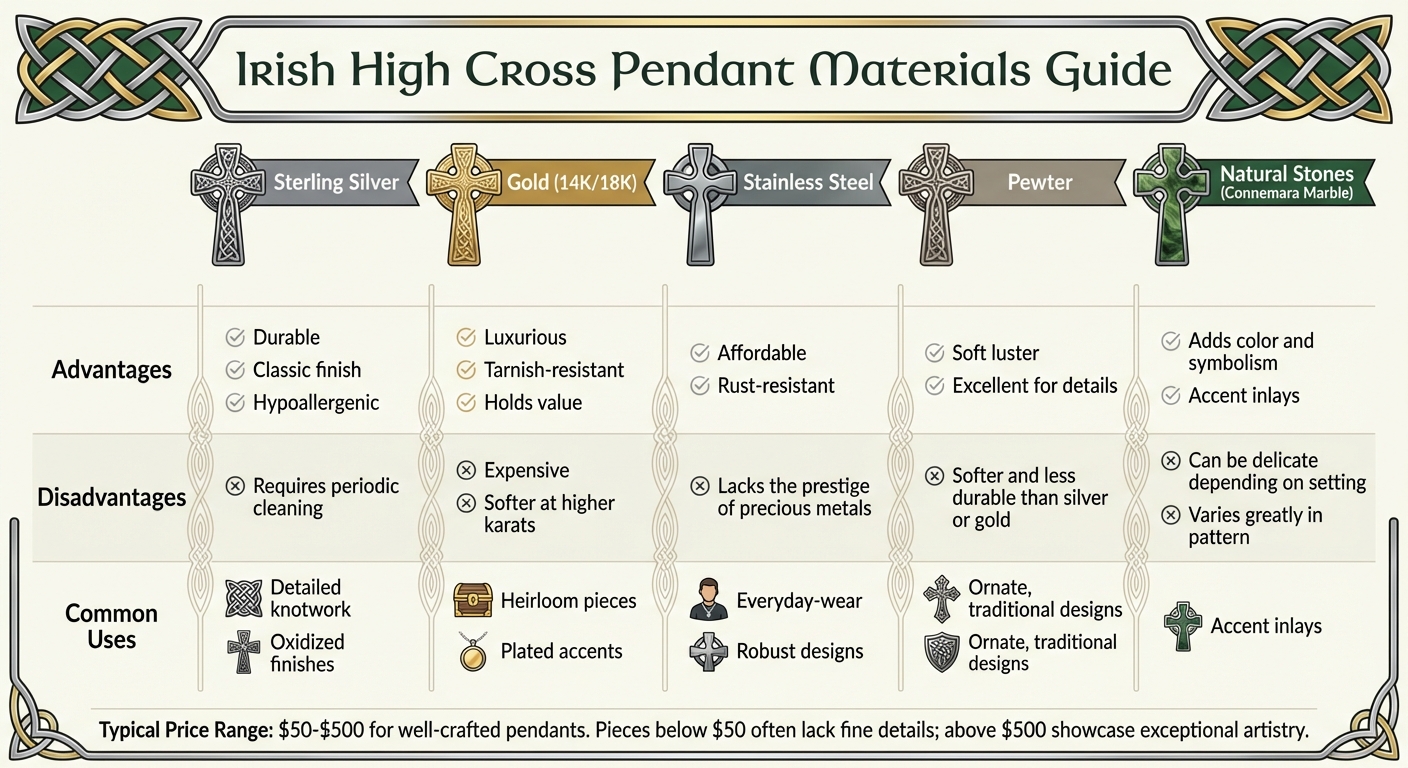
Irish High Cross Pendant Materials Comparison Guide
Comparing Materials
The material you choose for your pendant plays a big role in its overall look, feel, and durability. Sterling silver is a popular option due to its timeless finish, strength, and hypoallergenic properties. It’s especially great for detailed knotwork, as it oxidizes beautifully to highlight intricate designs. However, it does require occasional cleaning to maintain its shine.
Gold, often in 14K or 18K, offers a sense of elegance and tradition. Its resistance to tarnish and ability to retain value make it perfect for heirloom-quality pieces. That said, the price can vary significantly - ranging from around $300 to over $6,000 depending on weight and any gemstone accents.
If you're looking for something more budget-friendly, stainless steel provides a durable, rust-resistant option that mimics the appearance of precious metals. Meanwhile, pewter stands out for its soft luster and ability to capture intricate details, making it ideal for elaborate High Cross designs.
For an extra touch of uniqueness, natural stones can elevate both the aesthetic and symbolic value of a pendant. A great example is Connemara marble, a 900-million-year-old stone found only in Ireland. Often used as an inlay, it adds an authentic Irish element without drastically increasing the cost.
| Material | Advantages | Disadvantages | Common Uses |
|---|---|---|---|
| Sterling Silver | Durable, classic finish, hypoallergenic | Requires periodic cleaning | Detailed knotwork, oxidized finishes |
| Gold (14K/18K) | Luxurious, tarnish-resistant, holds value | Expensive; softer at higher karats | Heirloom pieces, plated accents |
| Stainless Steel | Affordable, rust-resistant | Lacks the prestige of precious metals | Everyday-wear, robust designs |
| Pewter | Soft luster, excellent for details | Softer and less durable than silver or gold | Ornate, traditional designs |
| Natural Stones | Adds color and symbolism | Can be delicate depending on setting | Accent inlays |
Typically, well-crafted pendants range from $50 to $500. Pieces priced below $50 often lack fine details, while those above this range showcase exceptional artistry and refined traditional patterns.
With a clear understanding of materials, let’s explore the artisan techniques that bring these pendants to life.
Handcrafted Techniques
The creation of High Cross pendants is steeped in tradition, with Irish artisans employing age-old methods to replicate the intricate designs found on ancient monuments. Techniques like engraving and embossing are used to recreate knotwork, spirals, and biblical scenes inspired by crosses that stand as tall as 23 feet.
"Our High Crosses recreate their intricate illustrations and designs in minute detail in solid sterling silver and gold."
– Ciaran, My Irish Jeweler
Inlaying is another key process, where natural stones such as Connemara marble or emeralds are carefully set into the metal. This not only adds vibrant color but also ties the piece to Irish heritage. Other techniques, like high-relief bossing, bring depth to the designs, while hallmarking by the Dublin Assay Office ensures the authenticity and quality of the materials.
When choosing a pendant, pay attention to the finer details. Look for smooth edges, securely set stones, and a solid, weighty feel. The clasp matters too - styles like lobster claw or spring ring closures are ideal for everyday wear.
"A well-crafted men's Celtic cross necklace should have smooth edges, secure settings, and a sturdy chain or cord. It shouldn't feel flimsy or lightweight but relatively solid in your hands."
– Aidan, Celtic Cross Online
The craftsmanship behind these pendants ensures they can endure years of wear while retaining their intricate beauty. To keep them looking their best, avoid exposing them to moisture, perfumes, or lotions that may cause tarnishing.
Artisans at LaCkore Couture utilize these time-honored methods to create pendants that not only honor the rich history of Irish High Cross designs but are also practical for modern, everyday wear.
How to Choose the Right Irish High Cross Pendant
Irish High Cross pendants carry a rich history and showcase exceptional craftsmanship. Here's how to pick the perfect one for your needs.
Consider the Occasion
The reason behind your purchase plays a big role in determining the material and design. For everyday wear, sterling silver is a great choice - it’s durable, hypoallergenic, and has a timeless shine. For special gifts or milestones like weddings or graduations, 14K or 18K gold adds a sense of tradition and elegance.
Everyday pendants tend to be simple and practical, while formal events may call for intricate designs featuring gemstones like emeralds or marcasite. If the pendant is for a religious milestone, look for "Scriptural Crosses" that depict biblical scenes, such as the Cross of the Scriptures or the Four Apostles cross. Replicas of historic crosses also make meaningful heritage gifts.
"The right Celtic Cross necklace isn't just an accessory; it's a statement of identity and a nod to tradition."
- Aidan, Celtic Cross Online
For daily wear, prioritize pendants with smooth edges and secure clasps like lobster claw or spring ring styles. Also, ensure the chain matches the pendant’s weight - a heavier, stone-carved cross needs a sturdier chain compared to a delicate, modern design.
Matching Your Personal Style
Your personal style should guide your choice of design. If you favor timeless looks, opt for classic designs with intricate knotwork, spirals, or historically inspired details. Sterling silver with oxidized finishes offers an antique appearance, while polished silver provides a sleek, reflective look.
Prefer something modern? Minimalist designs with clean lines are perfect for understated wardrobes. For a more luxurious vibe, consider 14K gold pendants adorned with diamonds or emeralds - a sophisticated option for formal occasions or family heirlooms.
Looking for something truly unique? Connemara marble adds a natural green hue that connects the piece to Irish heritage. Men often gravitate toward bold designs with Trinity knot details and oxidized finishes for a rugged look, while filigree Celtic crosses offer a lighter, elegant alternative.
"Wearing Celtic crosses is a way to celebrate your faith and heritage every day... a feeling that connects the present to the past and future."
Many high-quality pendants also come with a description card, explaining the historical significance of the design. This small detail can add a personal touch to your choice.
Evaluating Material and Craftsmanship
The craftsmanship of Irish High Cross pendants reflects the precision and heritage of ancient designs. Look for pendants made from sterling silver, 10K/14K gold, white gold, rose gold, or platinum. These materials should feature clear hallmarks of purity and showcase authentic Irish artistry.
Sterling silver pendants often use oxidized finishes to emphasize intricate knotwork and biblical scenes. Premium pieces may incorporate traditional materials like Connemara marble or gemstones such as emeralds and diamonds.
For those interested in historical accuracy, choose a pendant that faithfully mirrors the symbolism of its inspiration, such as the iconic ringed design or capstone. Some collections even offer scale models or replicas of famous historical crosses.
At LaCkore Couture, each piece is carefully handcrafted to honor the rich history of Irish High Cross designs while remaining practical for modern wear.
Conclusion
Irish High Cross pendants beautifully blend centuries of history with modern artistry. These timeless pieces serve as wearable tributes to Ireland's Golden Age, spanning the 8th to 12th centuries.
Each pendant reflects the essence of medieval "sermons in stone", featuring intricate biblical stories and iconic Celtic knotwork.
"The high cross is one of the greatest artistic achievements of the early Middle Ages in Ireland." - Tim Leahy, New Acropolis Ireland
The collection today offers a range of designs, from traditional scriptural motifs to sleek, modern interpretations, catering to various tastes and budgets.
What sets these pendants apart is their unique ability to serve as both spiritual symbols and artistic expressions. The signature ringed design, symbolizing eternal life, creates a meaningful connection to Irish heritage.
At LaCkore Couture, each Irish High Cross pendant is meticulously handcrafted to honor this legacy while adhering to modern standards of quality. Whether you're drawn to their historical significance, spiritual meaning, or artistic charm, these pendants are designed to resonate deeply and become cherished heirlooms. Discover the collection to find a piece that reflects your story and style - a perfect harmony of tradition and contemporary craftsmanship.
FAQs
What does the ring on a High Cross mean?
The ring on a High Cross stands for the circle of eternity and unity, reflecting the everlasting nature of faith and the deep connection between life and spirituality in Irish tradition. This design is a signature of Irish heritage, merging spiritual meaning with cultural identity into a symbol that endures through time.
How can I tell if a High Cross pendant is well-made or cheaply made?
A High Cross pendant crafted with care stands out through its detailed, precise carvings, particularly in elements like knotwork or symbolic patterns such as the Trinity knot. The cross's arms often widen slightly and rest on a sturdy base, showcasing the skill and attention to detail in its design. High-quality versions are typically made from long-lasting materials like silver, gold, or natural stones. In contrast, less expensive options may show uneven carvings and lack the polished details that define superior craftsmanship.
What chain length and thickness should I choose for my pendant?
When picking a chain, keep standard lengths in mind: 16 inches offers a snug choker fit, 18 inches typically rests at the collarbone, and 20-36 inches creates longer, more dramatic styles. The chain's thickness is just as important - it should strike a balance between durability and aesthetics. Thicker chains are ideal for heavier pendants, while thinner ones pair well with lighter, more delicate pieces. Make sure the length complements your neck and face shape, and that the thickness is sturdy enough to securely support your pendant.