Skip to content




Gold Vermeil vs Silver: Tarnish Comparison
Gold vermeil resists tarnish better while its gold layer stays intact; sterling silver tarnishes but usually polishes clean. My care rule: gently wipe vermeil - don’t use abrasive polish - and check silver for coatings before polishing.
Both have a 92.5% silver base. In the U.S., vermeil must have gold that’s at least 10k and 2.5 microns thick. I’d choose by gold jewelry color, friction, and upkeep - not tarnish alone.
Quick Comparison
| Factor | Gold vermeil | Sterling silver |
|---|---|---|
| Color | Gold over sterling silver | Silver-colored; may have a coating |
| Tarnish | Lower risk while plating is intact | Exposed silver tarnishes |
| Daily wear | Friction wears away gold | Can scratch and dent |
| Cleaning and repair | Gentle cleaning; replating for lost gold | Tarnish usually polishes off unplated silver |
| Best fit | Occasional necklaces and earrings | Frequent wear if you accept tarnish care |
Neither is care-free. I’d remove either before swimming or using household cleaners, then store it dry. <u>Cleaning removes residue - not plating loss.</u> If a silver-colored patch remains on vermeil after gentle cleaning, more rubbing won’t restore the gold.
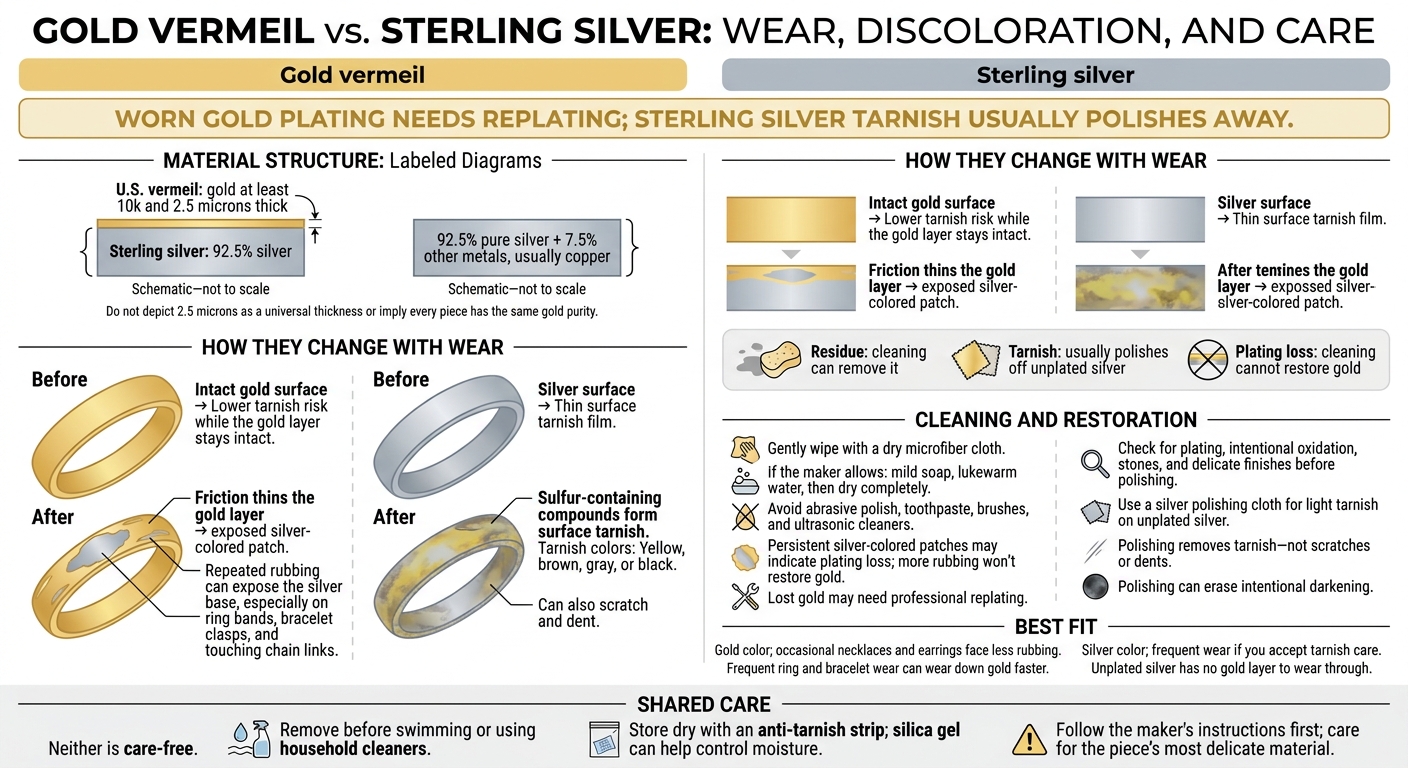
Gold Vermeil vs Sterling Silver: Tarnish and Care
Why Jewelry Tarnishes and Wears
Gold vermeil resists tarnish, but wear and residue can still change its surface. Discoloration may come from tarnish, residue, or worn plating. Tarnish changes the surface, while oils, cosmetics, and dirt leave residue that cleaning can remove. Wear removes part of the surface - and cleaning cannot put it back.
Gold Vermeil: Discoloration and Worn Plating
Intact gold plating delays silver tarnish. But friction, sweat, chlorine, cosmetics, and household chemicals can dull or wear down that layer.
Silver-colored patches may point to plating loss, especially on ring bands, bracelet clasps, and spots where chain links touch. If cleaning clears the dullness but leaves a silver-colored patch, the gold layer is gone. More rubbing won't restore it.
Sterling silver works differently: its surface tarnishes rather than losing a gold layer.
Sterling Silver: Surface Tarnish
Sterling silver contains 92.5% pure silver and 7.5% other metals, usually copper, for added strength. Sulfur-containing compounds react with silver to form a surface film. That film creates yellow, brown, gray, or black tarnish. Humidity, perspiration, cosmetics, and household chemicals can speed up the process.
Sterling silver has no plating to wear through unless a coating has been added. Before polishing, check for plating or intentional oxidation. Polishing can erase that deliberate darkening.
Gold Vermeil vs Sterling Silver: Tarnish and Durability
Neither material has a set lifespan. An intact gold layer can delay silver tarnish on vermeil, but durability depends on coating thickness, friction, how often you wear it, and what it’s exposed to.
The main difference is how they wear: vermeil loses its gold layer, while sterling silver develops tarnish on its surface.
| Comparison factor | Gold vermeil | Sterling silver |
|---|---|---|
| Surface finish | Gold layer over silver | Bare sterling silver; no plating |
| Tarnish risk | Lower while the gold layer stays intact | Higher because the silver surface is exposed |
| Wear pattern | Repeated rubbing can thin the gold layer and expose silver | Tarnish, scratches, and dents; no gold layer to lose |
| Restoration | May need replating | Tarnish usually polishes off |
Polishing removes tarnish - not scratches or dents. Abrasive polishing can strip gold from vermeil, and worn areas may need replating. That’s why these materials need different cleaning methods.
How to Clean and Store Your Jewelry
Follow the maker’s instructions first, and base your care routine on the piece’s most delicate material. Vermeil’s gold layer wears down, while silver tarnishes, so each needs different care. Metal cleaners can damage stones, pearls, enamel, adhesives, and oxidized finishes.
Gold Vermeil: Protect the Gold Layer
Take off vermeil before showering, swimming, or exercising. After wearing it, wipe it with a dry microfiber cloth. If the maker allows it, clean with a soft cloth, mild soap, and lukewarm water, then dry completely. Don’t soak pieces with glued or porous parts.
Skip abrasive cloths, toothpaste, brushes, and ultrasonic cleaners. Store vermeil in a dry container with an anti-tarnish strip or silica packet, away from humid spots like bathrooms.
Sterling Silver: Clean Away Tarnish
Wipe unplated sterling silver after wearing it. Use a silver polishing cloth for light tarnish. For heavier tarnish, use a baking soda paste only if the silver is unplated and has no stones or delicate finishes. For pieces with decorative or intentionally darkened details, choose a jeweler-approved gentle cleaner and polish only the exposed silver.
Dry completely with a microfiber cloth. Avoid paper towels - they can scratch. Store silver in a low-humidity or airtight container with an anti-tarnish strip. Keep it away from rubber, sulfur-releasing materials, and chemically treated wood. Silica gel packets can help control moisture, too.
Which Material Fits Your Style and Routine?
Choose by how you wear your jewelry first, then by color. The main difference is how each metal handles daily use and the care it needs.
| Use case | Gold vermeil | Sterling silver |
|---|---|---|
| Occasional necklaces and earrings | A good fit: less rubbing helps preserve the gold layer. | Works well if you prefer a silver finish and don’t mind caring for tarnish. |
| Frequently worn rings and bracelets | Friction can wear down the gold layer faster, so you may need replating over time. | There’s no plated layer to wear through on unplated sterling silver, but it still scratches and tarnishes. |
| Color preference | Gold color over a sterling silver base. | Silver color; check whether it’s unplated sterling silver or rhodium-plated. |
| Maintenance | Gentle care helps protect the gold layer; worn plating may need professional replating. | Periodic polishing removes tarnish; no gold replating is needed. |
Neither material is made for unrestricted exposure to water or chemicals. Chlorine, salt water, and household cleaners can damage the surface - not just dull its shine.
Conclusion: Choose Between Tarnish Care and Plating Care
Worn gold plating needs replating; sterling silver tarnish usually polishes away. Gold vermeil has a gold layer over sterling silver. Gentle wiping helps protect that layer, but once it wears away, the piece needs replating. Sterling silver tarnish, on the other hand, can usually be polished off.
Choose based on color, how often you’ll wear the piece, and how much friction it will face. Pick the care routine that fits your day-to-day life.
FAQs
Can gold vermeil or sterling silver turn my skin green?
Gold vermeil is designed to help prevent green skin discoloration. Its sterling silver base, described as hypoallergenic, makes it a better option for sensitive skin than gold-plated jewelry made with base metals such as copper or nickel.
Even if the gold layer wears off, the sterling silver underneath remains hypoallergenic.
How can I tell if my sterling silver is coated?
Sterling silver is often coated with rhodium, a metal in the platinum family. This coating helps resist tarnish and corrosion, but it doesn’t stop tarnishing completely.
A magnet can help check the metal beneath the coating, but it can’t confirm a rhodium coating. Genuine silver isn’t magnetic. If a piece is attracted to a magnet, it may be silver-plated or silver-filled rather than solid sterling silver.
When is gold vermeil worth replating?
Gold vermeil is worth replating when the gold layer has worn thin, the finish fades, or the sterling silver base starts to show. Professional replating can bring back its shine and original look.
With proper care, gold vermeil can last for years. LaCkore Couture recommends gentle, regular cleaning with a soft cloth. Avoid abrasive chemicals or polishing agents, which can wear away the gold layer.