Skip to content



Gemstone Care Guide: Restore Color and Shine
Cleaning can bring back a gemstone’s shine - but it can’t reverse fading or repair damage. My starting point: identify the stone, its treatments, and its setting before using water. For pieces that can safely get wet, use lukewarm water with 1–2 drops of mild dish soap.
I follow a few simple rules:
- Match the care to the piece. Pearls, opals, treated stones, and glued parts may need only a dry or barely damp cloth.
- Skip harsh methods. Avoid abrasives, bleach, and steam or ultrasonic cleaning unless a jeweler approves.
- Prevent new buildup. Wipe jewelry after wear, store pieces separately, and keep them away from chemicals, heat, and strong sunlight.
- Know when to stop. Loose stones, cracks, or lasting haze call for <u>inspection - not stronger cleaning</u>.
My rule: choose the gentlest safe method, and let the most delicate part of your jewelry guide its care.
How to Clean Gemstone Jewelry at Home
7 Steps to Clean Gemstone Jewelry Safely
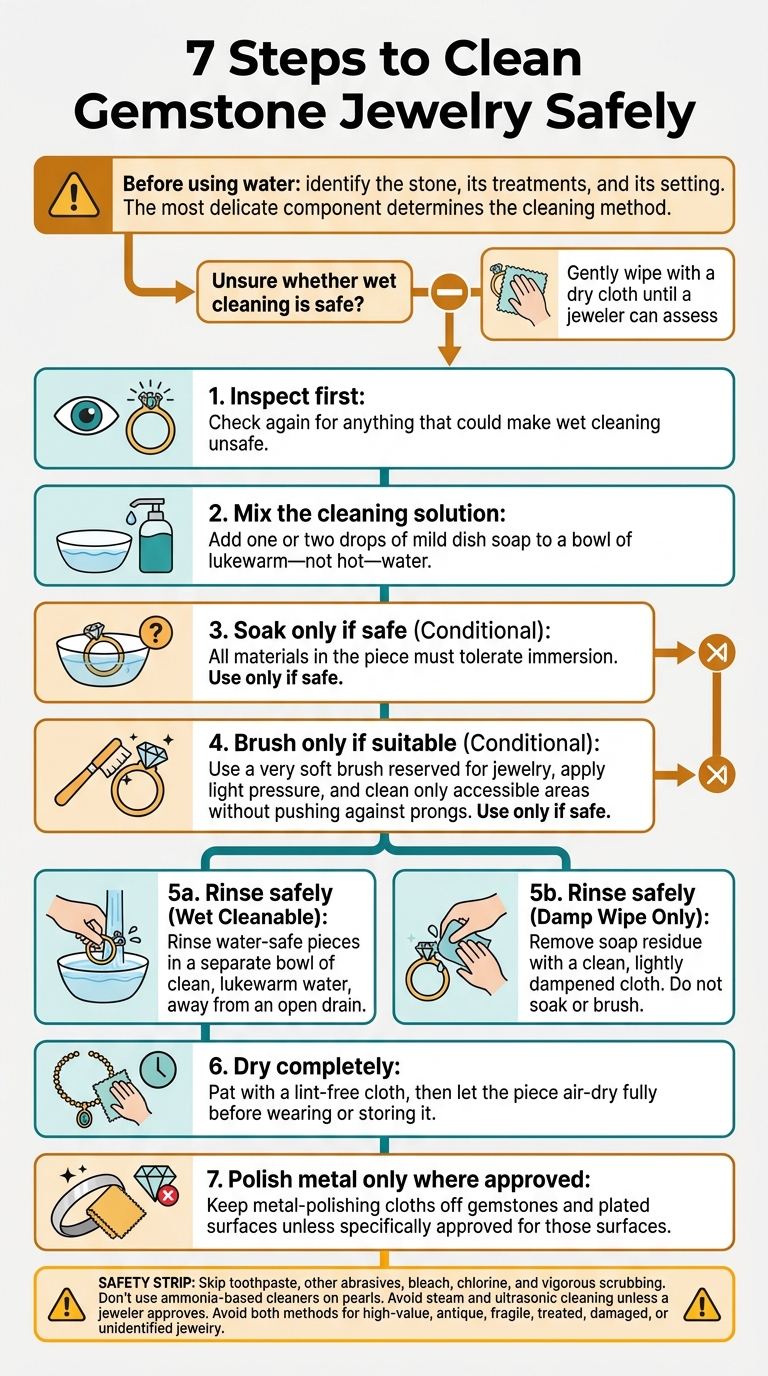
Lukewarm water and mild soap work for many gems - but only when the stone, treatment, and setting can tolerate water. Soaking and brushing aren't safe for every piece. If you're unsure about any of these details, gently wipe the jewelry with a dry cloth until a jeweler can assess it.
Once the piece passes inspection, use the gentlest suitable method below.
7 Steps to Clean Gemstone Jewelry Safely
- Inspect first: Check again for anything that could make wet cleaning unsafe.
- Mix the cleaning solution: Add one or two drops of mild dish soap to a bowl of lukewarm - not hot - water.
- Soak only if safe: All materials in the piece must tolerate immersion.
- Brush only if suitable: Use a very soft brush reserved for jewelry, apply light pressure, and clean only accessible areas without pushing against prongs.
- Rinse safely: Rinse water-safe pieces in a separate bowl of clean, lukewarm water, away from an open drain; for pieces approved only for damp wiping, remove soap residue with a clean, lightly dampened cloth.
- Dry completely: Pat with a lint-free cloth, then let the piece air-dry fully before wearing or storing it.
- Polish metal only where approved: Keep metal-polishing cloths off gemstones and plated surfaces unless specifically approved for those surfaces.
Cleaning Products and Methods to Avoid
Skip toothpaste, other abrasives, bleach, chlorine, and vigorous scrubbing. These products and methods can scratch, weaken, or discolor gemstone jewelry. Abrasives can scratch both stones and metal, while chlorine bleach can damage gold alloys. Don't use ammonia-based cleaners on pearls.
Ultrasonic and steam cleaners are unsafe for some pieces. Vibration can loosen stones, and heat can damage treatments and temperature-sensitive gems. Avoid both methods for high-value, antique, fragile, treated, damaged, or unidentified jewelry.
Safe Cleaning Methods by Gemstone Type
Before using this table, confirm the stone, its treatment, and how the piece is constructed. Then choose the gentlest method it can safely tolerate. Aim for the safest clean that restores luster - not the strongest clean.
| Gemstone | Safest method | Avoid | Treatment caution |
|---|---|---|---|
| Diamond | Mild soapy water and a very soft brush, if its condition allows | Abrasives, chlorine bleach, and steam or ultrasonic cleaning unless approved | Fractures, fillings, coatings, and loose settings need special care |
| Ruby and sapphire | Lukewarm soapy water for stones that can tolerate it | Steam or ultrasonic cleaning unless a jeweler approves | Filled, dyed, or coated stones need specific advice; soaking may be unsafe |
| Amethyst and garnet | Lukewarm soapy water, if treatment and condition allow | Steam and excessive heat | Fractures and treatments can rule out ultrasonic cleaning |
| Jade | Gentle cleaning with lukewarm soapy water, if treatment allows | Steam, ultrasonic, or solvent cleaning unless approved | Dye, bleaching, impregnation, and coatings change care needs |
| Pearl, coral, and amber | Soft, lightly dampened cloth | Routine soaking, steam, ultrasonic cleaning, and harsh chemicals | Organic materials and pearl stringing need gentle care |
| Turquoise, lapis lazuli, and malachite | Barely damp cloth with as little moisture as possible | Soaking, steam, ultrasonic cleaning, and acids | Porosity, dyes, and surface treatments make these stones more sensitive |
| Opal | Barely damp cloth; confirm construction before deeper cleaning | Steam, ultrasonic cleaning, and sudden temperature changes | Doublets, triplets, and treated opals need special care; do not soak assembled stones |
| Moonstone and sunstone | Gentle mild-soap cleaning, when suitable | Steam, ultrasonic cleaning, and abrupt temperature changes | Cleavage, fractures, and treatments affect which methods are safe |
| Fluorite, iolite, kunzite, tanzanite, and topaz | Barely damp cloth, or mild-soap cleaning confirmed safe for the stone | Steam, ultrasonic cleaning, excessive heat, and vigorous brushing | Softness, cleavage, fractures, and color stability vary by stone |
| Unknown gemstones | Soft, dry cloth until identification is confirmed | Soaking, solvents, steam, and ultrasonic cleaning | Identify the stone, treatment, and construction before using water |
How Treatments and Mixed Materials Affect Care
Treatments and mixed materials take priority over the table. Hardness alone does not make a treated stone safe for steam or ultrasonic cleaning. Heat, solvents, steam, and ultrasonic vibration can damage dyes, coatings, fillings, and impregnated materials. Steam can also draw oil or unhardened resin out of filled fractures.
For jewelry made with mixed materials, let the most delicate component guide your cleaning method. Follow care instructions for the whole piece, including its metal, plated finishes, adhesives, and stringing. If those instructions conflict or the construction is unclear, stick to a soft, dry cloth until a jeweler can assess it.
After cleaning, wipe the piece daily and store it separately to help keep dullness from returning.
Prevent Dullness With Daily Care and Storage
Once your jewelry is clean, daily care helps keep it bright between washes and slows new buildup.
Put jewelry on last and take it off first. Let lotion, fragrance, makeup, and hairspray dry before putting on your pieces. Remove jewelry before bathing, swimming, exercising, gardening, or cleaning.
Store Pieces Separately and Avoid Harsh Exposure
How you store jewelry matters as much as how you clean it. Give each piece its own pouch or lined compartment so pieces don’t rub against one another, whether at home or on the go. Use anti-tarnish storage and clean silver jewelry regularly and padded cases for travel.
Choose a cool, dry spot away from heaters, bathrooms, and chemicals. Keep pieces out of direct sunlight if you’re unsure whether their color could fade or change. Pearls and opals need stable humidity, so avoid very dry storage for these gems.
Wipe After Wear and Check Settings
After each wear, gently wipe the stone, metal, and setting with a clean, soft, lint-free cloth. Skip paper towels and don’t rub hard.
Check frequently worn rings and bracelets after wear, and inspect occasional pieces before putting them on. If you find a loose stone, a prong that catches, or a loose clasp, stop wearing the piece and have a jeweler inspect it.
When Home Cleaning Is Not Enough
If careful home cleaning no longer restores luster, surface buildup may not be the cause. Stop if gentle, stone-safe cleaning leaves haze or discoloration.
When to Consult a Jeweler or Gemologist
Get a professional inspection if stones feel loose or rattle, sit lower than neighboring stones, or show chips, cracks, or fractures that reach the surface. Lifted coatings, flaking, discoloration, and sudden changes in transparency also need inspection.
The next step is inspection - not stronger cleaning.
If you don’t know whether a stone has been treated, have it inspected. Antique or heirloom pieces, thin mountings, and tension settings should also be checked before cleaning.
A jeweler can inspect the mounting and recommend cleaning or repair. A gemologist can identify the material and detect treatments, though laboratory testing may still be needed. Bring purchase records, appraisals, lab reports, and notes about chemical exposure or impacts.
Cleaning, repair, and repolishing are separate services. Before approving any work, ask about the risks and how it could affect the stone’s weight, appearance, treatment, or value.
Conclusion: Choose the Gentlest Suitable Method
Choose a professional assessment when damage or treatment issues - not surface buildup - may be causing dullness.
FAQs
How can I tell buildup from gemstone fading?
Cloudiness, stickiness, or roughness often points to surface buildup from lotions, sweat, or cosmetics. Gentle cleaning can remove this buildup. Permanent fading is different: color loss in amethyst or citrine comes from internal changes caused by prolonged UV exposure or chemical damage. Cleaning won’t restore that color.
If dullness or cloudiness remains after gentle, professional-grade cleaning, it likely points to a permanent issue with the material.
How often should I clean gemstone jewelry?
After each wear, gently wipe your LaCkore Couture gemstone jewelry with a soft, lint-free microfiber cloth. This removes oils, perspiration, and residue. Clean frequently worn pieces monthly with warm water and mild dish soap.
Check for loose stones or damaged settings every three to six months. Schedule a professional cleaning and inspection once a year - or every six months for pieces you wear often.
What should I do after accidental chemical exposure?
Remove the jewelry immediately. Harsh chemicals can permanently damage stones and settings. Don’t use more household cleaners or abrasive materials.
For nonporous stones that can withstand rinsing, gently rinse with lukewarm water and pat dry with a lint-free cloth. Don’t submerge delicate or porous stones, such as pearls, opals, or turquoise.
If dullness, discoloration, or signs of damage persist - or you suspect damage - have a jeweler inspect the piece and recommend the safest way to restore it.