Skip to content




Family Tree Jewelry with Birthstones: A Guide
If I want family tree jewelry that feels personal and still looks good every day, I need to make 4 choices first: who to include, how many stones I need, which jewelry type fits that stone count, and which materials can handle daily wear.
Here’s the short version:
- Birthstones turn a tree design into a family map
- Pendants often fit 2 to 5 stones
- Bracelets can often hold more, around 6 to 8 stones
- Layout matters just as much as stone count
- Harder stones - like sapphire and ruby - tend to hold up better
- Sterling silver usually costs less, while 14k gold is often picked for long-term wear
- Pearls and opals need more care than harder stones
A family tree piece usually works best when I keep the design simple, match the layout to the number of family members, and leave space for future additions. I’d also think about names, initials, dates, metal color, and whether I want a fixed design or one that can grow over time.
Quick comparison
| Option | Best for | Usual stone count | Main thing to watch |
|---|---|---|---|
| Pendant necklace | Easy-to-see everyday wear | 2–5 | Can look crowded fast |
| Beaded bracelet | Bigger families | 2–8 | Stone spacing and fit |
| Charm bracelet | Adding members later | 2–4 to start | Charms can add bulk |
| Bar bracelet | Clean, modern look | 2–5 | Less room for extra stones |
| Stackable rings | Small family sets or couples | 1–3 per ring | Limited space |
One useful fact: gemstone hardness matters. Stones at Mohs 7 or higher usually do better with daily wear, while softer stones need more care and safer settings.
If I’m buying this as a gift, I’d keep the focus on clarity, comfort, and space for each person to stand out.
Why Family Tree Jewelry Uses Birthstones
Birthstones turn the family tree symbol into a color-coded family portrait. Each stone helps one branch point to one person at a glance. That’s why birthstones are such a clear way to personalize the tree without losing the shape and meaning that make the design recognizable.
How Birthstones Represent Each Family Member
Each birthstone lines up with a birth month, so the layout should show who’s included and how many stones the piece can hold without looking crowded. If too many stones are packed into a small design, the tree can start to feel busy instead of personal.
Placement matters too. The number of stones, where they sit, and how they’re spaced all shape how balanced the final piece feels. A well-planned layout makes it easier to see each family member while keeping the design easy to wear.
What Makes the Design Feel Personal and Long-Lasting
This style has staying power because it can grow with the family over time. A necklace or bracelet doesn’t have to stay fixed forever. Modular and charm-based designs can make room for new stones as children are born, families blend, or new chapters begin.
That kind of flexibility gives the piece a personal feel from day one and makes it worth keeping for years. With the symbolism set, the next choice is which necklace, bracelet, ring, or charm style fits the family.
Family Tree Jewelry Styles to Consider
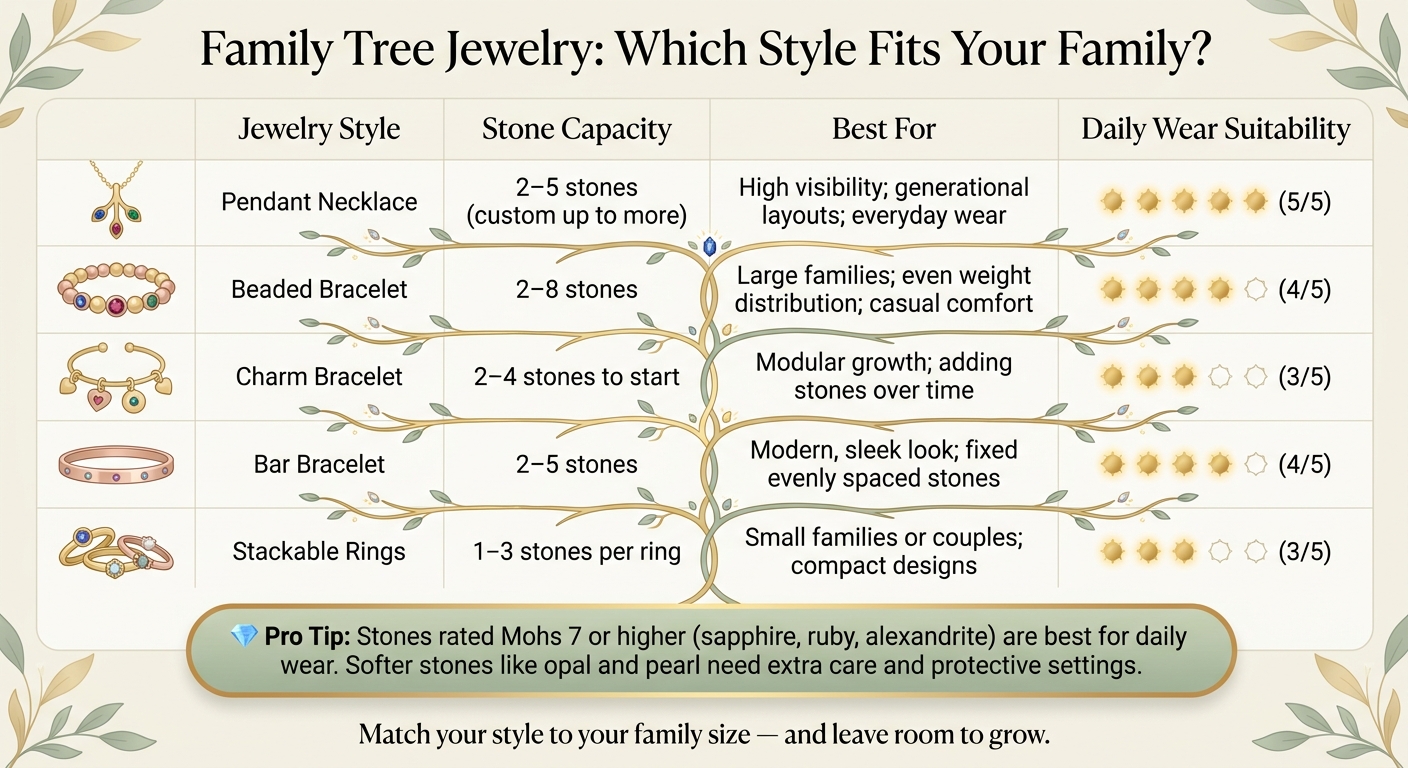
Family Tree Jewelry Styles: Stone Count, Best Use & Daily Wear Guide
The format you pick changes two big things right away: how easy the birthstones are to see and how the piece feels during daily wear. Some styles put the stones front and center. Others put comfort first or make it easier to fit more stones. That’s why it helps to choose the design based on how you’ll actually wear it.
Pendants and Necklaces for Everyday Wear
A pendant necklace sits close to the collarbone, so the stones are easy to see during the day. That makes necklaces a strong match for family tree jewelry, especially when the birthstones are placed in a classic Tree of Life design or arranged in a cascading layout that shows different generations.
Pendant necklaces usually work best with 2 to 5 stones, which keeps the design balanced and easy to read. If you need room for more, custom pendants can use a cascading layout to hold extra stones.
Bracelets, Rings, and Charms for Smaller or Modular Designs
Beaded bracelets spread color and weight more evenly, which makes them a good fit for 6 to 8 stones.
Charm bracelets and charm necklaces make sense if you want a piece that can grow over time. You can add new charms as the family gets bigger. Bar bracelets have a clean, modern look, with stones set in fixed, evenly spaced spots. Stackable rings can work too, but they tend to make more sense for smaller stone counts.
With the format chosen, the next step is matching the stone count to the layout.
How to Match a Style to Your Family Size and Daily Routine
A simple way to narrow it down is to look at stone count and daily wear. Pendants and bar bracelets usually suit smaller counts, while beaded bracelets can carry more stones without feeling crowded.
Use this quick guide to match style, stone count, and daily wear.
| Style | Stone Capacity | Best For |
|---|---|---|
| Pendant Necklace | 2–5 stones; larger custom designs possible | High visibility; generational layouts |
| Beaded Bracelet | 2–8 stones | Large families; everyday comfort |
| Charm Bracelet | 2–4 stones | Modular growth; adding stones later |
| Bar Bracelet | 2–5 stones | Modern look; fixed, evenly spaced stones |
| Stackable Rings | Smaller families or couples | Simple, compact designs |
Once the format is set, match the stone count and layout.
How to Choose Birthstones and Layouts
Match Stones by Birth Month and Decide Who to Include
Start by deciding who the piece is for. That choice shapes everything else, especially the number of stones and how large the design should be.
The most common setup uses only children's birthstones, often placed from oldest to youngest. Pieces made for grandmothers tend to include all grandchildren, usually 5 to 8 stones. Some layouts also use a larger center stone for the matriarch, with smaller stones for children or grandchildren around it to show family generations at a glance. Newer designs may include partners, stepchildren, pets, or memorial stones too. It helps to settle the family group first so the piece doesn't end up looking crowded.
If a birth month has more than one stone option, pick the one that works best for the piece's look and day-to-day wear. Some stones simply fit better in a ring, pendant, or bracelet than others.
Once the family group is set, the next move is choosing a layout that lets each stone stand out.
Pick a Layout That Fits the Number of Stones
Stone count usually decides the layout. A design with two stones has very different needs than one with eight. The table below lines up the main layout types so you can match the right format to your family size and the jewelry style you already picked.
| Layout Type | Ideal Family Size | Best Look | Best Jewelry Type |
|---|---|---|---|
| Linear/Bar | 2–5 stones | Sleek, modern, symmetrical | Bar bracelets, vertical pendants |
| Cluster | 3–6 stones | Organic, artistic; stones grouped together | Pendants, necklaces |
| Branch/Lariat | 2–7 stones | Hierarchical; shows growth along a branch | Drop necklaces |
| Circular/Arc | 6–8 stones | Balanced around a central point or frame | Large round or oval pendants |
| Beaded | 2–8 stones | Colorful, casual; weight distributed evenly | Stacking bracelets |
Customization Options That Make the Piece Your Own
Once the stones are in place, engraving and metal finish help tie the piece to your family in a more personal way. The layout sets the structure. The small details around the birthstones are what give it heart.
Engravings, Initials, and Meaningful Dates
You can add names, initials, or dates without making the design feel crowded. Small name charms work well when you want to keep the tree design open and easy to read. They usually fit a first name or a set of initials, and placement matters. Set them where they don't compete with the branches and stones.
If you want the front of the tree to stay uncluttered, move names or initials to the back of the pendant. That keeps the main design simple while still adding meaning.
Dates also fit nicely in less visible spots. Bar-style pendants or the back of the pendant are common places for engraving dates. An anniversary year or birth year often works well there because it adds meaning without taking attention away from the stones on the front.
After engraving, the metal you choose shapes the overall feel of the piece.
Gold, Silver, and Finish Options for Different Looks
Metal choice affects how the piece looks, how it feels to wear, and how much care it needs.
| Metal Type | Overall Look | Maintenance Level | Ideal Wearer |
|---|---|---|---|
| Yellow Gold (14k/18k) | Warm, classic, heirloom-like | Low; resists tarnishing | Those who want a time-tested look |
| Sterling Silver | Bright, cool, modern | High; needs regular polishing and cleaning | Buyers watching cost who still want a white-metal style |
| White Gold / Rhodium Plated | Sleek, modern, high-shine | Medium; may need occasional re-plating | Those who want a polished, current look |
| Rose Gold | Soft, romantic, on-trend | Low; very durable | Wearers who like a warmer, more delicate color tone |
| Oxidized Silver | Vintage, rustic, edgy | Very low; aged look hides wear | Fans of antique or Art Nouveau-inspired designs |
Next, it helps to compare materials and care needs so the piece works for daily wear.
Materials, Care, and Final Buying Considerations
Once you’ve settled on the layout, the next step is picking materials that fit how often the piece will be worn.
Natural Stones, Simulated Stones, and Metal Durability
Your material choices do more than shape the look of the jewelry. They also help protect the stones that stand for each family member.
Natural stones usually have slight color variation, which gives each piece a more personal feel. Simulated stones tend to have a more even color and usually cost less. If the jewelry will be worn every day, harder stones are the safer bet. Stones with a Mohs hardness of 7 or higher, like sapphire, ruby, and alexandrite, tend to wear better over time. Softer stones like opal and pearl need more care, so bezel or flush settings are a smart pick, along with gentle handling.
For metal, 14k solid gold is the strongest choice for an heirloom piece because it resists tarnish and fading. Sterling silver is the lowest-cost option. Pieces made with 14k gold and designs with multiple stones usually cost more.
How to Clean, Store, and Protect the Jewelry
A little routine care can make a big difference.
Clean the piece with mild soap, warm water, and a soft-bristled brush. Avoid ultrasonic cleaners and harsh chemicals, since they can damage engravings and delicate stones. It’s also smart to take the jewelry off before swimming, workouts, or applying perfume and hairspray, especially if it includes pearls or opals.
For storage, keep it in a soft pouch or its own compartment so it doesn’t get scratched. It also helps to check the stone settings and clasps from time to time. That way, you can catch loose settings before they turn into a bigger problem.
Conclusion: Build a Piece That Reflects Your Family
Pick a style that works for daily wear, match each birthstone to the right family member, and choose a layout with room to grow. Then protect the piece with simple care habits that help it last. LaCkore Couture offers handcrafted gold and silver pieces with natural stone options for a personal finish.
FAQs
How do I choose who to include?
Choosing who to include in your family tree jewelry is personal. It tells your family story.
A common option is to add one birthstone for each child, often placed in birth order.
You can also include your own birthstone, or the stones of a spouse, parent, grandchild, or another loved one. The main idea is simple: pick the people who mean the most to you.
That could be your immediate family, several generations, or a few special relationships that you want to keep close.
Can family tree jewelry be updated later?
Yes. Many family tree jewelry designs can be updated as your family grows, with new birthstones or charms added later.
For the best fit and visual balance, it’s often smart to send the piece back to the original jeweler. That helps make sure the new additions match the current design and keep the piece in good shape.
Which birthstones are best for daily wear?
For daily wear, pick birthstones that rank 7 or higher on the Mohs hardness scale. They tend to hold up better against scratches and the little knocks that happen in everyday life.
Your safest picks are:
- Best choices: diamond (10), ruby (9), sapphire (9)
- Good for regular wear: aquamarine, garnet, amethyst, citrine, peridot, tourmaline (6.5–8), especially when set in protective styles like bezels
- More delicate: pearls and opals, which are usually better suited for earrings or pendants