Skip to content




Custom Floral Engagement Rings
Floral engagement rings combine nature-inspired designs with deep symbolism, representing love, growth, and new beginnings. These rings, featuring petals, leaves, vines, and blooms, create a miniature garden on your finger. Popular since the 1700s, floral rings gained prominence during the Victorian era, embracing the "language of flowers" to convey affection. Today, modern technology allows intricate, personalized designs at accessible prices, starting from $1,000.
Key Points:
- Symbolism: Growth, love, renewal, and personal stories.
- Styles: Options include blooming roses, lotus flowers, tulips, and vine-inspired designs.
- Materials: Platinum, rose gold, white gold, and yellow gold.
- Gemstones: Diamonds, sapphires, morganite, emeralds, and lab-grown stones.
- Customization: Incorporate personal motifs, heirloom materials, or sustainable choices.
- Care: Regular cleaning, professional maintenance, and thoughtful storage preserve beauty.
Floral engagement rings are not just jewelry - they're meaningful, artistic expressions of love and nature.
Floral Engagement Ring Designs
Floral engagement rings turn nature's beauty into stunning jewelry. These designs can range from subtle, delicate details like engravings hidden in the ring's basket to bold, three-dimensional creations that truly stand out. Whether you prefer understated elegance or a full-on floral statement, there's a design to match your vision. Think minimalist under-gallery accents or intricate metal petals that create a blooming effect.
The structure of these rings offers endless creativity. Petal-shaped prongs, for instance, hold the center stone while mimicking the soft curves of a flower - giving a classic look with a romantic twist. For those who want more intricate designs, options like twisted bands symbolize winding vines, while marquise-cut diamonds or emeralds mimic leafy accents. Some rings even feature hand-carved textures or milgrain details that echo the patterns of tree bark or leaf veins. These unique structural choices make floral engagement rings a beautiful blend of artistry and nature.
Popular Floral Ring Styles
Floral ring styles offer something for everyone. The Blooming Rose design is romantic and dramatic, with layers of metal petals or swirling patterns - especially stunning in rose gold. The Lotus Flower style uses upward-curving petals to create a halo effect around the center stone, making it a favorite for custom designs. For a more delicate vibe, Tulip styles use petal-shaped prongs to cradle the stone, forming the silhouette of a budding flower. Meanwhile, the Halo Flower design arranges smaller stones, like marquise or pear cuts, around the center stone to mimic a floral bloom.
"Floral design elements add grace and style. They also add an aesthetic that non-natural design elements just lack." – Valeria Custom Jewelry
If you’re drawn to a more rustic, organic look, Vine & Branch styles might be the perfect fit. These rings feature twisted, branch-like bands with hand-carved textures and leaf accents, evoking a woodland feel. Many of these designs take inspiration from the Art Nouveau period (1890s–1910), known for its flowing lines and nature-inspired motifs. Prices for these nature-based designs vary widely, typically starting around $1,250 and going up to $4,100, with more intricate cluster styles reaching $4,590 or higher.
Sculptural Elements in Floral Rings
Sculptural details take floral rings to the next level. Layered metal petals add dimension, while satin or matte finishes on the petals replicate the softness of real flowers. Some designs incorporate multiple small gemstones arranged in a "bouquet" style, creating a floral look without relying on a single large center stone.
Thanks to modern CAD technology, jewelers can now achieve intricate botanical details that were once only possible through costly hand carving. Mixing metals, such as rose gold paired with platinum, combined with textured finishes, bring out the vibrant feel of springtime blooms.
At LaCkore Couture, skilled artisans transform these botanical inspirations into custom, handcrafted designs. Every floral engagement ring is made to reflect the uniqueness of your love story, ensuring a piece that’s as personal as it is breathtaking.
Materials and Gemstones for Customization
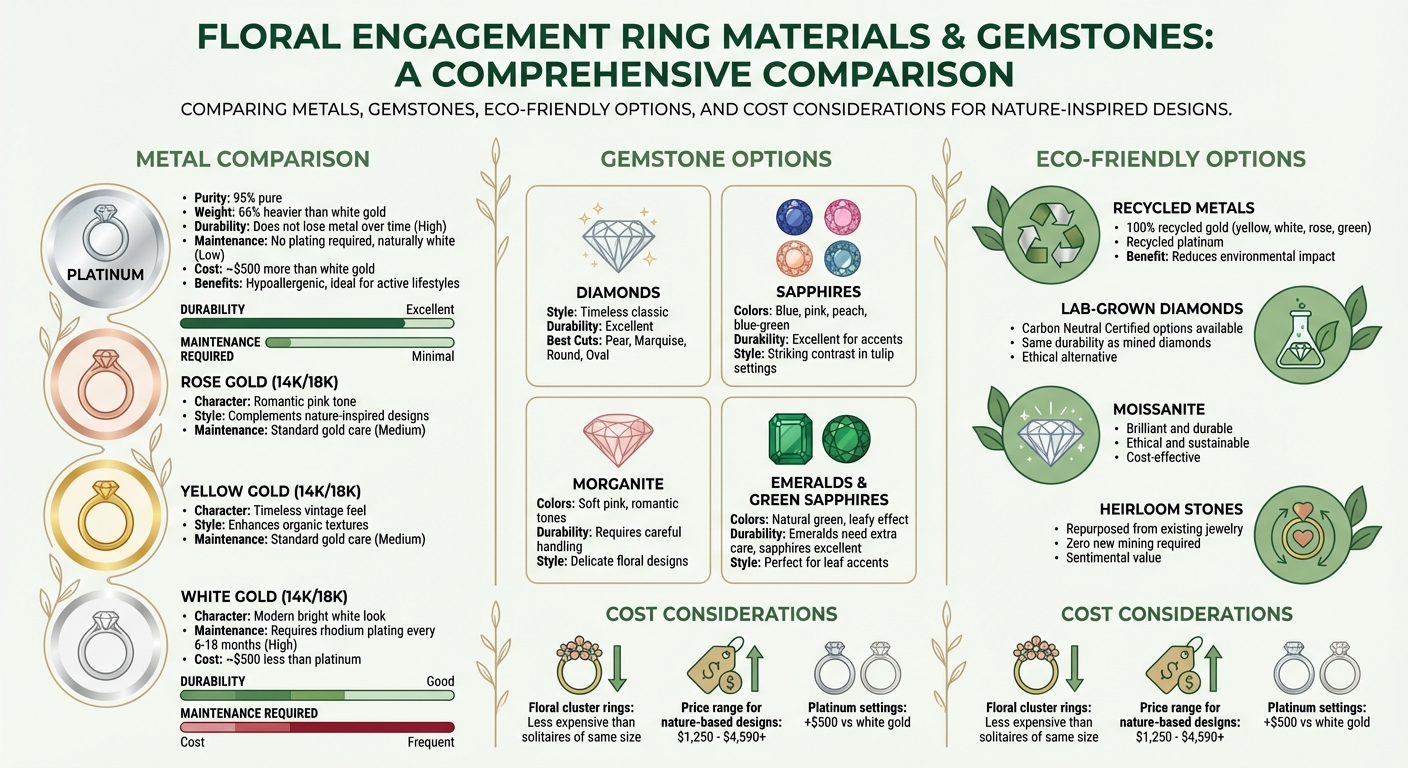
Floral Engagement Ring Metals and Gemstones Comparison Guide
Choosing the right materials and gemstones for your floral ring is about more than just style - it's about durability and creating something meaningful that lasts.
Metal Choices
Platinum is a top choice for floral rings due to its strength and longevity. Compared to white gold, it's about 66% heavier and denser, which ensures secure settings for intricate designs like petal clusters. Plus, platinum doesn’t lose metal over time, making it a long-term investment. Jewelry-grade platinum is typically 95% pure and naturally hypoallergenic, making it ideal for sensitive skin.
"Platinum's intense durability and natural strength make it an ideal candidate for an active lifestyle, and because it is naturally white, it does not require plating and will not change in color over time." – Ken & Dana Design
Gold options - like 14K and 18K - are also popular for their ability to preserve delicate floral shapes. Each type of gold brings a unique character to the design:
- Rose gold adds a romantic, pink tone that complements nature-inspired styles.
- Yellow gold gives a timeless, vintage feel, enhancing organic textures.
- White gold offers a modern look but requires rhodium plating every 6 to 18 months to maintain its bright white finish.
While platinum settings typically cost around $500 more than white gold due to their density and labor requirements, the hypoallergenic nature of platinum or nickel-free gold alloys makes them excellent for those with sensitive skin.
These metals provide a strong foundation for the vibrant gemstones that bring floral designs to life.
Gemstone Options
The gemstones you choose can completely transform the look and feel of your ring, adding both color and character.
Diamonds are a timeless favorite, but floral rings often feature colorful alternatives for a more unique touch. Sapphires come in a variety of shades, including blue, pink, peach, and blue-green. Blue sapphires create a striking contrast in tulip-inspired settings, while pink sapphires and morganite bring soft, romantic tones to floral designs. For a natural, leafy effect, emeralds and green sapphires are perfect complements to floral center stones.
The cut of the gemstone is just as important as its color. Shapes like marquise, pear, round, and oval mimic the curves of leaves, petals, and vines, enhancing the organic flow of the design.
"I love Pear, Marquise, and Round diamonds in floral-inspired settings. There's something about the natural curvature of those shapes that really work well with floral pieces." – Grace Taylor, Senior Director of Sales and CX, VRAI
Floral engagement rings often cost less than traditional solitaire rings of the same size since they use clusters of smaller diamonds rather than one large center stone. For durability, sapphires and rubies are excellent choices for floral accents, while emeralds and morganite, though vibrant, may require more careful handling.
Eco-Friendly and Ethical Options
For those looking to make a socially conscious choice, there are plenty of ethical and sustainable options available.
Recycled metals, such as 100% recycled gold (in yellow, white, rose, or green) and recycled platinum, help reduce environmental impact. Similarly, lab-grown diamonds and moissanite offer ethical alternatives to mined stones without sacrificing durability or brilliance. Some lab-grown diamond producers are even Carbon Neutral Certified.
"There's no better way to commemorate nature by creating an engagement ring with fair trade or recycled gold." – Taylor & Hart
Another sustainable option is repurposing heirloom stones from existing jewelry. For example, a center diamond can be reimagined in a cherry blossom setting, eliminating the need for new mining. Artisans at LaCkore Couture specialize in incorporating heirloom or ethical materials into sculptural designs, such as using marquise-cut lab diamonds for petals or green sapphires for leaves.
These thoughtful choices allow you to create a ring that’s not only beautiful but also kind to the planet.
The Customization Process
Designing a custom floral engagement ring is an interactive and creative experience. Depending on the complexity of the design and the jeweler's schedule, the process usually takes between 2 and 10 weeks. This journey blends your unique vision with the expertise of skilled artisans to create a one-of-a-kind piece.
Design and Inspiration
The process begins with a consultation where you share your vision with a design consultant. This is the time to bring your inspiration to life - whether through photos of nature, magazine clippings, or even your own sketches. A mood board can be particularly helpful, giving the jeweler a clear sense of the style and aesthetic you're aiming for.
"We'll work at your pace. Some customers only need to exchange a few messages with us... Others may prefer to design and iterate with us over many weeks, or even months." – CustomMade
Once your ideas are discussed, the designer creates detailed sketches or CAD (computer-aided design) models to bring your floral concept to life. High-resolution 3D renderings are provided for your review, allowing you to visualize the design before production begins. Unsure about how certain metals or stones will look together? Many jewelers offer digital colorization, so you can experiment with combinations like rose gold and emeralds or platinum with sapphires. Some even provide physical sizing rings to ensure a perfect fit.
For a truly personal touch, unique elements - like a special engraving or a stone with sentimental value - can be incorporated into the design. At LaCkore Couture, artisans excel at weaving these personal details into nature-inspired designs, making the piece a reflection of your story and the symbolic themes of growth and new beginnings that floral motifs represent.
Craftsmanship and Detailing
Once the design is approved, the artistry begins. Using a technique called lost wax casting, the CAD design is turned into a 3D wax model, which is then cast into a single piece of metal. This ensures the ring is structurally sound and ready for the intricate detailing that follows.
Highly skilled artisans meticulously hand-finish the ring, shaping and polishing every surface to highlight the delicate floral elements. Techniques like milgrain (tiny beaded edges), hand-engraving, and sculpted metalwork enhance the design's depth and texture. Afterward, the center stone and any accent gems are carefully set into place. The final step is a rigorous quality check to confirm every detail is flawless and secure.
"While we can get a certain level of detail. It will never match that of real life." – Valeria Custom Jewelry
Translating the beauty of real flowers into jewelry requires careful scaling - reducing natural textures from inches to millimeters while ensuring the design remains durable and wearable. Since finger size limits how much detail can be included, some organic textures may need to be simplified. Once complete, your custom ring is shipped in fully insured, discreet packaging, ready to mark your special moment.
Care and Maintenance Tips
Floral rings need special attention to maintain their beauty and structure. The delicate petals, leaves, and intricate metalwork create natural spaces where dirt, oils, and cosmetic residue can settle. With regular care, you can keep your ring sparkling and in excellent condition for years.
Cleaning and Storage
To clean your ring, soak it weekly in warm water mixed with a few drops of mild, de-greasing dish soap for 20–30 minutes. After soaking, use a soft-bristled toothbrush (new and clean) to gently scrub the crevices around the stone and the intricate details of the metal. Pay special attention to the underside of the stone and the back of the diamond, as these areas tend to collect the most grime.
"To remove any remaining dirt, scrub with a soft-bristled, clean new toothbrush... and make sure to target the back of the diamond and crevices where the most oil and grime build-up." – Grant Mobley, In-house Diamond Expert, Natural Diamond Council
Dry the ring carefully with a microfiber cloth, as paper towels can scratch the metal. Avoid harsh chemicals like bleach, chlorine, or acetone, which can harm both the metal and the gemstones. Similarly, steer clear of abrasive cleaners like toothpaste or baking soda, as well as ultrasonic cleaners, which can loosen small stones or damage porous gems like emeralds and opals.
Remove your ring during activities like exercising, gardening, or sleeping to avoid unnecessary stress on its design. To minimize residue buildup, apply lotions, perfumes, and hairspray before putting on your ring. When not wearing it, store the ring in a fabric-lined jewelry box with separate compartments to prevent scratches.
Regular home cleaning is essential, but it works best alongside periodic professional maintenance to keep your ring looking its best.
Professional Maintenance
Have your floral ring professionally inspected every 6 to 12 months. These check-ups help ensure that prongs are tight and the setting is secure, catching issues like loose stones or worn mountings before they become major problems. Many jewelers provide complimentary cleaning for rings purchased from them, while professional cleanings typically cost between $25 and $50.
"By following this cleaning and maintenance timeline, it helps to ensure the lasting beauty, luster, and secure wear of your diamond jewelry for many years to come." – Nehal Zaveri, Co-founder and Vice President, Diamondwish.com
If your ring is made of white gold, it will need rhodium replating every few years to maintain its brilliance. Platinum rings, on the other hand, develop a natural patina over time, which some owners choose to polish. Rings with porous gemstones like emeralds or opals require extra attention to avoid damage.
At LaCkore Couture, our handcrafted floral engagement rings are designed to last a lifetime. By following these care and maintenance tips, you can preserve their beauty and integrity for years to come.
Conclusion
Custom floral engagement rings bring together rich symbolism and personalized artistry, where each flower tells its own story - roses symbolizing passion, lotus flowers representing purity, and cherry blossoms standing for renewal. The use of organic curves, sculpted petals, and vine-like accents creates a nature-inspired design that ensures your ring is truly one-of-a-kind.
"Flowers have always been the love gesture... A flower engagement ring makes that tradition permanent. Flowers that never fade." – Eden Garden Jewelry
Thanks to advanced design technology, you can now see detailed renderings of your ring before it’s crafted. This allows you to fine-tune every element, from petal-shaped prongs and hidden motifs to mixed metals and vibrant gemstones that reflect the colors of nature. This flexibility also means you can create something stunning within your budget.
At LaCkore Couture, every floral engagement ring is handcrafted with care, undergoing seven rounds of hand-polishing to ensure it’s ready for daily wear. Their unique approach includes incorporating real plant specimens - like a petal from your first date or leaves from a special place - into your design. With options in 14k, 18k, or 22k gold, 3D previews, and a lifetime warranty, these rings become lasting symbols of love and connection.
Reach out to LaCkore Couture today and turn your floral vision into a timeless engagement ring that celebrates your love and the beauty of nature.
FAQs
How do I pick a flower motif that fits our story?
To pick a flower motif that speaks to your story, think about the symbolism and personal significance behind various flowers. For instance, roses often stand for love and passion, while orchids convey elegance and beauty. You might also draw inspiration from shared memories or a favorite bloom. Choosing a motif with personal meaning ensures your ring reflects your journey - whether you lean toward something understated, eye-catching, vintage, or contemporary.
Which center stones are best for daily wear in floral settings?
Diamonds are perfect for daily wear in floral settings because of their exceptional scratch resistance, scoring a 10 on the Mohs scale. Other sturdy alternatives include moissanite (9.25), as well as sapphires and rubies, both rated at 9. These gemstones provide impressive durability, making them excellent choices for everyday use.
What customization details add meaning without raising the price too much?
Incorporating thoughtful details like floral patterns, petal-inspired prongs, or customized gemstone selections can make a ring feel more personal without breaking the bank. These small, meaningful touches bring a sense of symbolism and uniqueness to the design while maintaining an elegant and affordable look.