Skip to content




How to Choose Earthy Engagement Rings
Earthy engagement rings are perfect for couples seeking rings that feel personal and inspired by nature. These rings often feature raw textures, nature-inspired designs, and gemstones like moss agate, moonstone, or salt-and-pepper diamonds. They emphasize natural beauty over traditional polished styles. Here's what to consider:
- Materials: Yellow gold and rose gold offer warmth, while platinum provides durability. Textured finishes like matte or hammered enhance the organic feel.
- Gemstones: Moss agate is a standout for its forest-like inclusions, while salt-and-pepper diamonds offer a raw, smoky look. Softer stones like opal or emerald require extra care.
- Design: Nature motifs like vines, leaves, or twig-textured bands create a natural aesthetic. Stone shapes like pear, oval, or kite enhance the organic vibe.
- Durability: For daily wear, choose 14K gold or platinum and secure settings like bezels to protect delicate stones.
- Budget: Earthy rings are often more affordable, with moss agate rings ranging from $300–$2,500, compared to diamond rings averaging $5,200.
Proper care, including gentle cleaning and safe storage, ensures these rings remain beautiful over time. Earthy engagement rings reflect personal stories and a love for nature, making them a meaningful choice.
Choosing the Right Materials for an Earthy Look
The materials you choose for an earthy engagement ring define more than just its appearance - they influence its durability and how well it fits into daily life. The goal is to capture nature's raw beauty while ensuring the ring holds up to everyday wear. This decision is a blend of personal style and practical needs.
Metal Options for Earthy Designs
When it comes to metals, yellow gold is a classic choice. Its warm, golden hue complements organic gemstones perfectly and develops a soft patina over time, adding character. For better scratch resistance, 14K gold - with its 58.3% gold content - is a more durable option than the softer 18K variety.
For a gentler, romantic tone, rose gold is ideal. Its copper alloy makes it one of the tougher gold options, standing up well to daily use. Platinum, however, is the ultimate in durability. According to Anubh Shah, CEO and Co-Founder of With Clarity:
"Platinum develops a natural patina - an understated, satin-like finish prized in high jewelry for its quiet elegance. It never loses metal; it simply shifts under pressure, which makes it ideal for lifetime wear."
To enhance the organic feel, consider finishes like matte, hammered, or bark textures instead of a high-polish shine. Shah adds that "matte or brushed finishes disguise wear and offer low-maintenance longevity", which is perfect for a ring worn every day. Artisans at LaCkore Couture specialize in textured finishes, ensuring their pieces feel natural and handcrafted.
Once your metal is chosen, it’s time to focus on gemstones, which bring the ring’s earthy personality to life.
Natural and Unusual Gemstones
The gemstone is where the magic happens. Salt-and-pepper diamonds, with their smoky, speckled appearance, are as durable as traditional diamonds (Mohs hardness of 10) but offer a raw, unconventional look. For a more budget-friendly option, moss agate is a standout. With a Mohs hardness of 6.5–7, it resists splitting better than many harder stones and costs 70–90% less than a traditional diamond.
If you’re drawn to rich colors, teal and olive sapphires bring earthy tones to the table. With a Mohs hardness of 9, they’re tough enough for daily wear. However, stones like moss agate and salt-and-pepper diamonds may have inclusions that require special care - avoid ultrasonic cleaners or harsh chemicals to protect their natural beauty.
The right setting will ensure these materials stay secure and ready for everyday life.
Balancing Style and Durability
For those with an active lifestyle, 14K gold paired with a bezel setting is a smart choice. A bezel encases the stone’s edge in metal, reducing the risk of chips and cracks - especially important for softer stones like moss agate. Elizabeth McDowell, Founder & CEO of Aquamarise, explains:
"A moss agate engagement ring set in a bezel or partial-bezel and worn with reasonable care will last decades - we've seen Victorian-era moss agate jewelry from the 1880s still in beautiful condition."
Matching the hardness of your gemstone with the right setting and metal ensures longevity. Textured finishes not only highlight the earthy vibe but also help mask wear over time. Here's a quick comparison of common metals to guide your decision:
| Metal | Earthy Appeal | Ideal For | Maintenance |
|---|---|---|---|
| 14K Yellow Gold | Warm, vintage feel | Active, everyday wear | Low |
| Rose Gold | Soft warmth | Nature-inspired motifs | Low |
| Platinum | Organic satin patina | Long-term durability | Low (occasional polish) |
| 18K Yellow Gold | Rich, deep color | Heirloom-style pieces | Low - handle with care |
Key Design Elements for Earthy Engagement Rings
Once you've nailed down materials that strike the right balance between style and durability, the design elements bring the ring's natural charm to life. Thoughtful choices in settings, motifs, and stone shapes can make a ring feel like it was plucked straight from nature.
Nature-Inspired Settings and Motifs
Earthy engagement rings often feature design motifs that echo the natural world. Vine and branch patterns are a favorite, with bands that resemble climbing ivy or intertwined twigs. These designs use graceful, flowing lines instead of rigid, uniform shapes. Leaf motifs add depth and symbolism, representing growth and renewal through engraved or sculpted foliage. For a touch of elegance, floral halos - where petal-shaped prongs surround the center stone - create a soft, blooming effect.
Design trends for 2026 lean toward organic silhouettes rather than perfect symmetry. Twig-textured bands and woodland-inspired settings are particularly sought after. One practical tip: ensure delicate elements like leaf tips or vine-like prongs are thick enough to handle daily wear without compromising their intricate beauty.
These nature-inspired details set the tone for choosing stone shapes that complement the ring's organic aesthetic.
Stone Shapes and Arrangements
The shape of the gemstone plays a huge role in defining the ring’s overall vibe. Pear-shaped stones evoke the look of dewdrops or soft teardrops, while oval cuts bring a smooth, flowing elegance. Marquise cuts, with their elongated form, resemble leaves or willow petals and work beautifully as side stones flanking a central gem. For those seeking something less conventional, hexagon and kite cuts are gaining traction. These shapes mirror the geometric beauty of natural crystals.
"A nature-inspired engagement ring swaps rigid, traditional geometry for the fluid, organic beauty of the wild." - Frank Darling
How the stones are arranged matters just as much as their shape. Asymmetrical clusters, where smaller stones are grouped in uneven patterns, give the impression that the ring formed naturally rather than being manufactured. On a practical note, clusters of smaller diamonds can create the illusion of a larger overall size compared to a single solitaire of the same carat weight.
Combining Textures and Details
Textures bring a tactile dimension to earthy engagement rings, completing their natural appeal. Hand-carved bark textures, hammered finishes, and matte metals add a grounded, organic feel that polished surfaces simply can't match. Pairing a matte or brushed band with a sparkling gemstone creates a striking contrast, making the texture itself a standout design feature.
For a subtle yet impactful touch, tiny burnish-set diamonds along a twig-style band can mimic dewdrops glistening on branches. Mixed metals are also trending for 2026, with combinations of yellow and rose gold reflecting the layered tones of natural landscapes. Designers like LaCkore Couture embrace this handcrafted approach, offering textured finishes and nature-inspired elements that feel personal and intentional.
Matching Earthy Rings to Personal Style and Budget
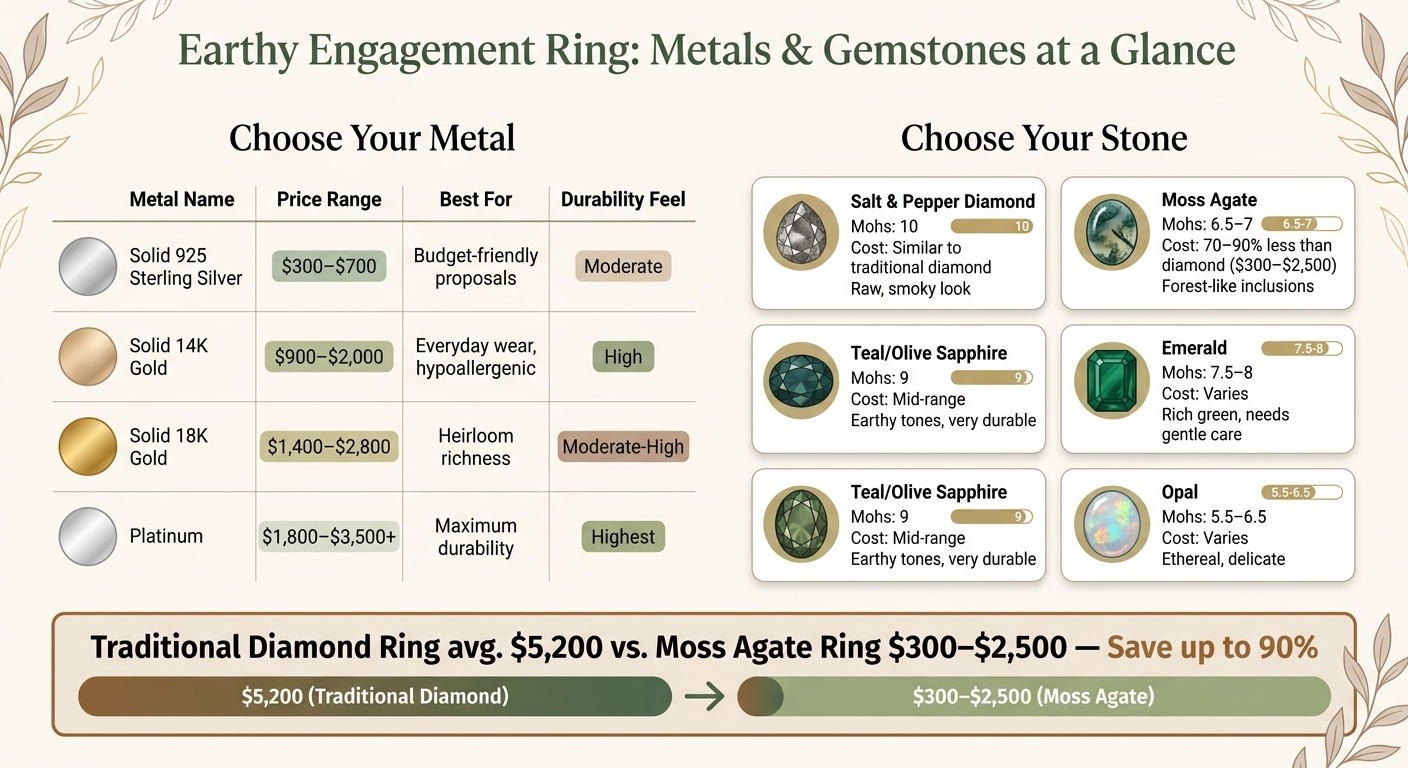
Earthy Engagement Ring Metals & Gemstones: Cost, Durability & Style Guide
Choosing a Ring for an Active Lifestyle
If you're someone who spends a lot of time outdoors - whether hiking, climbing, or working with your hands - the ring's setting style is just as important as the stone itself. Bezel or burnish settings are great options because they protect the stone and avoid snagging, unlike prong settings. Low-profile designs are another smart choice since they’re less likely to catch on gear, gloves, or clothing.
Also, consider the band material. Solid gold or platinum bands are more durable than hollow cast ones, which can be prone to breaking under pressure. For added strength and scratch resistance, look for wider shanks, around 4.6mm, as they hold up better than thinner, polished bands.
Once you’ve considered functionality, think about how these choices fit into your budget.
Earthy Ring Options at Different Price Points
Rings with an earthy aesthetic can make a big impression without breaking the bank. While traditional engagement rings average around $5,200, high-quality moss agate rings typically cost between $300 and $2,500. Here’s a quick breakdown of typical price ranges by metal:
| Metal | Typical Price Range | Best For |
|---|---|---|
| Solid 925 Sterling Silver | $300 – $700 | Affordable option for proposals on a budget |
| Solid 14k Gold | $900 – $2,000 | Durable, hypoallergenic, and highly popular |
| Solid 18k Gold | $1,400 – $2,800 | Offers a richer color and higher purity |
| Platinum | $1,800 – $3,500+ | Extremely durable; perfect for everyday wear |
(Data source:)
"A moss agate engagement ring... price typically runs 70–90% less than a comparable diamond ring while still offering excellent daily-wear durability." - Elizabeth McDowell, Founder & CEO, Aquamarise
Finding a Design That Fits Your Style
Once you’ve worked out your budget, focus on finding a design that matches your personal aesthetic. If you prefer minimalist styles, organic bezel solitaires - featuring a single textured stone on a branch-like band - are a great fit. For a boho vibe, look for asymmetrical stone clusters, mixed metals, or rings that highlight moss agate’s forest-like inclusions. If you’re drawn to rustic designs, consider hammered finishes, Koa wood inlays, or bark-textured bands.
Handcrafted options, like those from LaCkore Couture, offer natural stone designs and customization, making it easier to find a ring that feels personal and unique. Ultimately, the best ring is one you’ll love wearing every day - not just one that photographs well.
How to Care for Earthy Engagement Rings
Cleaning and Maintenance Tips
Textured surfaces on earthy engagement rings tend to attract dirt and oils, which can settle into the crevices. To keep your ring looking its best, establish a weekly cleaning routine. Start by soaking the ring for 15–20 minutes in lukewarm water with a few drops of mild dish soap. Then, gently scrub the surface with a soft baby toothbrush or an interdental brush to clean those hard-to-reach areas. For stubborn grime, a wooden toothpick works wonders.
Many earthy rings include intentional oxidation, achieved using liver of sulfur, to darken recessed areas and enhance their textures. Be cautious when cleaning these rings - aggressive scrubbing can strip away the oxidation. Focus on cleaning only the raised surfaces using a soft cloth.
"Aggressive scrubbing damages handcrafted details that took hours to create." - Golden Bird Jewels
Once the cleaning is done, remove any moisture using a bulb syringe, then pat the ring dry with a lint-free microfiber cloth. To avoid chemical buildup in intricate areas, apply cosmetic products like lotions or perfumes before wearing your ring.
Now, let’s look at how to protect those delicate settings and textured details.
Protecting Settings and Textured Details
Intricate vine patterns or delicate leaf tips can snag or bend during certain activities. To protect these fragile details, remove the ring during high-impact tasks or vigorous activities.
It’s also wise to schedule a professional inspection every 6–12 months to check for loosened stones or worn prongs. As Valerie Galperin, a design consultant at Lauren B Jewelry, advises:
"Removing it when appropriate helps preserve both its beauty and longevity."
When you’re not wearing your ring, store it in an individual fabric-lined pouch or a padded compartment. Avoid tossing it loose in a jewelry box, as the protruding details could bend or scratch. During humid months, placing a silica gel packet in the storage pouch can help minimize tarnishing, particularly on silver bands.
While protecting the metal is essential, natural stones require a bit more specialized care.
Long-Term Care for Natural Stones
Softer gemstones demand extra attention to maintain their beauty. Use the table below as a quick guide for caring for different stones:
| Gemstone | Mohs Hardness | Cleaning Method | Key Warning |
|---|---|---|---|
| Opal | 5.5–6.5 | Damp cloth wipe only | Do not immerse; store with a moist cotton ball to prevent cracking |
| Pearl | 2.5–4.5 | Damp cloth after wear | Extremely sensitive to acids, perfume, and skin oils |
| Emerald | 7.5–8 | Lukewarm water and cloth | Avoid ultrasonic or steam cleaning to prevent fissure damage |
| Moss Agate | 6.5–7 | Soapy water and soft brush | Avoid ultrasonic cleaners; can chip on impact |
| Tanzanite | 6–7 | Mild soap and water | Prone to temperature shock |
For rings featuring resin-embedded botanicals, such as real flowers or leaves set in resin, avoid soaking entirely. Prolonged water exposure can cloud the resin, dulling its appearance.
"Knowing your stone's strengths and weaknesses is the first step in caring for it properly." - Chantelle Lobo, Graduated Gemologist, JupiterGem
For more tips and to explore handcrafted designs, visit LaCkore Couture.
Conclusion
Selecting an earthy engagement ring involves making thoughtful choices to create something truly personal. Start with the stone - whether it's moss agate, emerald, or opal - and let its unique qualities shape your choice of metal, setting, and overall design. For softer stones, a bezel or partial-bezel setting is a smart way to ensure durability, while nature-inspired details like vine-wrapped bands or leaf accents add a sense of timeless elegance.
Budget is another key factor. For example, a moss agate ring set in solid 14k gold typically costs between $900 and $2,000. This makes it a more affordable option compared to traditional choices, freeing up resources for custom designs, intricate settings, or superior craftsmanship that tells your unique story.
"A ring should still feel meaningful 30 years from now. Nature motifs age beautifully because they aren't trend-based." - Orleone Jewelry
Proper care is essential to preserve its beauty. Routine cleaning, safe storage, and yearly inspections are especially important for rings with delicate hand-carved details or intentional oxidation. Taking these steps ensures your ring remains as stunning as the day you first wore it.
FAQs
What’s the most durable “earthy” gemstone for everyday wear?
For daily use, moissanite stands out as the most durable earthy gemstone, boasting a Mohs hardness of 9.25, which provides strong scratch resistance. Sapphires and rubies are also solid choices, each scoring a 9 on the Mohs scale. On the other hand, gemstones like moss agate, tourmaline, and garnet offer distinctive organic appearances but are softer. To maintain their longevity, these stones do best in protective settings like bezels.
Should I choose a bezel or prong setting for a nature-inspired ring?
When deciding between a bezel or prong setting, it’s all about matching your personal style and daily needs. Bezel settings provide a sleek, smooth look that securely encases the stone, making them a great option for those with active lifestyles. On the other hand, prong settings let in more light, enhancing the stone's sparkle. They can also be shaped into intricate designs, like vines or leaves, to complement a nature-inspired aesthetic. At LaCkore Couture, our handcrafted jewelry combines artistic elegance with lasting durability, offering you the best of both worlds.
How do I prevent textured or oxidized rings from wearing down over time?
To keep textured or oxidized rings looking their best, steer clear of harsh chemicals and abrasive cleaners - they can damage the finish. Instead, use mild soap, water, and a soft cloth for cleaning. Pay attention to raised surfaces, but be gentle around recessed areas to avoid stripping the texture. Regular check-ups with a jeweler can ensure that the settings remain secure. Opting for sturdy metals, such as platinum or 14k gold, can also help maintain the ring's structure and appearance over the years.