Skip to content




5 Care Tips for Gold and Silver Tropical Jewelry
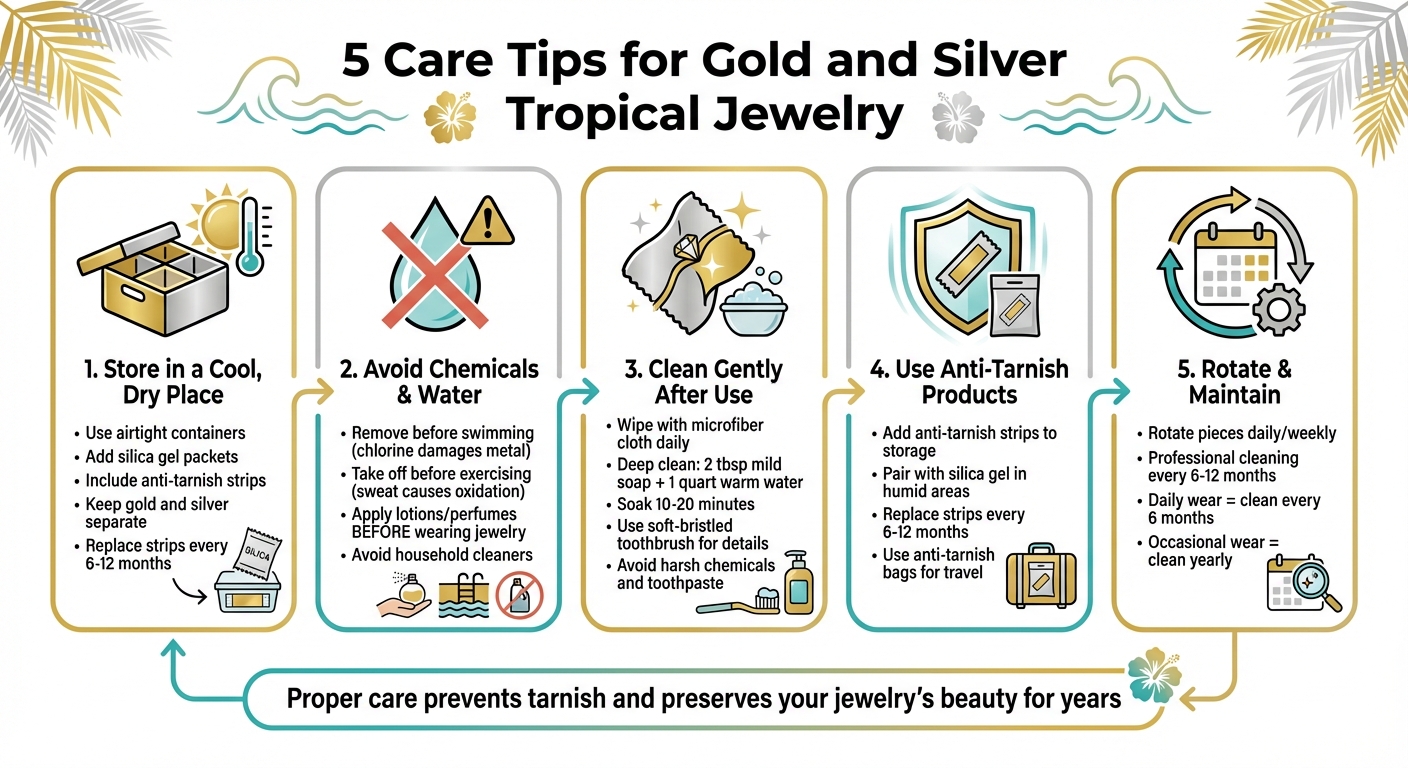
Gold and silver tropical jewelry can lose its shine due to humidity, saltwater, sweat, and everyday products like lotions and perfumes. Proper care can help maintain its appearance and prevent tarnish. Here’s a quick summary of the best practices:
- Store in a Cool, Dry Place: Use airtight containers, anti-tarnish strips, and silica gel to minimize moisture and oxidation.
- Avoid Chemicals and Water: Remove jewelry before swimming, exercising, or applying lotions and perfumes.
- Clean Gently After Use: Wipe with a soft cloth daily; use mild soap for deeper cleaning when needed.
- Use Anti-Tarnish Products: Add anti-tarnish strips or bags to storage for extra protection.
- Rotate and Maintain: Alternate pieces to reduce wear and schedule professional cleanings every 6–12 months.
These steps will keep your tropical-inspired jewelry looking its best for years to come.
5 Essential Care Tips for Gold and Silver Tropical Jewelry
1. Store Jewelry in a Cool, Dry Place
Humidity can speed up oxidation, which dulls the shine of silver and gold. If you live in tropical or coastal areas, the combination of salt air and humidity can make this process even worse. To keep your jewelry in good condition, store it in a cool, dry spot, away from moisture. Avoid places with temperature swings, as these can lead to condensation in storage spaces. A dresser drawer or a closet shelf works well for this purpose.
Use Airtight Containers or Anti-Tarnish Strips
Choosing the right storage method adds an extra layer of protection for your jewelry. Airtight containers are excellent for keeping moisture out. Options include airtight bags, jewelry boxes with anti-tarnish linings, or sealed containers that limit exposure to air and humidity.
To further protect your pieces, add silica gel packets or anti-tarnish strips to your storage containers. Silica gel absorbs excess moisture, while anti-tarnish strips neutralize pollutants that can cause discoloration. These tools are especially helpful in humid environments, but remember to replace them every few months for continued effectiveness.
Before you store any jewelry, clean it with a soft cloth to remove oils, sweat, or other residues. For silver, wrap each piece in jeweler’s tissue before sealing it to avoid dark spots.
Keep Gold and Silver Pieces Separate
Good organization is just as important as controlling moisture. Always store gold and silver items separately. When different metals are stored together, they can scratch each other or even cause chemical reactions that harm the surface. A jewelry box with soft-lined compartments is ideal for keeping items safe and organized.
For added protection, place each piece in a soft pouch to prevent scratches or tangling. This method not only safeguards your jewelry but also makes it easier to find specific items when you need them. Separating gold and silver also allows you to use tailored storage solutions - for instance, adding anti-tarnish strips for silver while keeping gold in its own space.
| Storage Method | Best For | Key Benefit |
|---|---|---|
| Airtight containers with silica gel | Silver in humid areas | Absorbs moisture and prevents oxidation |
| Anti-tarnish strips in jewelry box | Gold and silver | Neutralizes pollutants that cause tarnish |
| Soft pouches or lined compartments | All pieces | Prevents scratches and tangling |
| Ziplock bags with tissue paper | Silver | Seals out air, reducing dark spots |
2. Keep Jewelry Away from Chemicals, Water, and Sweat
Gold and silver jewelry may be sturdy, but they don't get along well with chemicals and moisture. Everyday culprits like chlorine, saltwater, sweat, lotions, and household cleaners can harm your tropical-inspired pieces. Knowing how these substances affect your jewelry can save you from unnecessary wear and expensive repairs.
The damage isn’t always obvious. Sweat, for instance, contains fatty and amino acids that can tarnish and corrode metal over time. For gold-plated jewelry, sweat and moisture can strip away the thin gold layer, exposing the base metal underneath, which is more prone to tarnishing. Even solid gold and sterling silver aren’t immune - constant exposure to body acids can darken their appearance over time.
If your jewelry comes into contact with sweat or chemicals, rinse it as soon as possible with warm water and mild soap, then dry it gently with a soft cloth. Beyond proper storage, limiting exposure to harmful substances is key to keeping your jewelry shining.
Remove Jewelry Before Swimming or Exercising
Chlorine and saltwater are among the worst offenders when it comes to damaging jewelry. Chlorine speeds up tarnishing and can even weaken the structure of the metal, while saltwater can erode surface finishes. On top of that, intense workouts combine sweat, moisture, and oxygen, which can accelerate oxidation and dull your jewelry even faster. To avoid unnecessary damage, take off your jewelry before swimming, hitting the beach, or engaging in strenuous exercise.
Avoid Lotions, Perfumes, and Cleaning Products
Everyday products can also take a toll on your jewelry. Lotions and sunscreens often leave behind a residue that attracts dirt, while perfumes and hairsprays contain chemicals that can corrode metal and strip gold plating. To minimize damage, apply lotions and perfumes first, let them fully dry, and then put on your jewelry. Similarly, remove your pieces before washing your hands or using cleaning products to avoid chemical exposure and keep them looking their best.
| Substance | Effect on Gold/Silver Jewelry |
|---|---|
| Chlorine | Speeds up tarnishing and can weaken the metal over time |
| Sweat/Body Acids | Causes oxidation and wears away gold plating, exposing base metals |
| Saltwater | Corrosive and damages surface finishes |
| Lotions/Perfumes | Leaves residue that attracts dirt and can strip gold plating |
| Household Cleaners | Harsh chemicals that can damage stones and remove coatings |
3. Clean Jewelry Gently After Each Use
Even with careful handling, your tropical jewelry can collect oils, dirt, and residue from daily wear. Over time, this buildup can dull its shine and speed up tarnishing. To keep your pieces looking their best, a quick cleaning routine after each use can make all the difference.
Wipe Jewelry After Every Wear
After removing your jewelry, use a soft microfiber cloth or a facial tissue to gently wipe away skin oils, sweat, and dust. Always wipe in straight motions to avoid scratching the surface. This step is particularly important for tropical-themed designs like palm leaves, hibiscus flowers, or wave patterns. These intricate details often have grooves where residue can gather, leading to discoloration over time.
Use Mild Soap Solutions for Deeper Cleaning
For a more thorough clean, mix 2 tablespoons of mild dish soap with 1 quart of warm water. Let your jewelry soak in this solution for 10–20 minutes. Then, use a soft-bristled toothbrush to gently scrub any crevices or detailed areas. Rinse thoroughly with clean water and pat the pieces dry to prevent moisture from causing damage.
Steer clear of harsh cleaning agents like toothpaste, acidic cleaners, or abrasive silver polish. These can strip gold plating or scratch the metal surface. Stick to gentle, nonabrasive dish soap, and if you're trying a new cleaning solution, test it on a small, inconspicuous spot first to ensure it’s safe for your jewelry.
4. Use Anti-Tarnish Products for Added Protection
If you live in a humid area or want to give your tropical jewelry an extra layer of defense, anti-tarnish products are a great solution. These products work by absorbing sulfides and other pollutants in the air that cause metals to tarnish. In humid conditions, moisture speeds up the chemical reaction between sulfur in the air and the metal surface of your jewelry, leading to discoloration. Modern anti-tarnish strips, for instance, use copper-based polymers to neutralize these harmful gases.
Incorporate these products into your jewelry storage routine for better results.
Add Anti-Tarnish Strips to Storage
Slip anti-tarnish strips or tabs into your jewelry box or storage container. They don’t need to come into direct contact with your jewelry to do their job. For maximum efficiency, store your jewelry in an airtight container along with the strips. If you’re dealing with high humidity, pair the anti-tarnish strip with a silica gel packet. Silica gel absorbs excess moisture, which can prevent condensation on your jewelry - this is especially useful in bathrooms or regions with humidity levels over 60%.
Replace anti-tarnish strips every 6 to 12 months, or sooner if they change color. Many strips include a color-change indicator to signal when they’ve reached their limit. Silica gel packets should be replaced every 3 to 6 months to stay effective. Before storing your jewelry, wipe it down with a microfiber cloth to remove oils and moisture that could interfere with the protective measures.
For additional protection, consider using the right kind of storage bags. Skip plastic bags and opt for specialized anti-tarnish bags that neutralize corrosive gases while also preventing scratches. These bags are perfect for travel and work particularly well for silver and mixed-metal tropical jewelry, like wave-patterned bracelets or palm leaf pendants.
5. Rotate Pieces and Schedule Professional Maintenance
Taking care of your jewelry doesn’t have to be complicated. By rotating your pieces and scheduling regular professional maintenance, you can help ensure your collection stays stunning for years to come.
Rotate Jewelry to Minimize Wear and Tear
Wearing your favorite gold palm leaf necklace or silver hibiscus earrings every single day might seem tempting, but it exposes them to constant moisture, oils, and other stressors. Giving your jewelry a break by rotating pieces can help reduce wear and slow down tarnishing or oxidation.
Try alternating pieces daily or setting up a simple weekly rotation. For example, wear your gold and silver items on different days. This way, you’re spreading out the exposure and keeping the intricate details - like wave patterns or shell engravings - looking crisp. While natural oils from your skin can polish silver over time, rotation prevents overuse and keeps everything in balance.
Leave Deep Cleaning to the Pros
While at-home cleaning works for routine upkeep, professional cleaning goes the extra mile. Experts not only restore your jewelry’s shine but also check for potential issues like loose clasps or settings that could worsen if left unattended.
For pieces you wear daily, aim for a professional cleaning every six months. Jewelry you wear less often can typically go a year between visits. This is especially important for tropical-inspired designs that face extra challenges like sweat, salty air, or high humidity. Many jewelers even offer free cleanings for gold and silver items, so maintaining your collection’s beauty doesn’t have to come with a hefty price tag.
Conclusion
Your tropical-inspired gold and silver jewelry deserves to keep shining as brightly as the day you chose it. With proper storage, regular cleaning, and a little maintenance, you can protect their brilliance and value for years to come. These small habits go a long way in preventing tarnish or corrosion, which can dull even the most striking designs.
Polishing your pieces regularly and scheduling professional cleanings every six to twelve months can make a big difference. These steps not only remove buildup but also help identify issues like loose settings before they become bigger problems. This is especially true for tropical-themed jewelry, which often faces extra wear from humid environments and daily use.
By taking care of your jewelry, you're preserving more than just its functionality - you’re honoring the artistry behind each piece. The handcrafted gold, silver, and natural stone creations from LaCkore Couture showcase exceptional craftsmanship and individuality. Whether it’s a palm leaf necklace or hibiscus earrings, each piece is made in the USA with meticulous attention to detail. Proper care ensures these designs remain as stunning as the day you first wore them.
Think of these care practices as a way to invest in your jewelry’s future. A few minutes spent cleaning or rotating your collection can prevent long-term damage. It’s a small effort that pays off by extending the life and beauty of your treasured pieces.
FAQs
How can I keep my tropical-themed gold and silver jewelry from tarnishing in humid weather?
To keep your tropical-themed jewelry looking its best in humid conditions, make sure to clean and dry each piece completely before putting it away. Store them in airtight, anti-tarnish containers or bags, and choose a cool, dry spot for storage. Aim to maintain a humidity level between 35–45% and a temperature of 65–75°F to protect their shine and overall quality.
How can I safely clean gold and silver tropical-themed jewelry at home?
To keep your gold and silver jewelry looking its best, start by mixing warm water with a few drops of mild dish soap. Use a soft-bristled toothbrush to gently clean away dirt and grime. Once cleaned, rinse the pieces thoroughly with clean water and carefully pat them dry with a soft, lint-free cloth to bring back their shine. Steer clear of harsh chemicals or abrasive materials, as they can damage the jewelry's finish.
Why is it important to rotate the jewelry I wear?
Rotating your jewelry is a smart way to keep it in great shape. By switching up the pieces you wear, you ensure they experience even wear and tear, which helps maintain their look and durability. It also gives you a chance to spot any early signs of damage or tarnish, so you can take care of issues before they escalate. Plus, regular rotation means you get to enjoy all your favorite pieces more often, keeping your collection looking its best.