Skip to content




Artisan Gold Necklace Care for Daily Wear
My daily necklace care rule: put it on after products dry, wipe it after wear, and store it dry and separate. I take it off before exercise, showers, swimming, chores, and sleep.
Before deeper cleaning, I check the metal, stones, and finish - not just the gold color. 14K gold is about 58.3% gold; 18K is 75%, but neither stamp means every part of a necklace is safe to soak.
- Clean gently: I use a dry, lint-free cloth first and follow the maker’s instructions if residue remains. The most delicate part sets the cleaning rules.
- Check for wear: I inspect links, clasps, stones, and finishes weekly. If anything is loose, bent, or peeling, I stop wearing and cleaning it and ask a jeweler.
- Pack separately: I use individual pouches or padded compartments and keep high-value pieces in my carry-on.
My rule before any wash: <u>if I don’t know the materials, I don’t soak it.</u>
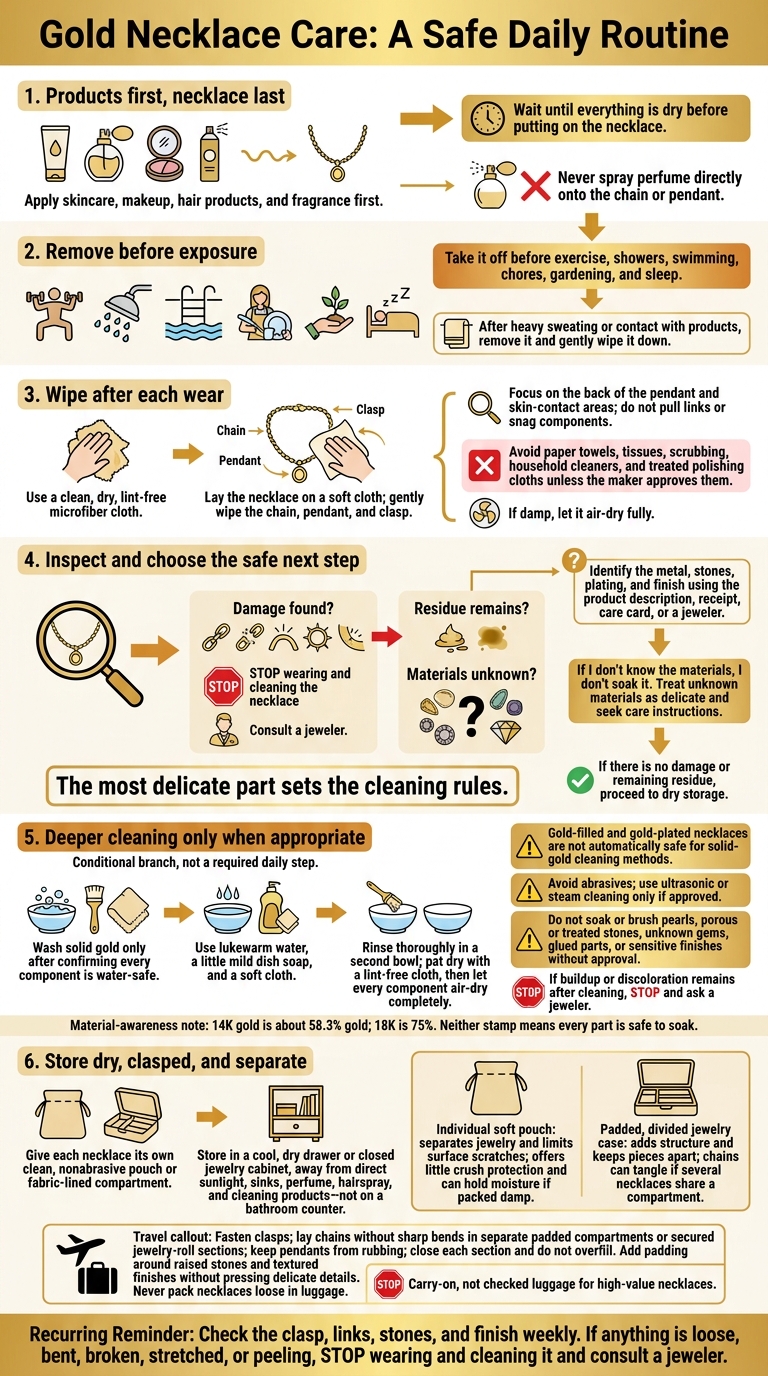
Gold Necklace Care: A Safe Daily Routine
Limit Sweat and Product Residue
For daily wear, wipe away residue before it hardens. Sweat and skin oils can collect on the chain, clasp, pendant, and areas that touch your skin most. Sunscreen can leave a dull film, while perfume, lotion, and makeup can dull gold and damage pearls or porous stones.
Put Your Necklace On After Applying Products
Apply skincare, makeup, hair products, and fragrance first. Wait until everything is dry before putting on your necklace. Never spray perfume directly onto the chain or pendant.
Take your necklace off before exercise, showers, swimming, chores, or gardening. If you sweat heavily or get product on it, remove it and gently wipe it down. Don’t scrub stubborn residue or use household cleaners. If buildup remains, follow the maker’s instructions for the necklace’s materials.
Wipe Light Residue With a Soft Cloth
After each wear, use a clean, dry, lint-free microfiber cloth to remove light sweat, oils, and recently deposited residue. Lay the necklace on a soft cloth, then wipe the chain, pendant, and clasp with light strokes. Focus on the back of the pendant and areas that touch your skin most, without pulling delicate links or snagging components.
Dry wiping won’t remove heavy sunscreen or perfume buildup. Avoid paper towels, tissues, rubbing, and treated polishing cloths unless the maker approves them. These can scratch gold or wear away gold-filled finishes and plating.
If the necklace is damp, let it air-dry fully before storing it. If residue remains after wiping, stop and check the necklace’s materials before washing it.
Check Materials Before Deeper Cleaning
If dry wiping leaves buildup behind, confirm what the necklace is made of before trying anything else. Check the product description, receipt, or care card, or ask a jeweler to inspect it. Identify the metal, stones, plating, and finish - not just the gold color. Treat unknown materials as delicate until you have clear cleaning instructions.
Wash Solid Gold Only When All Parts Are Water-Safe
Wash solid gold only after confirming that every component is water-safe. Mix lukewarm water with a little mild dish soap, then clean gently with a soft cloth. Soak the necklace or use a very soft jewelry brush only with approval from the maker or a jeweler.
Rinse thoroughly in a second bowl. Pat dry with a lint-free cloth, then let every component air-dry completely before storing it.
Check Care Rules for Plating, Stones, and Finishes
Follow the care rules for the most delicate component. Gold-filled and gold-plated necklaces aren’t automatically safe to clean with methods meant for solid gold. Avoid abrasives, and don’t use ultrasonic or steam cleaning unless approved.
Don’t soak or brush pearls, porous or treated stones, unknown gems, glued parts, or sensitive finishes without approval from the maker or a qualified jeweler.
For necklaces from LaCkore Couture, check the product page and care card for the exact materials, finish, and cleaning limits.
If you spot wear, stop before cleaning further.
Stop Cleaning if You Find Damage
Inspect the necklace under good light before cleaning. Daily wear can loosen components or wear away finishes, which changes how you can safely clean it. Look for stretched or broken links, a weak or warped clasp, bent parts, loose settings, and peeling or worn finishes.
If you find damage, stop wearing and cleaning the necklace and consult a jeweler. If buildup or discoloration remains after cleaning, stop and ask a jeweler for help.
Store Necklaces Separately at Home and Away
Once your necklace is clean and dry, put it away to prevent new residue and tangles. Keep each necklace clasped and separate from other pieces. A cool, dry bedroom drawer or closed jewelry cabinet works well - not a bathroom counter. Keep necklaces away from direct sunlight, sinks, perfume, hairspray, and cleaning products.
Use a Soft Pouch or Divided Jewelry Case
Give each necklace its own clean, nonabrasive pouch or fabric-lined compartment. A pouch or case helps prevent scratches, but it won't dry a damp necklace.
| Storage method | Main benefit | Main limitation |
|---|---|---|
| Individual soft pouch | Separates jewelry and limits surface scratches | Offers little crush protection and can hold moisture if packed damp |
| Padded, divided jewelry case | Adds structure and keeps pieces apart | Chains can tangle if several necklaces share a compartment |
Add extra padding around stones that sit above the setting and textured finishes, without pressing on delicate details. Even in a divided case, each necklace needs its own section.
Secure Chains for Travel
The same rule applies when packing for a trip: keep necklaces separate, even when space is tight. Fasten each clasp, then lay chains without sharp bends in separate padded compartments or secured jewelry-roll sections. Position pendants so they can't rub against chains or other pieces.
Close each section before packing, and don't overfill the case. Too much pressure can bend links and settings. Never pack necklaces loose in luggage, where they can tangle, scratch, or get crushed.
Pack high-value necklaces in your carry-on, not checked luggage. Place the case in a secure pocket or compartment you can keep with you.
Conclusion: Keep Care Gentle and Consistent
Keep care gentle and consistent: take your necklace off before exposure to moisture or going to sleep. Wipe it after each wear, then store it dry and separate from other jewelry.
Adjust Care to Wear and Condition
Daily buildup isn’t the only concern. Check regularly for wear and loose parts, too.
After heavy sweating or contact with products, gently wipe the necklace and let it dry completely. If residue remains, follow the maker’s care instructions for that material.
Check the clasp, links, stones, and finish weekly. Stop wearing the necklace and get professional help if a stone loosens, a link stretches, the clasp fails, or the plating peels.
FAQs
How can I tell residue from damaged gold plating?
Residue looks like a dull, filmy, or grimy coating. Sweat, body oils, lotions, and perfumes can leave this buildup in grooves or around settings. You can remove it with a soft cloth or mild soap and water.
Damaged gold plating exposes the base metal underneath as the gold layer thins or wears away. Unlike residue, discoloration, dark spots, or a change in the necklace’s base color won’t wipe or wash off.
What should I do after accidental chlorine exposure?
Wash your artisan gold necklace as soon as possible with warm water and mild soap, then rinse well. Dry it thoroughly with a soft, lint-free cloth, gently patting each crevice where moisture may linger.
Promptly removing chlorine residue helps prevent faster tarnishing and weakening of the metal over time. Once the necklace is completely dry, store it in an airtight container.
How often should a jeweler inspect my daily necklace?
Have a jeweler inspect your daily-worn gold necklace about every six months. Many jewelers also recommend professional cleaning on that schedule. These checkups help spot loose settings or worn parts before they turn into bigger problems.
For extra care, check your necklace by sight more often between visits, while keeping professional inspections at roughly twice a year.