Skip to content




African Tribal Jewelry: History And Meaning
African tribal jewelry is more than just decoration - it’s a historical and symbolic art form that dates back over 75,000 years. These pieces have served as markers of identity, status, spirituality, and even currency. From the intricate beadwork of the Ndebele people to the gold ornaments crafted by the Akan, each piece tells a story rooted in its community and resources.
Key insights:
- Identity and Status: Jewelry often signifies lineage, age, marital status, or political rank.
- Spiritual Role: Many communities use amulets and designs believed to offer protection or connect with ancestors.
- Materials and Trade: Resources like shells, beads, and metals reflect both local availability and centuries of trade.
- Modern Relevance: Figures like Nelson Mandela and contemporary designers highlight how these traditions inspire modern fashion and political statements.
This jewelry blends artistry with meaning, preserving its legacy while adapting to contemporary contexts.
Origins and History of African Tribal Jewelry
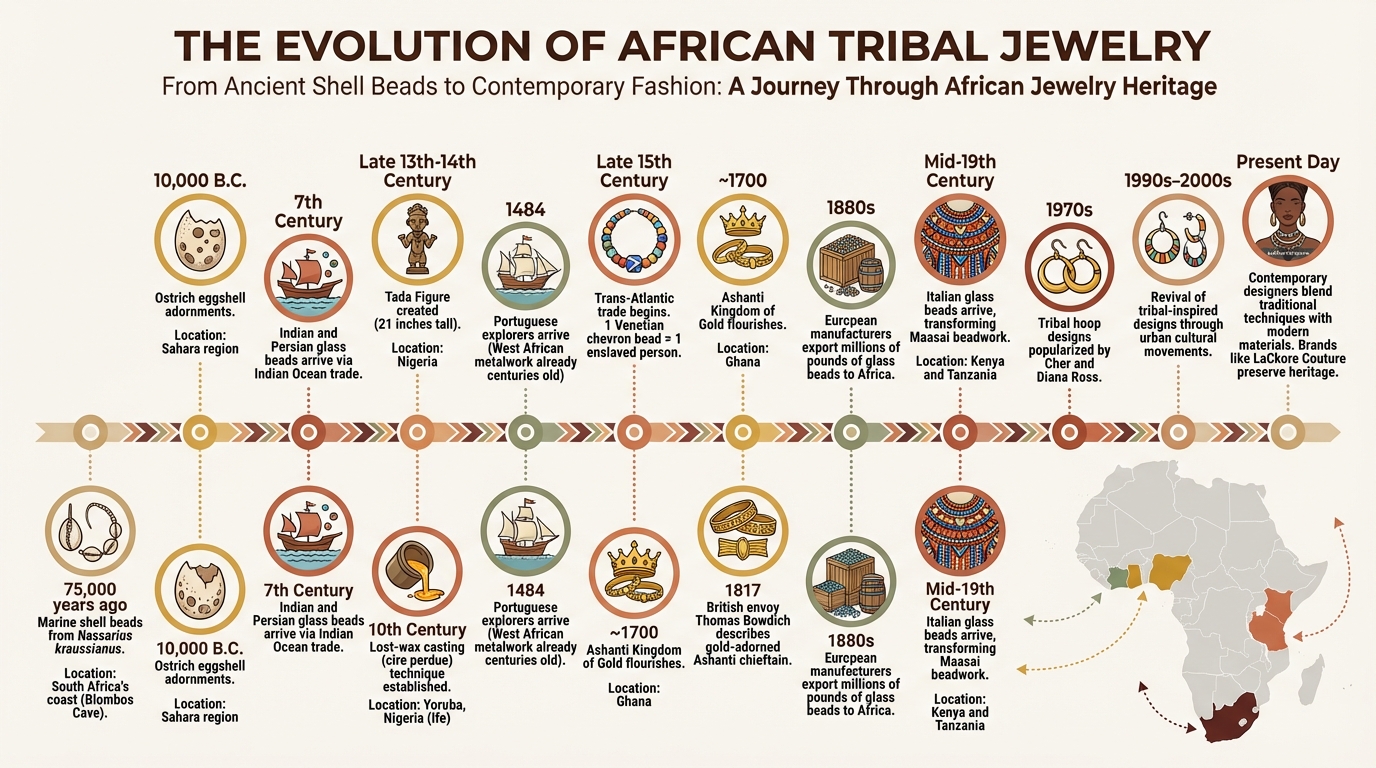
75,000-Year Timeline of African Tribal Jewelry History and Evolution
Jewelry's Role in Ancient African Societies
In ancient African societies, jewelry was far more than decorative - it was a powerful symbol of identity, status, and spirituality. These adornments often marked key life events like births, marriages, and deaths. They also communicated an individual’s age group, social standing, and political influence.
Jewelry even had an economic role. Long before coins existed, items like shells and beads were used as currency. For example, in Benin, coral beads were tightly regulated and held immense value. By the late 15th century, European traders recognized the worth of these items. During the trans-Atlantic trade, a single Venetian chevron bead could tragically equate to the life of an enslaved person.
Religious significance was another vital aspect. Craftsmen created amulets from materials believed to hold protective powers. Red jasper, for instance, symbolized Isis’s girdle, while green feldspar was used for papyrus-shaped amulets. This blend of social, spiritual, and economic roles laid the foundation for the diverse jewelry traditions across the continent.
How Geography and Resources Shaped Jewelry Styles
The natural resources of each region heavily influenced its jewelry styles. In the Sahara, artisans used ostrich eggshells for adornments as early as 10,000 B.C.. Along South Africa's coast, marine shell beads made from Nassarius kraussianus date back 75,000 years. In Côte d’Ivoire, materials such as clay, furs, and feathers showcased the region's creativity and resourcefulness.
Trade routes also played a crucial role. Precious materials like agate, carnelian, and jasper found their way to West Africa, while Indian Ocean trade brought Indian and Persian glass beads as early as the 7th century. By the 1880s, European manufacturers were exporting millions of pounds of glass beads to Africa and the United States.
Rather than overshadowing local traditions, these imported materials enriched them. In Ghana and Côte d’Ivoire, the Akan peoples utilized their vast gold reserves to perfect lost-wax casting, creating intricate gold beads. In Benin, Mediterranean coral - brought by European traders - became a symbol of royalty, while brass was the material of choice for regal adornments. In Nigeria, Owo rulers preferred carved ivory for ceremonial armlets and pendants, drawing on both local ivory resources and their expert carving skills.
This interplay of geography, trade, and tradition gave African tribal jewelry its rich diversity and enduring cultural significance.
Symbolism and Meaning in African Tribal Jewelry
Jewelry as Identity Markers
African tribal jewelry has long played a vital role in marking identity within communities, often reflecting social status, cultural heritage, and personal significance. For example, in Benin, specific beads were used to signify the oba's (king's) authority, showcasing a direct connection between adornment and leadership. In South Africa, the Ndebele people have distinct traditions: young girls wear the lighabi, a beaded apron made with white-seed beads and cotton cords, while married women don the ijogolo, a five-paneled skin apron featuring an "H" pattern symbolizing the family homestead.
In Ghana, the Akan people use gold-ornamented sandals to identify rulers. These sandals are more than just symbols of power - they also serve a protective role. Walking barefoot is considered taboo among the Akan, as it is believed to invite communal misfortune. Akan jewelry designs often carry deeper meanings through proverbs. A fish motif, for instance, represents the idea that "a king without followers ceases to exist", while an egg symbolizes the delicate balance of power. These pieces combine artistry, status, and spiritual significance, making them integral to both personal and communal identity.
Religious and Protective Functions
Jewelry in African traditions often transcends mere decoration, carrying deep spiritual and protective meanings. Many communities believed that the materials used in jewelry had supernatural origins. For instance, the Zulu and Kongo peoples viewed glass beads not as human creations but as sacred gifts from an ancestral realm. This belief imbued these adornments with a sacred connection to ancestors, transforming them into powerful spiritual tools.
Specific designs also served protective purposes. Akan crowns, for example, feature triangular gold shapes inspired by Muslim protective amulets, blending spiritual protection with regal authority. In the Benin kingdom, Edo soldiers wore small quadrangular bells around their necks. These bells not only invoked ancestral protection but also intimidated enemies. Similarly, cast-brass bells shaped like truncated pyramids were placed on ancestral altars to summon spirits and ensure prayers were heard.
Even the decorative motifs carried profound religious symbolism. Crocodile heads and "fish-legged" figures on armlets, for example, were used to highlight a ruler's connection to Olokun, the deity associated with the sea, wealth, and fertility. These intricate designs reflect the deep intertwining of artistry, spirituality, and cultural identity, setting the stage for the diverse regional styles that follow.
Regional Jewelry Styles Across Africa
Africa's jewelry traditions are as diverse as its landscapes, showcasing centuries of artistry, symbolism, and craftsmanship. The continent’s vast geography and rich history have shaped unique jewelry-making techniques and styles, each reflecting the distinct materials, traditions, and values of the region. From the bronze artistry of West Africa to the intricate beadwork of East Africa, these creations tell stories that connect people to their heritage.
Yoruba Bronze Casting
The Yoruba people of Nigeria are renowned for their advanced metalworking skills, particularly in the historic city of Ife. Their primary method, known as cire perdue or lost-wax casting, is a meticulous process. Artisans carve designs in beeswax, coat the wax model with layers of clay, and then fire it to melt away the wax. The hollow mold is filled with molten metal - typically brass or nearly pure copper. This technique, used by West African sculptors centuries before Portuguese explorers arrived in 1484, dates back as far as the 10th century.
Yoruba bronze casting is celebrated for its naturalistic details and lifelike proportions. One remarkable example is the Tada Figure, a half-lifesize depiction of a seated man from the late 13th or early 14th century. Standing about 21 inches tall, this masterpiece was created in multiple pourings and played a role in rituals promoting fertility and successful fishing. For larger works, artisans wrapped wax around a clay core supported by iron spikes, allowing them to create hollow, lightweight sculptures with intricate details.
"In direct lost-wax casting, the object produced is always unique, as the mold is necessarily destroyed as part of the casting process."
- Alice Apley, Independent Scholar, The Metropolitan Museum of Art
This unique approach to metalwork highlights the Yoruba's artistic ingenuity, a tradition that continues to inspire.
Maasai Beadwork
The Maasai people of Kenya and Tanzania have elevated beadwork into a form of storytelling and identity. While glass beads are now synonymous with Maasai jewelry, this practice evolved in the mid-19th century with the arrival of imported beads from Italy.
Maasai beadwork serves as a visual language, with patterns and colors symbolizing social status, marital position, wealth, and life stages. For example, specific hues and designs can signify whether someone is married or single, while others might reflect their role within the community. Some pieces even incorporate elephant hair, believed to bring good fortune and protect against illness. Traditionally crafted by women, beadwork remains a source of empowerment and income for Maasai communities today.
Ashanti Gold Ornaments
In Ghana, the Ashanti people have long used gold as a symbol of power and wisdom. Known as the "Kingdom of Gold", the Ashanti empire flourished around 1700, but goldworking in the region predates European contact by centuries. Ashanti gold jewelry, typically made from 8 to 12 carat gold, serves not just as adornment but as a medium for conveying proverbs and leadership principles.
Gold-ornamented sandals, for instance, signify a ruler's elevated status and protect against misfortune, as chiefs traditionally never walk barefoot. British envoy Thomas Bowdich, visiting in 1817, described an Ashanti chieftain whose wrist was so heavily adorned with gold that it required the support of a small boy. This opulence symbolized the kingdom’s strength and unity, as most gold regalia is considered communal property rather than personal wealth.
"A fish out of water dies; a king without followers ceases to exist."
- Akan Proverb
Ashanti goldsmiths also use the lost-wax casting method, crafting intricate beads and ornaments. Over time, they incorporated foreign motifs, such as European lions and cannons, blending local artistry with global influences.
Senufo Animal-Inspired Designs
The Senufo people of Côte d'Ivoire and Mali use animal imagery in their jewelry to express spiritual beliefs and ancestral connections. Their metalwork often features stylized animal motifs, linking wearers to ancestral spirits and serving as visual reminders of their cosmology. In Senufo tradition, animals act as intermediaries between the human world and the spiritual realm. These designs are frequently paired with ceremonial masks and play a central role in rituals marking life transitions and communal celebrations.
African Tribal Jewelry in Contemporary Fashion
African tribal jewelry has profoundly influenced contemporary fashion, with designers often drawing from its centuries-old techniques and motifs. These modern interpretations keep the rich traditions of African jewelry alive while making them relevant in today's fashion world. Take the geometric patterns of Ndebele beadwork, for instance. Once used to signify cultural milestones, these patterns now feature prominently in modern collections as enduring symbols of African heritage. Similarly, the symbolic motifs of traditional Akan goldwork have found their way into contemporary design trends, blending history with modern aesthetics.
Hoop earrings are a great example of how traditional designs are being reimagined. These classic shapes, once crafted from natural materials, are now brought to life using acrylic, resin, and wood. The 1970s saw a revival of tribal-inspired hoop designs, popularized by cultural icons like Cher and Diana Ross. This trend reemerged in the 1990s and early 2000s, influenced by urban cultural movements. Today, jewelry makers continue to honor these traditional forms, working with both modern materials and timeless metals. LaCkore Couture exemplifies this approach, offering handcrafted gold and silver pieces that seamlessly combine tribal influences with modern craftsmanship, creating versatile designs for everyday wear.
"The 1970s embraced silver, chrome, kinetic, and tribal hoop designs, famously worn by Cher and Diana Ross." - LaCkore Couture
This ongoing reinterpretation allows contemporary artisans to celebrate and honor these timeless traditions in fresh, innovative ways.
Preserving Heritage Through Modern Craftsmanship
Modern artisans are not just reinterpreting traditional styles - they're also preserving ancient techniques. In Ghana, for example, contemporary Akan chiefs wear gold bracelets that are intricately crafted to resemble luxury wristwatches. This blend of traditional gold-casting methods with modern luxury aesthetics showcases how heritage and innovation can coexist beautifully.
How to Wear African Tribal Jewelry
Styling Tribal Jewelry with Everyday Clothes
When it comes to wearing bold tribal jewelry, the secret lies in making it the centerpiece of your outfit. A striking brass pendant or a detailed beadwork collar can truly shine when paired with simple, neutral clothing - think along the lines of a sleek black dress or a crisp white button-down shirt. This way, your jewelry can take center stage without competing with busy prints or vibrant colors.
For added visual depth, try layering necklaces of different lengths. A Collar length (12″–13″) is perfect for making a strong fashion statement, while Princess length (17″–19″) works well for everyday wear. Matinee length (20″–24″) offers versatility, and Rope length (35″+) creates an elegant wrap-around effect. If you're mixing traditional beadwork with modern styles, consider pairing a tribal pendant with sleek Box or Snake chains to blend traditional and contemporary vibes seamlessly.
To elevate the look, balance organic materials like wood, bone, or semi-precious stones (think amazonite or tiger eye) with polished sterling silver or gold-plated chains. Incorporating metal beads as spacers between traditional beads can add a polished, modern touch. For a cohesive style, try matching a bold beaded necklace with a bracelet in a similar design rather than introducing too many competing patterns.
Combining Traditional and Contemporary Pieces
Once you've established a minimalist base, you can effortlessly merge traditional tribal jewelry with modern accessories for a chic, unified look. Start with a standout piece, such as a traditional beaded collar, and pair it with understated contemporary accents like handcrafted gold or silver earrings from brands like LaCkore Couture. When stacking bracelets, aim for five or six pieces on one arm to avoid overwhelming the overall design.
Modern trends make mixing styles easier than ever. For instance, you can pair tribal beads with power pearls for a fashion-forward edge, or opt for lightweight resin beads that mimic the look of stone or glass while being comfortable enough for all-day wear. Pay attention to your neckline when choosing necklaces - shorter Choker lengths (14″–16″) complement open-neck tops, while longer Opera lengths (25″–34″) create bold statements over high-necked sweaters. The goal is to craft a harmonious look that honors the cultural significance of traditional pieces while showcasing your personal style through modern design.
Conclusion
African tribal jewelry is much more than just decoration; it’s a visual language that has evolved over an astonishing 75,000 years. From the ancient marine shell beads unearthed in South Africa's Blombos Cave to the intricate Akan gold jewelry and vibrant Maasai beadwork, these pieces tell powerful stories about identity, community, and heritage that still resonate today.
This rich tradition connects the past with the present. Throughout history, tribal jewelry has been used by leaders to assert authority and honor their ancestors, proving that these adornments hold both cultural and political significance.
"Focusing on the humble and venerable bead reveals commonalities rather than differences between world cultures."
– James Green, Sylvan C. Coleman and Pam Coleman Memorial Fund Fellow
The symbolism woven into African jewelry offers timeless insights. Whether it’s the fish motif teaching that "a king without followers ceases to exist" or the egg symbolizing the delicate balance of power, these designs go beyond aesthetics - they carry wisdom that transcends borders and eras. Understanding these meanings transforms jewelry from simple ornamentation into a deeper expression of identity and philosophy.
For those who appreciate these traditions, exploring handcrafted designs rooted in techniques like lost-wax casting or two-bead edging helps keep this heritage alive. Brands such as LaCkore Couture celebrate these time-honored methods, offering pieces that allow you to embrace individuality while connecting with a legacy that spans millennia. Choosing such jewelry isn’t just about accessorizing - it’s about engaging in a conversation that has been unfolding for 75,000 years, a conversation about what it truly means to be human.
FAQs
What does African tribal jewelry represent in terms of identity and status?
African tribal jewelry goes beyond mere ornamentation; it’s a vivid expression of identity and status, weaving together personal and communal stories. Every piece is thoughtfully made, incorporating materials like beads, metals, shells, or natural stones. The colors and patterns aren’t just decorative - they carry deep meaning. For example, specific color combinations can indicate marriage, while others might signify a rite of passage into adulthood. These intricate designs often get passed down through generations, preserving not just heritage but also the personal narratives tied to them.
Beyond identity, these adornments often symbolize social rank and wealth. Elements like gold, detailed beadwork, or motifs such as lion heads and protective amulets can reveal a person’s role within their community, whether as a leader, warrior, or someone of considerable affluence. Take the Maasai, for instance: their brightly colored bead necklaces are a striking way to display wealth and seniority. Similarly, in Ghana’s Akan kingdoms, gold regalia underscores political power and authority. Drawing inspiration from these rich traditions, modern designers like LaCkore Couture craft handmade pieces that honor this heritage while offering a distinctive way for individuals to showcase their own style.
How did trade routes influence the design and materials of African tribal jewelry?
Trade routes have historically shaped the materials and styles of African tribal jewelry in fascinating ways. Overland routes, such as the trans-Saharan caravans, transported gold from West Africa to Mediterranean markets. This made gold a marker of wealth and power in many African kingdoms. These same routes also introduced metals like brass and copper, along with beads and cowrie shells. These materials allowed artisans to craft intricate, textured designs that carried deep cultural significance.
Maritime trade across the Indian Ocean and Atlantic Ocean brought even more variety. European and Arab traders introduced glass beads, enamel, and advanced metalwork techniques. African artisans blended these new materials with traditional symbols, such as animal motifs and geometric patterns, creating jewelry that not only represented tribal identity but also reflected the far-reaching influence of global trade.
Modern designers, including LaCkore Couture, continue to honor this legacy. By working with gold, silver, and natural stones, they celebrate the storytelling and identity-rich traditions of African tribal jewelry while bringing its timeless beauty to contemporary audiences.
How does African tribal jewelry influence modern fashion?
African tribal jewelry has left a lasting mark on modern fashion, weaving its rich history, bold aesthetics, and deep cultural roots into today's styles. The vibrant beadwork, intricate metal craftsmanship, and use of natural materials - once symbols of social status, age, or identity - are now reinterpreted into striking necklaces, bracelets, and earrings that celebrate both individuality and heritage.
This influence can be spotted everywhere, from high-fashion runways to streetwear and everyday accessories. Brands like LaCkore Couture have embraced this connection by incorporating traditional African elements, such as symbolic patterns and beadwork, into their contemporary, handcrafted creations. These designs not only pay tribute to the artistry of African jewelry but also provide a meaningful way for people to express their personal style and cultural pride.
By merging heritage with modern trends, African tribal jewelry continues to shape the fashion world, offering pieces that are both visually captivating and rich with history.